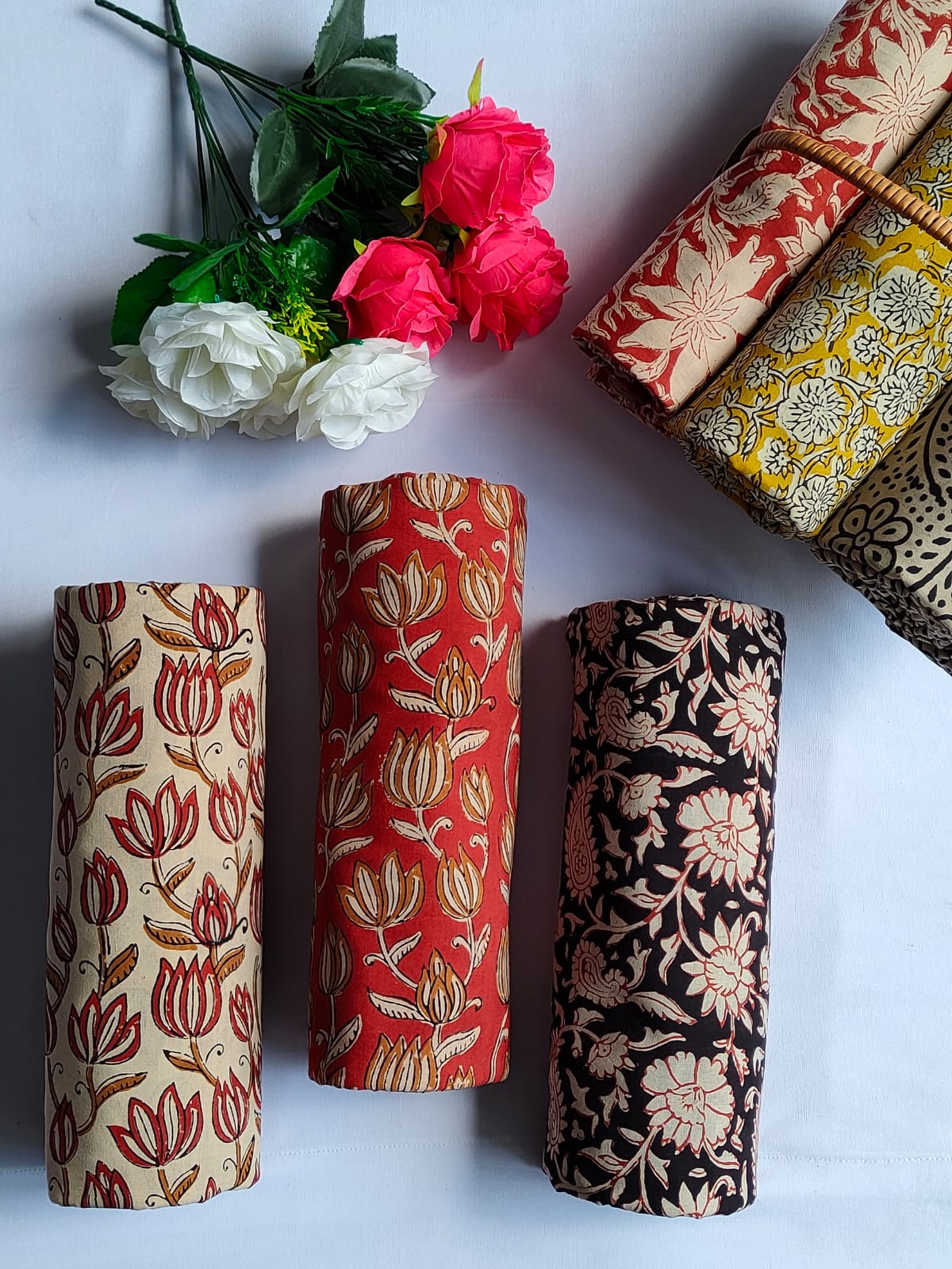


Indian block print fabric is known for its detailed patterns, traditional craftsmanship, and connection to regional textile cultures. From the earthy floral designs of Bagru to the geometric patterns of Ajrakh and the delicate motifs of Sanganer, each printing tradition has its own visual character. These fabrics are used to make everyday clothing, occasion wear, cushion covers, curtains, quilts, table linen, bags, and many other products.
What makes Indian block printing particularly interesting is the process behind the finished fabric. Artisans use carved wooden blocks to transfer designs onto cloth, often repeating the process with different blocks to build colours and patterns. Depending on the region and technique, printing may involve direct application of colour, resist methods, or several stages of preparation and dyeing.
For anyone buying cotton fabric for sewing, fashion, home décor, or craft projects, understanding these regional styles makes it easier to select a print that suits the intended use.
In this guide, we explore the major Indian block-printing traditions, their characteristic designs, how to identify suitable fabrics, and what to consider before buying printed cotton online.
What Is Indian Block Print Fabric?
Indian block print fabric is textile material decorated using carved blocks, traditionally made from wood. The artisan applies colour to the carved surface and presses it against the fabric to transfer a motif. Repeating the process creates a pattern across the material.
Traditional printing requires careful placement, consistent pressure, and coordination between the blocks and colours. A design may use one block for the main motif and additional blocks for outlines, secondary colours, or decorative details.
The finished appearance depends on several factors, including:
-
The design carved into the block
-
The type of fabric being printed
-
The colours and printing materials used
-
The number of blocks required for the pattern
-
The printing technique and finishing process
-
The skill and experience of the artisan
Cotton is a popular base for block printing because it is versatile and suitable for a wide range of clothing, craft, and home décor applications. However, not every block-printed fabric is cotton, so buyers should check the actual fibre composition before purchasing.
If you are new to the subject, our guide to the art of handblock printing explains the craft and its place in Indian textile traditions. You can also explore what handblock printing is, including its history and process for a closer look at how the technique developed.
A Brief History of Indian Hand Block Printing
Hand block printing has developed over generations through regional craft communities, local markets, changing fashion preferences, and the availability of dyes and textile materials.
Artisans have adapted their patterns and methods to suit different uses. Some traditions became known for floral designs, while others developed distinctive geometric layouts, dark backgrounds, resist effects, or particular colour combinations.
The craft involves more than transferring a pattern onto cloth. Preparing fabric, selecting and applying colours, aligning the blocks, repeating motifs, and finishing the printed material all influence the final result.
Although traditional methods remain important, contemporary producers also create new designs for modern clothing and home interiors. Traditional motifs may appear in contemporary colour palettes, oversized prints, coordinated collections, and fabrics designed for current sewing trends.
For a more detailed explanation of the process, read how handblock printing works, including its techniques and traditions.
Major Regional Traditions of Indian Block Print Fabric
India has several recognised block-printing traditions. Their visual differences can help buyers choose a fabric based on the appearance they want, although designs can overlap between regions and contemporary prints may draw inspiration from more than one tradition.
1. Bagru Print Fabric: Earthy Colours and Traditional Motifs
Bagru, in Rajasthan, is widely associated with hand block printing. Traditional Bagru textiles often feature floral, leafy, geometric, and nature-inspired motifs arranged in repeating patterns.
Earthy colour combinations are a familiar feature of many Bagru-inspired designs. Depending on the fabric and printing process, these may include indigo, black, red, brown, and muted natural-looking shades.
Bagru printing is also associated with Dabu, a mud-resist printing technique. In resist printing, selected areas are protected from colour so that the final design develops contrasting sections. However, not every Bagru print uses Dabu, and the two terms should not be treated as interchangeable.
Bagru-inspired cotton fabrics can work well for:
-
Kurtas, tunics, and everyday dresses
-
Shirts and relaxed co-ordinated sets
-
Cushion covers and table linen
-
Tote bags and fabric pouches
-
Patchwork and other textile crafts
When selecting Bagru prints, consider the scale of the motifs and the contrast between the background and pattern. Smaller designs may suit shirts and children's garments, while larger motifs can create a stronger visual effect on dresses, curtains, or statement cushions.
Browse Bagru print cotton fabrics to explore designs for clothing and craft projects.
2. Sanganeri Print Fabric: Fine Florals and Light Backgrounds
Sanganer, near Jaipur, is known for its distinctive hand block-printing tradition. Sanganeri designs are often recognised for fine floral patterns, delicate botanical motifs, and carefully arranged repeats.
Many familiar Sanganeri-style designs use light backgrounds with colourful floral details. Small flowers, vines, leaves, and intricate motifs give these fabrics a detailed appearance without necessarily making the overall design feel heavy.
Sanganeri-inspired prints are suitable for:
-
Summer dresses and everyday kurtas
-
Blouses and lightweight shirts
-
Children's clothing
-
Scarves and accessories
-
Cushion covers and other soft furnishings
Fine floral patterns can be particularly useful when you want a print that remains visually balanced across a garment. Before choosing a fabric, check whether the pattern scale matches the garment size. A tiny floral repeat may look different on a full-length dress than it does on a small accessory.
It is also worth checking the fabric's weight and drape. A fine floral print does not automatically mean the fabric is lightweight or suitable for every garment.
3. Ajrakh Print Fabric: Geometric Patterns and Layered Colours
Ajrakh is a traditional textile-printing tradition associated with Kutch and other parts of western India, with related practices and influences extending across regional boundaries.
Ajrakh textiles are often recognised for symmetrical geometric arrangements, repeated borders, intricate grids, and combinations of indigo, red, black, and white. Traditional processes can involve resist printing and multiple stages of dyeing and printing.
The visual appeal often comes from the relationship between the central motifs, small repeating elements, and border patterns. The finished fabric may have a dense, carefully balanced design.
Ajrakh-inspired fabrics can be used for:
-
Shirts and kurtas
-
Jackets and layering pieces
-
Dresses and co-ordinated outfits
-
Scarves and accessories
-
Cushion covers and decorative panels
Because Ajrakh patterns may contain many small details, check the fabric width and repeat before cutting large garment pieces. If you want a continuous geometric layout, you may need to allow extra fabric for matching motifs at seams.
Buyers should also distinguish between a fabric made using a traditional Ajrakh process and a modern fabric featuring an Ajrakh-inspired pattern. Both can be attractive, but the production method and origin may differ.
4. Bagh Print Fabric: Strong Contrasts and Balanced Patterns
Bagh printing is associated with Bagh in Madhya Pradesh. The tradition is known for patterned textiles featuring distinctive combinations of red, black, and lighter backgrounds, along with floral and geometric arrangements.
The exact appearance varies by design and process. Some patterns are compact and repeating, while others feature more open layouts or larger motifs.
Bagh-inspired prints can suit garments where you want a distinctive pattern without relying on large, scattered floral designs. They may also work well for accessories, cushion covers, and decorative fabric panels.
When selecting this style, consider the amount of contrast in the design. Strong colour differences can make the pattern stand out, while a more restrained palette may work well for garments intended for frequent wear.
As with other regional styles, the name of a traditional printing region does not automatically establish the origin or method used to produce a particular fabric. Check the product description for reliable information about its manufacturing process.
5. Barmer and Other Western Rajasthan Print Traditions
Western Rajasthan has a rich textile heritage, with regional printing and dyeing practices that reflect local design preferences, materials, and craft histories.
Ajrakh-related traditions are also associated with parts of western Rajasthan, while contemporary collections may feature a wider variety of motifs inspired by the region. These can include geometric repeats, floral elements, strong colour contrasts, and decorative borders.
For clothing, such prints can create interesting options for shirts, kurtas, skirts, and relaxed co-ordinated outfits. For home décor, repeated motifs can work on cushions, table linen, and fabric accessories.
If regional origin matters to your purchase, check whether the seller identifies the actual place of production or simply describes the design as regionally inspired.
6. Farrukhabad and the Wider Craft Network
Farrukhabad in Uttar Pradesh is associated with textile printing and the broader network of Indian printing crafts. The movement of artisans, carved blocks, motifs, and textile knowledge has contributed to the development and spread of printing traditions.
A design seen in one region may have similarities to patterns used elsewhere. Likewise, contemporary fabric collections may combine familiar Indian motifs with newer colour combinations and layouts.
This is one reason it is helpful to assess a fabric by both its design and its verified production details. A floral or geometric motif alone is not enough to determine where the fabric was made or whether it was printed by hand.
How Regional Block Prints Differ
The following comparison is a practical starting point for choosing designs. It describes common visual associations rather than fixed rules for every fabric.
| Print tradition | Common visual characteristics | Possible uses |
|---|---|---|
| Bagru | Earthy colours, floral and geometric motifs | Kurtas, dresses, bags, cushions |
| Sanganeri | Fine florals, delicate repeats, often light grounds | Summer clothing, children's wear, accessories |
| Ajrakh | Geometric symmetry, intricate repeats, indigo and red combinations | Shirts, kurtas, scarves, decorative panels |
| Bagh | Strong contrasts, floral and geometric compositions | Garments, accessories, home décor |
| Western Rajasthan traditions | Varied regional motifs, borders, geometric or floral patterns | Clothing, bags, cushions |
| Contemporary Indian block-print-inspired designs | Traditional-looking motifs in modern layouts and colours | Fashion, crafts, home projects |
A fabric's actual weight, fibre composition, colourfastness, and printing method should always be assessed separately from its regional design style.
Hand Block Printing vs Screen Printing
Hand block printing and screen printing are both used to create patterned textiles, but they work differently.
Hand block printing uses carved blocks to transfer designs onto the fabric. Screen printing uses a prepared screen to apply colour through selected areas of a design. Both techniques can produce attractive printed cotton fabrics, and the best option depends on the intended result.
Hand Block Printing
Hand block printing involves repeated manual placement of a block. Small differences in alignment, colour application, or pressure may occur between impressions. These variations can contribute to the character of a handmade textile, but they should not be treated as definitive proof of authenticity.
The process can be suitable for traditional motifs, repeating floral patterns, and designs that benefit from the appearance of hand-applied printing.
Screen Printing
Screen printing can reproduce designs using prepared screens and controlled colour application. Depending on the production setup, it can be used for repeated patterns, more controlled placement, and larger production runs.
It is important not to assume that screen-printed fabric is automatically lower quality than hand block-printed fabric. Fabric quality depends on the base material, printing materials, production controls, and finishing.
For a detailed comparison, read hand block vs screen-printed cotton fabric. If you are considering screen-printed designs, our screen-printed cotton fabric buyer's guide explains what to look for before choosing a fabric.
You can also explore the best uses for screen-printed cotton fabric in 2026 for ideas across clothing, accessories, and home projects.
What Makes Hand Block-Printed Cotton Special?
The appeal of hand block-printed cotton comes from the combination of textile material, pattern design, and the printing process.
Each stage affects the final fabric. The base cotton determines many of its physical properties, while the design and printing method influence its appearance. The finishing process can also affect the fabric's handle, colour, and performance.
Hand block-printed cotton is popular for several reasons.
Traditional Patterns With Individual Character
Regional printing traditions offer a wide range of floral, botanical, geometric, and abstract motifs. Repeating patterns can create a cohesive appearance while retaining the character of the chosen design.
Versatility for Sewing
Printed cotton can be used for many projects, provided the fabric's weight, width, and construction suit the intended purpose. A fabric suitable for a relaxed shirt may not have the structure required for a tailored jacket or a heavy-use bag.
A Wide Choice of Design Styles
Buyers can choose fine florals, bold geometric layouts, compact repeats, large motifs, or designs with decorative borders. This variety makes it possible to select patterns for both simple everyday clothing and more distinctive statement pieces.
A Connection to Craft Traditions
Traditional hand block printing represents specialised knowledge passed through craft communities. Choosing a verified handmade product can support the people and processes involved in producing it.
For a closer look at these qualities, read what makes hand block-printed cotton special.
How to Choose the Right Block-Printed Fabric for Your Project
The best fabric is not necessarily the one with the most attractive design. It should also suit the garment or product you plan to make.
1. Start With the Intended Use
Think about the finished item before choosing a print.
For a shirt or kurta, consider comfort, drape, opacity, and the scale of the pattern. For cushion covers, you may prefer a more prominent motif or a repeat that works well across the front panel. For bags, the fabric needs to be suitable for the expected wear and may require lining or additional structure.
Do not assume that every printed cotton fabric is suitable for every application. Review the product specifications and inspect a sample when possible.
2. Select the Right Motif Scale
Small floral repeats often work well on shirts, children's garments, and accessories. Medium patterns can suit dresses, kurtas, and coordinated sets. Large motifs can be effective on statement garments, cushion covers, and decorative panels.
These are guidelines rather than strict rules. The final result also depends on the garment's shape, the placement of the pattern, and the amount of fabric visible.
For more design inspiration, explore the top 15 handblock designs for fabric lovers in 2026 and this collection of beautiful handblock designs, patterns, and inspiration.
3. Consider Colour and Contrast
The background colour and the contrast between motifs can change the overall appearance of a garment.
High-contrast prints tend to stand out, while lower-contrast designs may create a softer look. Indigo, earthy reds, black, cream, and muted colours are often associated with traditional Indian print aesthetics, but contemporary designs offer many other combinations.
Consider how the print will work with plain fabrics, linings, buttons, trims, and other materials used in the finished product.
4. Check Fabric Weight and Drape
Fabric weight affects how a garment hangs and how much structure it has. A lightweight cotton may suit gathered dresses and relaxed shirts, while a firmer construction may work better for structured pieces or certain accessories.
However, weight alone does not determine quality or durability. Yarn, weave, finishing, and intended use also matter.
If you are buying fabric for a specific garment, ask for the available specifications and test how the material behaves before cutting it.
5. Plan for Pattern Repeats and Seam Placement
Printed fabrics may have repeating motifs, borders, or directional layouts. These details affect how much fabric you need.
If you want motifs to align across seams, pockets, or garment panels, allow extra yardage for matching. A border print may need additional planning if the border is intended to run along a hem or sleeve.
For practical advice, read how to choose the perfect handblock design for your project.
6. Choose a Fabric Type That Suits the Project
Different cotton fabrics have different constructions and finishes. Some are soft and lightweight, while others have more body or a firmer surface.
The printing method is only one part of the decision. A suitable base fabric can make a significant difference to the finished item.
Our guide to the best handblock fabric types for sewing and crafts can help you compare options before choosing a material.
How to Identify Quality in Hand Block-Printed Cotton
A well-chosen printed fabric should meet the practical requirements of the project and have clear, reliable product information.
Here are several points worth checking.
Fibre Composition
Check whether the fabric is cotton, a cotton blend, or another fibre. Do not rely only on the appearance or feel of the material. Product specifications provide a more reliable starting point.
Weave and Surface
Look at the fabric's construction, surface consistency, and suitability for the intended use. Minor differences may occur in handmade textiles, but noticeable damage, unexpected thin areas, or defects that interfere with cutting should be considered carefully.
Printing and Colour Application
Inspect the pattern for the level of detail, consistency, and appearance you expect. Small variations can occur in hand printing, but uneven results should be evaluated in context rather than automatically treated as proof of traditional production.
Colourfastness
Colourfastness describes how well colour resists fading or transferring during washing, rubbing, or exposure to other conditions. It cannot be confirmed reliably from appearance alone.
Check the care instructions and ask the seller about testing where this matters to your project. If you receive a sample, follow the recommended care method and test it before making a full garment.
Fabric Weight and Finish
Choose a fabric with a construction suitable for the intended item. Pay attention to opacity, drape, surface feel, and the finish described by the seller.
Production Information
If you specifically want hand block-printed fabric, check whether the product listing identifies the printing method. A traditional-looking motif is not sufficient evidence that the material was printed by hand.
For a more detailed checklist, see how to choose high-quality handblock fabric in 2026 and how to spot authentic quality in hand block-printed cotton.
Creative Ways to Use Indian Block-Printed Cotton
One reason block-printed cotton remains popular is its versatility. The same type of print can look quite different depending on the garment, pattern placement, and accessories used with it.
Everyday Kurtas and Tunics
Small floral prints, repeating motifs, and traditional geometric patterns can work well for everyday kurtas and tunics. The fabric's weight and opacity should suit the design, especially if the garment has gathers, pleats, or fitted sections.
Dresses and Skirts
Floral and botanical patterns are popular choices for dresses and skirts. Larger prints can create a strong visual statement, while smaller repeats may be easier to use for garments with multiple panels.
Shirts and Co-Ordinated Sets
Geometric prints, compact florals, and traditional Indian motifs can be used for casual shirts and matching sets. Before cutting, check the direction of the design and decide whether the pattern should align across the front, sleeves, and pockets.
Tote Bags and Pouches
Printed cotton can be used for tote bags, zipper pouches, storage bags, and accessories. The fabric may need a lining, interfacing, or another suitable reinforcement depending on the expected use.
Cushion Covers and Table Linen
Block-printed fabric can add pattern to living spaces without requiring a complete change in décor. Consider how the print works with existing colours, furniture, and other textiles.
Patchwork and Craft Projects
Smaller fabric pieces can be used for patchwork, fabric-covered notebooks, soft toys, quilting details, and decorative panels, depending on the material's properties.
For more inspiration, explore these 10 creative ways to use block-printed cotton in your projects.
If you enjoy sewing your own items, the guide to hand block print fabric for sewing and crafts provides additional ideas for using printed textiles.
Why Designers Choose Block-Printed Cotton
Designers often look for materials that offer a clear visual identity while remaining practical for their intended products. Block-printed cotton provides a broad selection of traditional and contemporary motifs that can be adapted to different collections.
For a small clothing brand, a distinctive print can help establish a collection's visual direction. For an independent maker, it can add character to a limited-run garment or accessory. For home décor designers, repeating patterns can help coordinate cushions, table linen, and other textile products.
The fabric itself still needs to meet the requirements of the finished product. Designers should consider consistency between batches, available quantities, colour variation, repeat size, and the ability to reorder the same design.
Read why designers choose block-printed cotton for more on the appeal of these textiles in design projects.
How to Sew With Block-Printed Cotton
Successful sewing starts with understanding how the fabric behaves. Printed cotton can be straightforward to work with, but preparation and cutting make a difference to the finished result.
Prepare the Fabric Before Cutting
If the care instructions permit it, prewash the fabric before sewing. This helps you assess how it responds to washing and reduces the risk of unexpected shrinkage after the garment is completed.
Use a suitable washing method for the fabric and avoid assuming that every printed cotton can tolerate hot water or aggressive detergents.
Use a Suitable Needle and Stitch Length
Select a needle appropriate for the fabric's thickness and construction. Test the stitch on a spare piece before sewing the main garment. Adjust the stitch length and tension if the fabric puckers or the stitches appear uneven.
Plan the Pattern Layout
Place the pattern pieces carefully so that the motifs run in the intended direction. If the design includes a border, decide where it should appear before cutting.
For large or symmetrical prints, consider whether matching motifs across seams is important to the finished design. Pattern matching may require extra fabric.
Test Before Pressing
Check the care guidance before ironing. Use an appropriate temperature and test on a small area if you are uncertain how the print will respond.
For step-by-step ideas, see how to sew with floral printed cotton fabric.
Floral Printed Cotton: A Related Style Worth Exploring
Floral prints are a major part of many Indian textile traditions, including numerous block-printing styles. They can range from delicate botanical repeats to large flowers and more stylised motifs.
When choosing floral printed cotton, consider the size of the flowers, the background colour, and the spacing between motifs. A dense pattern may create a different effect from a design with plenty of open background space.
For fashion, small florals can suit everyday garments, while larger patterns can work well for statement dresses and skirts. For home décor, the same design may be used on cushions, table linen, or fabric accessories.
For current design inspiration, read top floral printed cotton fabric trends for 2026. You can also explore the best uses of floral printed cotton fabric in home and fashion.
How to Care for Hand Block-Printed Cotton Fabric
The correct care method depends on the fibre, dyes, printing materials, and finishing process. Follow the product's specific care instructions whenever they are available.
As a general starting point, consider the following:
-
Wash gently: Use a suitable gentle cycle or hand-washing method if recommended.
-
Avoid harsh detergents: Strong cleaning products may affect some colours and finishes.
-
Separate colours when necessary: This can reduce the risk of colour transfer, especially during the first wash.
-
Avoid unnecessary high heat: Follow the recommended washing and drying temperatures.
-
Dry appropriately: Follow the product instructions, including any guidance about direct sunlight.
-
Iron carefully: Use a suitable temperature and test a small area if needed.
-
Store clean and dry: Avoid storing damp fabric or garments.
Do not assume that every hand block-printed textile uses natural dyes. Printing materials and dye choices vary, so care instructions should be based on the actual product.
For more guidance, visit how to care for hand block-printed cotton fabric.
Where to Buy Indian Block Print Cotton Fabric Online
When buying block-printed cotton online, review the product information before making a purchase. Clear specifications help you choose a fabric that suits your project and reduce uncertainty about the material.
Look for details such as:
-
Fibre composition
-
Fabric width and available length
-
Print style and design
-
Fabric weight or other available construction details
-
Colour and product photographs
-
Care instructions
-
Availability and shipping information
If you are buying fabric for a specific sewing project, check whether the listed dimensions provide enough material for the pattern pieces and any matching requirements.
Jaipur Bazar offers a range of cotton fabric styles for clothing, sewing, crafts, and other creative projects. You can browse hand block print cotton fabrics, explore Bagru print cotton fabrics, or view the wider selection of all cotton fabrics.
If you are comparing different printing styles, reviewing both hand block and screen-printed options can help you choose a design and production method that fit your needs.
Frequently Asked Questions
1. What is Indian block print fabric?
Indian block print fabric is textile material decorated using carved blocks that transfer patterns onto the surface. The technique is associated with several regional traditions and is used to create floral, geometric, botanical, and other repeating designs.
2. Which Indian regions are known for block printing?
Bagru and Sanganer in Rajasthan, Ajrakh traditions in western India, and Bagh in Madhya Pradesh are among the well-known Indian textile-printing traditions. Each has distinctive design associations, although motifs and techniques may overlap across regions.
3. What is the difference between Bagru and Sanganeri prints?
Bagru prints are often associated with earthy colour combinations and floral or geometric motifs. Sanganeri prints are frequently recognised for fine floral designs and delicate repeats, often on lighter backgrounds. These are common characteristics rather than fixed rules for every product.
4. Is all Indian block-printed fabric made from cotton?
No. Block printing can be applied to different textile materials. Check the product specifications to confirm whether a particular fabric is 100% cotton, a cotton blend, or another fibre.
5. How can I tell if a fabric is hand block-printed?
Look for reliable production information from the seller and examine the pattern and printing details. Small variations can occur in hand printing, but variations alone do not prove authenticity. A traditional-looking design can also be produced using other printing methods.
6. Is hand block printing the same as Dabu printing?
No. Dabu is a resist-printing technique associated with Bagru and other textile traditions. Bagru refers to a regional printing tradition, while Dabu describes a particular technique. Not every Bagru print uses Dabu.
7. Is hand block-printed cotton suitable for sewing clothes?
It can be suitable for many garments, including kurtas, shirts, tunics, dresses, and skirts. Choose a fabric with an appropriate weight, drape, opacity, and construction for the pattern you plan to sew.
8. Can block-printed cotton be used for home décor?
Yes. Depending on the fabric's construction, it can be used for cushion covers, table linen, decorative panels, bags, and other household projects. Check durability and care requirements before selecting fabric for frequently used items.
9. How should I wash hand block-printed cotton?
Follow the specific care instructions supplied with the fabric. Gentle washing, suitable detergents, and avoiding unnecessary heat are useful starting points, but the right method depends on the dyes, printing materials, and finish.
10. What is the difference between hand block printing and screen printing?
Hand block printing uses carved blocks pressed against fabric to apply a design. Screen printing uses a prepared screen to transfer colour through selected areas. Both methods can produce attractive textiles, and neither method alone determines the overall quality of the finished fabric.
Final Thoughts
Indian block print fabric brings together regional textile traditions, distinctive motifs, and a wide range of creative possibilities. Bagru, Sanganeri, Ajrakh, and Bagh each offer different visual characteristics, giving buyers plenty of options for clothing, sewing, accessories, and home décor.
The key to choosing the right fabric is to look beyond the print name. Consider the fibre composition, weight, design scale, colour application, care requirements, and intended use. If the printing method or regional origin is important to you, check that the product information supports those claims.
Whether you are making an everyday kurta, sewing a floral dress, creating a tote bag, or adding patterned textiles to your home, choosing the right base fabric and print can make the finished project more successful.
Explore Jaipur Bazar's hand block print cotton fabric collection to find designs for your next sewing or craft project.