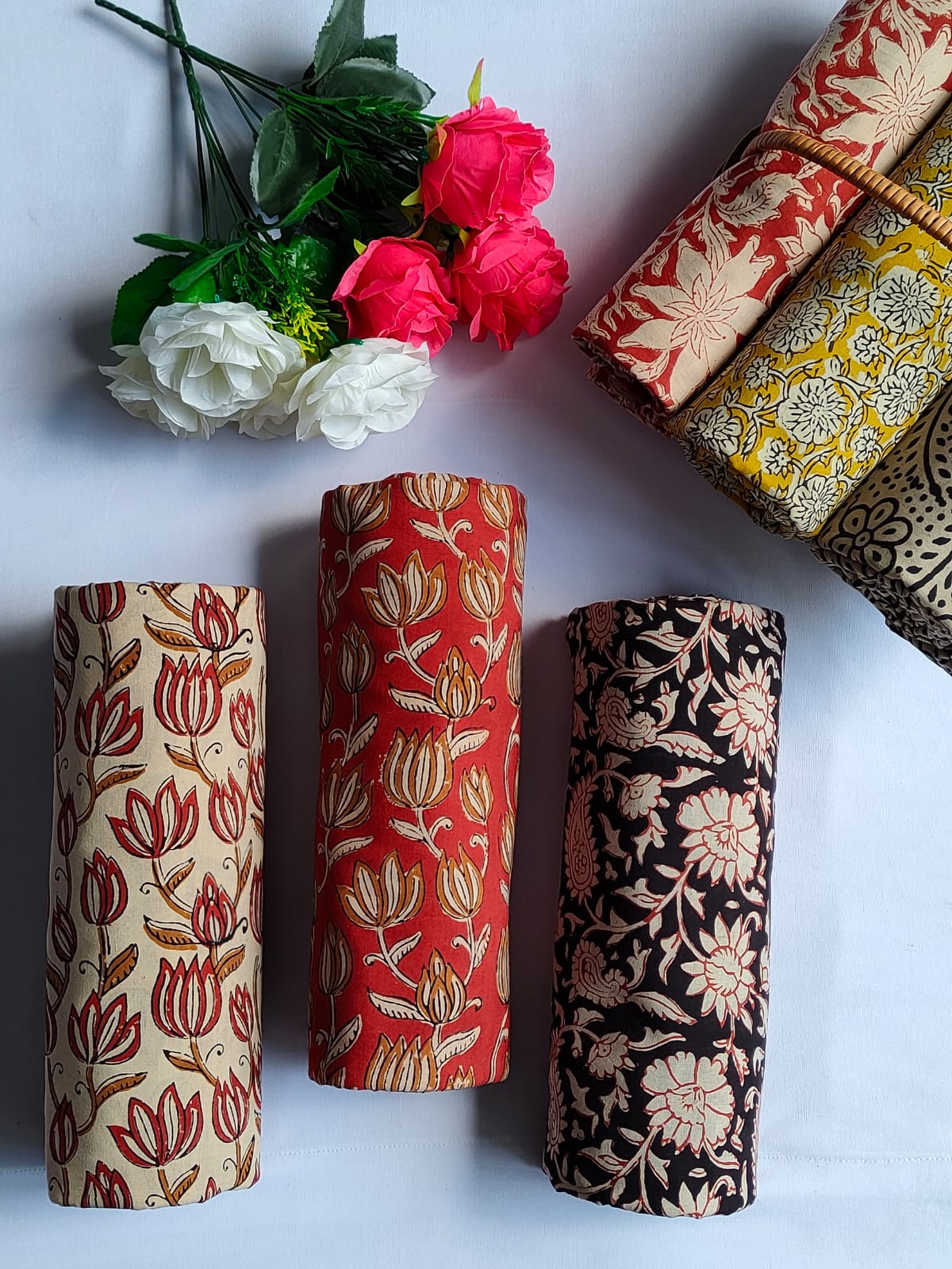


Screen printed cotton fabric is a versatile choice for clothing, accessories, home décor and creative sewing projects. It combines the familiar feel of cotton with the flexibility of printed designs, making it useful for everything from everyday kurtas and summer dresses to tote bags, cushion covers and handmade gifts.
In 2026, printed cotton continues to offer plenty of possibilities for people who enjoy sewing, independent fashion labels, boutique owners and home décor enthusiasts. Floral patterns can bring a fresh look to everyday clothing, geometric prints can create a contemporary style, and traditional Indian-inspired motifs can add character to modern products.
But choosing the right screen printed cotton fabric involves more than picking a design. A lightweight cotton that works beautifully for a summer top may not provide enough structure for a tote bag. A bold, large-scale print may suit a cushion cover but require more planning when used for a fitted garment. The fabric's construction, print quality, colour performance and care requirements all influence the final result.
This guide explores the best uses for screen printed cotton fabric in 2026, how to choose the right material for different projects, and how India's textile traditions continue to inspire contemporary printed designs. Whether you are planning a personal sewing project or developing products for a small business, these ideas can help you make a more informed choice.
What Is Screen Printed Cotton Fabric?
Screen printed cotton fabric is cotton cloth decorated by transferring a design through a prepared screen. Selected areas of the screen allow printing ink or colour paste to pass through, creating the intended pattern on the fabric.
The process can be used for floral motifs, stripes, geometric designs, abstract artwork, decorative borders and many other patterns. Depending on the equipment and production setup, screen printing can be carried out manually or with automated machinery.
Cotton is a popular base for printed textiles because it is available in different weights, weaves and finishes. Lightweight cotton may suit relaxed summer clothing, while firmer cotton can work for bags, organisers and some home furnishings.
It is important to distinguish between the material and the printing method. Cotton describes the fibre, while screen printing describes how the design is applied. Two screen printed cotton fabrics can look similar but feel and perform differently because of variations in yarn quality, weave, weight, printing medium and finishing.
You can explore Jaipur Bazar's Printed Cotton Fabrics collection to compare designs for different sewing and creative projects.
1. Summer Dresses and Everyday Clothing
One of the most popular uses for screen printed cotton fabric is everyday clothing. Cotton is available in lightweight and medium-weight constructions that can suit a wide range of garments, while printed designs offer plenty of scope for personal style.
Summer dresses
Floral, botanical and small repeating prints can work well for summer dresses. They suit simple silhouettes such as A-line dresses, shirt dresses, gathered dresses and relaxed everyday styles.
For a soft, flowing dress, look for a lightweight fabric with a suitable drape. If you prefer a more structured silhouette, a firmer cotton construction may work better.
Consider the size of the print before purchasing. Small florals can create a subtle, balanced look, while large-scale designs can become the main feature of a simple dress.
Kurtas and tunics
Screen printed cotton is also useful for kurtas and tunics. Geometric patterns, delicate florals and contemporary Indian-inspired designs can work for everyday wear, casual outings and coordinated clothing collections.
For a straight kurta, a repeating motif may be relatively easy to position. For garments with panels, gathers or decorative borders, consider how the design will appear across seams.
If you are making several garments from the same fabric, check the usable width and calculate the required quantity before cutting.
Shirts and relaxed tops
Small geometric prints, stripes and abstract patterns can suit casual shirts and tops. Medium-weight cotton may provide enough body for a shirt while remaining comfortable for regular use, depending on its construction.
For a button-down shirt, pay attention to pattern alignment at the front placket, collar and pocket. Directional prints may require additional fabric to ensure that all pieces face the intended way.
Buying tip: Before selecting a printed cotton for clothing, check the fibre composition, fabric weight, width and care instructions. If the garment will be washed regularly, ask about colourfastness and test a sample when possible.
2. Boutique Collections and Independent Fashion Labels
Screen printed cotton can be a useful option for boutique owners and independent designers developing small clothing collections.
A well-planned print can help create a recognisable visual identity across several products. For example, a collection might use a floral print for dresses, a smaller coordinating motif for tops and a geometric pattern for accessories.
Building a coordinated collection
Instead of selecting unrelated prints, consider working with a consistent colour palette. Two or three complementary colours can help different designs feel connected without making every garment identical.
You might combine:
-
Small florals for everyday tops.
-
Larger botanical patterns for dresses.
-
Geometric motifs for shirts and tunics.
-
Coordinating plain cotton for trims, facings or contrast panels.
The result can be a collection with variety while maintaining a clear visual direction.
Choosing prints for your customers
Think about the people who will wear the garments. A boutique focused on everyday clothing may benefit from versatile patterns that pair easily with plain trousers, skirts or denim. A brand with a more expressive style may prefer larger motifs and stronger colour contrasts.
It is also worth considering seasonality, but avoid choosing prints based on trends alone. Designs that suit your customers' preferences and the intended garment are often more useful than patterns selected only because they are fashionable at the moment.
Planning fabric requirements
Before placing a larger order, estimate the fabric needed for each garment and account for pattern matching, shrinkage and cutting waste.
Order a sample when possible. Check how the fabric drapes, how the print looks when worn and whether the colours work with the rest of your collection.
For businesses, the cheapest fabric is not always the best choice. A consistent specification, dependable print quality and suitable finishing can matter more than a small difference in the price per metre.
3. Children's Clothing
Screen printed cotton fabric can be used for a variety of children's garments, including tops, dresses, shorts, shirts, pyjama-style clothing and simple coordinated outfits.
Playful prints offer plenty of design options. Small animals, florals, stars, stripes, geometric motifs and colourful abstract patterns can all work depending on the garment and the intended age group.
Choose comfortable fabric
For everyday children's clothing, consider a cotton construction that feels comfortable against the skin and allows the garment to move easily. The appropriate weight depends on the design, climate and intended use.
Avoid assuming that every cotton fabric is equally soft or suitable for every garment. The yarn, weave, finish and printing process can influence how the material feels.
Consider colour and care
Children's clothes are often washed frequently. Ask the supplier about colourfastness and follow the recommended care instructions.
If you are developing garments for sale, also check the relevant safety requirements for the market in which the products will be sold. Suitability depends on the complete product, including its materials, finishes and construction.
Keep cutting layouts simple
Small repeating prints are often easier to position across garment pieces. Large motifs can also look attractive, but they may require extra fabric to ensure that a prominent design element does not fall awkwardly across a seam.
A sample can help you check the motif scale before committing to a larger quantity.
4. Tote Bags and Reusable Shopping Bags
Screen printed cotton fabric is a popular choice for tote bags and other reusable fabric bags, provided the base cloth has suitable strength and construction.
A printed tote can be practical while also acting as a way to showcase a design. Florals, abstract artwork, typography-style patterns and traditional Indian-inspired motifs can all work well.
Select a suitable base fabric
A lightweight cotton that works for a blouse may be too soft for a bag intended to carry heavy items. Look for a firmer, more substantial construction when the bag needs to hold its shape or support weight.
Depending on the project, you may also need a lining, interfacing or reinforced seams.
Choose the right print scale
Large prints can create a striking visual feature across the main panel of a tote bag. Smaller repeating patterns can be easier to position and may conceal minor everyday marks more effectively, although performance depends on the colours and use.
If the fabric has a border or directional design, plan the cutting layout before ordering.
Think about repeated use
Reusable bags experience friction, folding and frequent handling. Ask about the print's resistance to rubbing and follow the fabric's care guidance.
If you are making bags for sale, test a finished sample under realistic conditions. This is more informative than judging the fabric from appearance alone.
5. Pouches, Cosmetic Bags and Fabric Organisers
Smaller accessories are another excellent use for screen printed cotton fabric. Pouches, pencil cases, cosmetic bags, travel organisers and fabric storage pockets can be made from relatively small fabric pieces.
These projects can also be useful for using leftover cotton from larger sewing projects.
Why printed cotton works for small accessories
The print can become the main decorative feature without requiring complicated construction. A simple pouch made with a distinctive floral or geometric fabric can look finished with just a zip, lining and neat stitching.
For organisers that need to hold their shape, consider using a firmer cotton or adding suitable interfacing.
Coordinate prints and plain fabrics
A printed outer fabric paired with plain cotton lining can create a balanced finish. You can also use a contrasting print for the inner pocket or zip panel.
Jaipur Bazar's Plain Cotton Fabrics collection may be useful when looking for coordinating material.
For business owners, pouches and small organisers can be suitable products for using fabric offcuts. Plan the cutting layout carefully so that the most attractive part of a motif appears on the visible panel.
6. Cushion Covers and Decorative Home Textiles
Printed cotton fabric can bring colour and pattern into a room through cushion covers, table accessories, decorative panels and other soft furnishings.
The right print depends on the atmosphere you want to create. Soft florals can suit a relaxed bedroom, while geometric patterns may complement a more contemporary living space.
Cushion covers
Cushion covers are one of the most straightforward home décor projects for printed cotton. A large-scale motif can make a feature cushion stand out, while small repeating patterns can work well across several cushions.
Consider the size of the cushion and the repeat of the print. A large design may need careful positioning to avoid cutting off a key motif.
For frequently used cushions, select a fabric with suitable strength and ask about colourfastness and cleaning requirements.
Coordinating multiple cushions
You do not need to use the same print on every cushion. Try combining one larger pattern, one smaller print and a plain fabric in a complementary colour.
This approach can create visual variety without making the room feel overcrowded.
Decorative panels and fabric accents
Screen printed cotton can also be used for decorative wall panels, fabric-covered boards and other low-wear applications, provided the fabric and installation method are appropriate.
For curtains or other applications that require specific performance, check the fabric's weight, light exposure, cleaning needs and any relevant safety requirements before choosing it.
Explore All Cotton Fabrics at Jaipur Bazar to compare cotton options for sewing and home projects.
7. Table Runners, Napkins and Dining Accessories
Printed cotton can be used for table runners, placemats, napkins, fabric coasters and decorative dining accessories.
These projects offer a way to introduce pattern without changing an entire room. A printed runner can add colour to a plain table, while matching napkins can help create a coordinated setting.
Choose patterns for the dining space
Small geometric prints and subtle florals can suit everyday dining. Larger, more decorative designs may work well for special occasions or festive settings.
Consider how the print will look when the fabric is folded. A border design, for example, may be more effective along the edges of a table runner than across the centre.
Check care requirements
Dining accessories can be exposed to food, moisture and frequent washing. Choose a fabric that suits the intended care routine and ask about colourfastness.
If you are producing items for sale, test washing and ironing on a sample. The final result depends on both the cotton and the printing and finishing processes.
Do not assume that a printed cotton is suitable for every food-contact application simply because the base fibre is cotton. Check any relevant requirements for the specific product.
8. Quilting, Patchwork and Sewing Crafts
Screen printed cotton fabric can add colour and variety to patchwork, quilting, fabric panels and other sewing crafts.
Small motifs can work well in projects where several fabric pieces appear together. Larger patterns may be better suited to feature panels, borders or the backing of a project.
Combining prints successfully
When mixing several printed fabrics, think about contrast and balance. A combination of large florals, small geometric prints and plain cotton can create interest without making every piece compete for attention.
A shared colour can help connect different patterns.
Check the fabric before cutting
Quilting and patchwork often involve multiple seams, so fabric stability matters. If the cotton is likely to shrink, test and prepare it according to the project requirements before cutting.
Check that the print remains attractive at the scale of the pieces you intend to use.
Use offcuts creatively
Leftover printed cotton can become fabric bookmarks, patchwork panels, small storage pockets or decorative details on larger projects.
This is a practical way to make use of fabric that might otherwise be left unused.
9. Hair Accessories, Scrunchies and Small Fabric Gifts
Small accessories are another use for screen printed cotton. Depending on the fabric's weight and feel, you can make scrunchies, headbands, fabric ties, small gift bags and other decorative items.
Select the right print
Small-scale florals, stripes and repeating motifs can work well for narrow accessories. More prominent designs can be used for wider headbands or fabric bows where there is enough space for the motif to remain visible.
The fabric should be flexible enough for the intended construction. A very stiff print may not gather comfortably, while an extremely lightweight fabric may require a different sewing approach.
Create coordinated gift sets
Printed cotton can be used to make matching accessories, pouches and reusable gift bags. Coordinating pieces can be produced from the same fabric or from prints in a complementary colour palette.
If you are making products for sale, inspect seams and finishing carefully. Small accessories still need to be durable and comfortable for their intended use.
10. Fabric Book Covers, Notebooks and Craft Storage
Printed cotton can also be used for fabric book covers, journal sleeves, craft organisers and storage pockets.
These projects benefit from patterns that remain attractive across small panels. Geometric prints, fine florals and simple repeating motifs are often straightforward to position.
For book covers or organisers that need structure, the cotton may need interfacing or another suitable support material.
If the item will be handled frequently, check how the print responds to rubbing and whether the fabric can be cleaned using the intended method.
These projects can also make practical use of offcuts left over from clothing or home décor sewing.
11. Indian-Inspired Fashion and Contemporary Home Décor
India's textile heritage provides a rich source of inspiration for modern printed cotton designs. Regional printing traditions such as Bagru, Sanganeri and Ajrakh demonstrate how local materials, artisan knowledge and visual preferences can shape distinctive patterns.
Screen printing can reproduce designs inspired by traditional motifs, making them useful for contemporary clothing, accessories and interiors. However, it is important to distinguish between a traditional craft process and a modern print inspired by its appearance.
Bagru-inspired designs
Bagru, in Rajasthan, is associated with hand block printing, earthy colour combinations and repeating motifs. Dabu, a resist-printing technique, is also used within Bagru's textile tradition.
Cotton designs inspired by these visual characteristics can work well for relaxed clothing, cushion covers, bags and decorative accessories.
If you specifically want a textile made through traditional Bagru printing, ask about the production method and origin. A similar colour palette or motif does not establish that the fabric was printed in Bagru.
Browse Jaipur Bazar's Bagru Print Cotton Fabrics collection for designs influenced by this regional style.
Sanganeri-inspired florals
Sanganer, near Jaipur, is known for hand block printed textiles with delicate floral patterns and botanical motifs.
Fine florals and repeating vines can translate well into contemporary clothing and home décor. Screen printed versions may offer consistent placement, while traditional hand block printed versions are produced using carved blocks and manual impressions.
The method should be clearly identified in the product description.
Ajrakh-inspired geometric patterns
Ajrakh is a distinctive resist-printing and dyeing tradition associated with Kutch in Gujarat and a wider regional history. It is known for geometric arrangements, repeated motifs and decorative borders.
Geometric cotton prints inspired by Ajrakh can be used for shirts, bags, cushion covers and statement accessories. But a screen printed geometric pattern is not necessarily traditional Ajrakh.
These distinctions matter because the printing process and regional origin are part of what makes each craft tradition unique.
Supporting traditional textile knowledge
Buyers can help sustain India's textile heritage by choosing accurately described products, asking about artisan production when it matters and avoiding unsupported claims about origin or dyes.
Screen printing and hand block printing both have a place in the contemporary textile market. The important thing is to understand which process you are buying and to choose the fabric that best fits your project.
For shoppers interested in traditional printing styles, explore Jaipur Bazar's Hand Block Print Cotton Fabrics collection.
12. How to Choose Screen Printed Cotton Fabric for Your Project
Before ordering fabric, consider the following factors.
Fabric weight and construction
Choose a weight suited to the finished product. Lightweight cotton may work for tops and accessories, while a firmer construction may be better for bags and organisers.
Weight alone does not determine durability. Weave, yarn quality and finishing also matter.
Print scale and direction
Think about how the motif will appear on the finished item. Large prints may need additional fabric for matching, while directional designs require careful cutting.
Colour performance
Ask about colourfastness if the fabric will be washed or handled frequently. For business orders, test a sample before committing to a larger quantity.
Usable width and fabric quantity
Check the usable width and calculate the fabric required for your pattern. Include allowances for shrinkage, matching motifs and cutting waste where appropriate.
Care instructions
Confirm how the fabric should be washed, dried and ironed. Do not assume that all screen printed cotton fabrics can be cared for in the same way.
Price and supplier information
Compare fabrics with similar specifications. Check composition, weight, width, print quality, finishing, shipping and available quantity instead of relying on price alone.
If you are buying online, review close-up images and ask questions when product details are unclear. A sample can help you judge the fabric's feel and suitability before making a larger purchase.
Caring for Screen Printed Cotton Fabric
Proper care can help maintain the appearance of printed cotton, although the correct method depends on the base fabric and printing system.
-
Read the care instructions provided by the supplier.
-
Test a sample before washing a large quantity or finished product.
-
Use a suitable detergent and avoid harsh chemicals unless the care instructions permit them.
-
Avoid excessive heat during washing, drying and ironing.
-
Turn garments inside out when appropriate to reduce surface abrasion.
-
Test the ironing temperature on an inconspicuous area before pressing directly over the print.
-
For business production, test shrinkage and colour performance before cutting the full order.
These steps are useful starting points, but product-specific guidance should take priority whenever it is available.
Conclusion: Make More of Screen Printed Cotton in 2026
Screen printed cotton fabric offers a wide range of possibilities for clothing, boutique collections, children's wear, tote bags, pouches, home décor, quilting and creative sewing projects.
The best choice depends on what you plan to make. Lightweight cotton may suit summer dresses and tops, while firmer constructions can be more appropriate for bags and organisers. Print scale, fabric width, colour performance and care requirements all influence the final result.
India's textile traditions also offer a rich source of design inspiration. Bagru and Sanganeri printing in Rajasthan and Ajrakh in Gujarat demonstrate the cultural value of regional textile knowledge. Contemporary screen prints can draw inspiration from these styles, but the printing method and origin should always be described accurately.
Before purchasing, check the cotton composition, weight, width, print quality and finishing. Request a sample when the project or order size makes it worthwhile.
Ready to explore printed cotton designs? Browse Jaipur Bazar's Printed Cotton Fabrics for clothing and creative projects, or visit the Hand Block Print Cotton Fabrics collection for designs associated with India's hand-printing traditions. With the right fabric and a clear project plan, you can create useful, attractive products that suit your style and purpose.
Frequently Asked Questions
1. What are the best uses for screen printed cotton fabric?
Screen printed cotton can be used for dresses, kurtas, shirts, children's clothing, tote bags, pouches, cushion covers, table runners, quilting and sewing crafts. The best use depends on the fabric's weight, construction, print quality and care requirements.
2. Is screen printed cotton fabric good for summer clothing?
It can be. Lightweight cotton with a suitable construction may work well for summer tops, dresses and relaxed garments. Check the actual fabric weight, feel and drape rather than assuming every printed cotton is lightweight.
3. Can screen printed cotton be used for tote bags?
Yes, provided the fabric has suitable strength for the intended bag. A firmer cotton construction, reinforced seams and suitable lining may be necessary for bags that carry heavier items.
4. Is screen printed cotton suitable for cushion covers?
Yes. Printed cotton can work well for decorative cushion covers. Choose a fabric with appropriate strength and check the cleaning instructions and colourfastness, especially for cushions that will be used frequently.
5. Can I use screen printed cotton for children's clothes?
Yes, if the fabric, print and finish are suitable for the intended garment and comply with the relevant safety requirements. Check comfort, colour performance and care instructions before sewing or manufacturing children's clothing.
6. What is the difference between screen printed and hand block printed cotton?
Screen printing transfers colour through a prepared screen. Hand block printing uses carved wooden blocks pressed onto the fabric by hand. Both methods can create repeating patterns, but they differ in process and production characteristics.
7. Are Bagru, Sanganeri and Ajrakh designs always hand printed?
No. A contemporary fabric may be inspired by these regional traditions but produced using screen printing or another method. Check the product description and ask about the actual printing process and production location if authenticity matters to you.
8. How much screen printed cotton fabric should I buy?
The required quantity depends on your project, pattern pieces, fabric width, print direction and repeat size. Calculate your pattern requirements and include a suitable allowance for shrinkage, matching motifs and cutting waste.
9. How do I prevent printed cotton fabric from fading?
Follow the supplier's care instructions, use suitable washing methods and avoid excessive heat or harsh chemicals. Because printing systems vary, test a sample before processing a large quantity or finished product.
10. Where can I buy printed cotton fabric online?
You can browse Jaipur Bazar's Printed Cotton Fabrics collection to explore available designs. Review the product specifications, composition, width, care instructions and availability before placing an order.