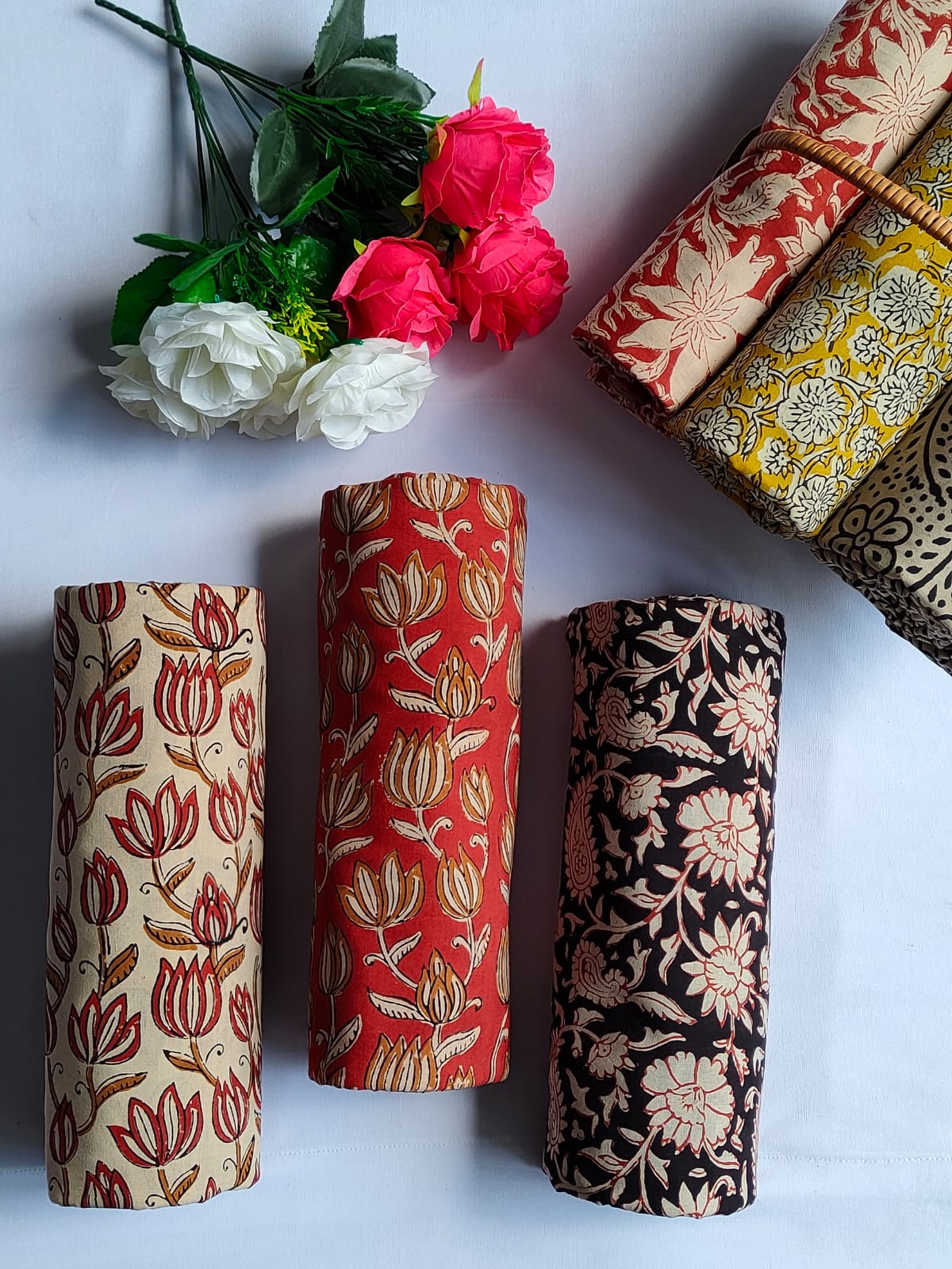


Fashion designers are always looking for fabrics that offer more than just a surface to work with. The right fabric can influence an entire collection, from the colors and silhouettes to the mood of a garment and the way it feels when worn. For designers who value distinctive patterns, natural-looking textures, and a connection to traditional craftsmanship, block printed cotton continues to be an appealing choice.
Block printed cotton brings together the comfort of cotton fabric and the visual character of printed designs. Its patterns can range from small floral motifs and delicate vines to geometric arrangements, bold repeating shapes, and traditional Indian designs. This variety makes it suitable for everything from everyday clothing to statement pieces, accessories, and home textiles.
What makes this fabric particularly interesting is the balance it offers between tradition and contemporary design. A centuries-old printing approach can create fabric for a modern co-ord set, a relaxed summer dress, a contemporary kurta, or a collection of handmade accessories. Designers can draw inspiration from traditional motifs while developing products that reflect their own creative identity.
For independent labels, boutique owners, and emerging designers, block printed cotton also offers opportunities to build recognizable collections without relying entirely on complicated embellishments or expensive surface treatments.
In this guide, we will explore why block printed cotton is a preferred material for many designers, how it influences the design process, where it works best, and what to consider before choosing it for a new collection.
1. What Makes Block Printed Cotton Different?
Block printed cotton is cotton fabric decorated with patterns applied using carved printing blocks. In traditional handblock printing, artisans press carved wooden blocks onto fabric with printing paste or dye to create individual motifs and repeating designs.
Depending on the technique, the process may involve separate blocks for different colors, repeated impressions to build a pattern, and careful alignment to maintain the design across the fabric. Some traditions also use resist-printing methods, in which selected areas are protected from dye to create contrasting patterns.
The result is fabric with a distinctive printed appearance. Depending on the printing method and production process, small variations may occur in the placement, color, or appearance of individual motifs. These variations can contribute to the character of hand-produced textiles, although they should not be treated as definitive proof of authenticity.
Block printed cotton is not limited to one particular look. It can be subtle and minimal, colorful and expressive, or rich in traditional detail. The fabric's final appearance depends on the print design, colors, base cloth, printing technique, and finishing.
Designers appreciate this range because it allows them to select a textile that supports the intended identity of a product rather than forcing every collection into the same aesthetic.
To explore different designs, browse hand block print cotton fabrics at Jaipur Bazar.
2. It Gives Designers More Creative Freedom
One of the strongest reasons designers choose block printed cotton is the variety of visual directions it offers.
A plain fabric can be an excellent starting point, but a printed fabric already introduces a pattern, color combination, and visual rhythm. Designers can use these elements as the foundation of a garment or product instead of developing every detail from scratch.
For example, a small floral print might inspire a relaxed summer dress, while a larger geometric pattern could become the central feature of an oversized shirt. A delicate repeating motif might work well for a coordinated kurta and trouser set, whereas a contrasting print could create an interesting statement sleeve or panel.
This flexibility allows designers to experiment with different styles using the same broad fabric category.
Working with print scale
Print scale is an important design consideration. Small motifs often create a quieter, more uniform appearance, while larger motifs attract attention and can become the focal point of a garment.
A designer developing a collection might choose:
-
Small floral prints for everyday shirts, blouses, and children's clothing.
-
Medium repeating motifs for kurtas, tunics, and relaxed dresses.
-
Larger patterns for statement garments, kaftans, and selected accessories.
-
Geometric prints for contemporary silhouettes and coordinated separates.
-
Border-style designs for hems, sleeves, or other areas where placement matters.
These are starting points rather than fixed rules. The final effect depends on the garment's shape, the pattern's layout, and how the fabric is cut.
Building a distinctive design identity
Designers can also create a recognizable visual identity by working with related print styles. A label might consistently use indigo tones, botanical motifs, or small geometric patterns across different products.
The designs do not need to be identical. Instead, a shared color palette or visual theme can connect separate garments into a collection that feels intentional.
This is particularly valuable for independent brands that want their products to look connected without producing a uniform range of designs.
3. Traditional Craftsmanship Adds a Story to the Fabric
A fabric can be visually attractive, but its making can also influence how designers present it to customers.
Traditional Indian block printing has developed through regional craft practices, with different areas known for particular printing styles, patterns, and approaches to color. These textile traditions provide a rich source of inspiration for contemporary fashion and product design.
Bagru and Sanganer, for example, are well-known block-printing traditions associated with Rajasthan. Their designs and printing practices have distinct histories and characteristics. Designers can study these traditions to understand how motifs, layouts, and colors have been used in textiles over time.
For a modern clothing label, this connection offers more than decorative appeal. It can help inform a collection's visual direction, product storytelling, and choice of details.
A designer might use traditional floral motifs in a contemporary co-ord set, combine an indigo-inspired palette with modern tailoring, or develop accessories around repeating geometric patterns.
The key is to approach traditional designs with care. If a product is described as handcrafted, naturally dyed, or produced in a particular region, those claims should reflect how that specific fabric was actually made. Not every block-inspired print is hand-printed, and not every handblock-printed textile uses natural dyes.
Accurate descriptions help designers communicate the fabric's qualities without making unsupported claims.
Turning craft inspiration into contemporary products
Traditional textile patterns can work particularly well when paired with simple silhouettes. A printed fabric already has visual detail, so a clean cut, thoughtful neckline, or uncomplicated sleeve can allow the print to remain the main feature.
This approach can also help a designer create products that feel contemporary while respecting the visual heritage behind the textile.
Learn more about the available styles in the Bagru print cotton fabric collection.
4. Cotton Offers Practical Comfort for Everyday Clothing
Designers must think about appearance, but they also need to consider how a garment will feel and function in everyday use.
Cotton is widely used in clothing because it can feel comfortable against the skin and is available in many fabric weights, constructions, and finishes. Its suitability for a particular garment depends on the quality of the cotton, yarn, weave, finishing, and intended use.
When block printing is combined with an appropriate cotton base, designers can develop products for a variety of everyday settings.
Examples include:
-
Casual shirts and relaxed tops.
-
Kurtas and tunics.
-
Summer dresses and skirts.
-
Comfortable co-ord sets.
-
Children's everyday clothing.
-
Lightweight scarves and selected accessories.
The choice of base fabric matters as much as the print. A lightweight cotton may suit a loose summer silhouette, while a firmer cotton may be more appropriate for a shirt with structure or a bag that needs to hold its shape.
Designers should assess the actual fabric rather than assume that every cotton base has the same drape, softness, opacity, or durability.
Choosing cotton for the intended garment
A lightweight printed cotton can fall softly around the body, depending on its construction and finish. A more closely woven cotton may offer greater structure for tailored or semi-tailored pieces.
Before finalizing a design, it is worth checking the fabric's weight, feel, drape, opacity, and response to washing. These factors influence both the finished appearance and the customer's experience.
For a closer look at available base fabrics, explore printed cotton fabrics and compare them with the requirements of your planned product.
5. It Works Across Different Fashion Categories
Some fabrics are selected for a narrow purpose. Block printed cotton, however, can support several different product categories, provided the print and base cloth suit the intended use.
This makes it useful for designers who want to explore different product types while maintaining a coherent creative direction.
Women's clothing
Block printed cotton is often used for dresses, kurtas, tunics, skirts, blouses, and coordinated sets. Floral prints can create a soft, relaxed look, while geometric patterns can give a garment a more structured visual character.
For a capsule collection, a designer could select three related prints and use them across different silhouettes. One print might appear on a dress, another on a shirt, and a third on a pair of relaxed trousers.
The result is variety within a shared design language.
Men's clothing
Printed cotton can also work well in men's shirts, relaxed overshirts, casual kurtas, and resort-inspired clothing.
Smaller motifs, restrained color combinations, and balanced patterns may suit everyday pieces, while larger designs can create more expressive statement garments.
For oversized shirts and contemporary silhouettes, designers should consider how the pattern behaves across the chest, back, sleeves, and collar. A visually attractive fabric may need careful cutting to ensure the finished garment looks balanced.
Children's clothing
Cotton prints can be suitable for children's garments when the fabric's construction, finish, and care requirements match the intended use.
Small florals, playful repeating patterns, and colorful motifs can be used for dresses, shirts, shorts, and other everyday clothing. Designers should pay attention to softness, comfort, seam placement, and practical care instructions.
The choice should be based on the fabric's actual properties rather than the print alone.
Contemporary fusion wear
Block printed cotton can also be used in fusion clothing that combines traditional Indian textile aesthetics with modern cuts.
Examples include printed jackets, contemporary tunics, coordinated separates, shirt dresses, and relaxed matching sets. A designer can keep the silhouette modern while allowing the print to introduce a traditional visual element.
This makes the fabric relevant to labels that want to explore Indian textile influences without restricting themselves to conventional garment shapes.
6. Block Printed Cotton Helps Create Cohesive Collections
A successful fashion collection usually feels connected. Even when individual pieces have different silhouettes, they often share a color story, pattern language, mood, or intended customer.
Block printed cotton can make this process easier because the print itself provides a starting point for coordinating colors and products.
Imagine a small collection built around earthy neutrals, muted reds, indigo tones, and botanical motifs. A designer could use these elements to develop several products:
-
A printed everyday dress.
-
A plain cotton top paired with a printed skirt.
-
A coordinating shirt and trouser set.
-
A simple tote bag made from a matching print.
-
A cushion cover or textile accessory that extends the collection into home products.
The products are different, but the shared colors and motifs help connect them.
Mixing printed and plain fabrics
A collection does not need to use prints on every product. In fact, combining printed and plain cotton can make a range feel more balanced.
A printed top paired with plain trousers can create an easy everyday outfit. A plain garment with printed cuffs, pockets, or a contrasting panel can offer a subtler way to use pattern.
Designers can explore plain cotton fabrics alongside printed options to build combinations with different levels of visual detail.
The important point is to give each fabric a clear role. A bold print may work best as the main feature, while a plain fabric can provide contrast and keep the design from feeling too busy.
7. It Supports Small Labels and Independent Designers
Independent designers often work with limited budgets, smaller teams, and shorter product-development timelines. They need materials that offer creative possibilities without making every new product unnecessarily complicated.
Block printed cotton can be useful in this setting because the fabric already carries a strong visual identity. Designers can focus on developing silhouettes, fits, finishing details, and product combinations around the print.
This does not mean that every printed cotton product is inexpensive to produce. The final cost depends on the fabric price, order quantity, cutting efficiency, sewing complexity, wastage, finishing, and other production requirements.
However, choosing a suitable print can help a small label create products with a distinctive appearance without adding embroidery or extensive surface embellishment to every piece.
Start with a focused product range
A new clothing label does not need dozens of products to establish its identity.
It might begin with a small collection of shirts, dresses, and accessories built around a few carefully chosen prints. Once customer response becomes clearer, the label can expand into additional silhouettes or color combinations.
This approach can help designers evaluate which prints and product categories attract interest before committing to a larger range.
Use samples before placing larger orders
Before purchasing fabric for production, designers should check whether the selected print works with their patterns and construction methods.
A sample garment can reveal problems that are difficult to spot in a fabric photograph. The print might appear too large on a narrow sleeve, the color combination may look different under indoor lighting, or the fabric may not drape as expected.
Sampling also helps estimate fabric consumption and identify potential cutting waste.
These practical checks are especially useful for small businesses where every production decision affects the overall budget.
8. The Prints Offer Plenty of Options for Home Décor
Block printed cotton is not limited to clothing. Designers working in home textiles can use printed cotton to create products that bring color and pattern into everyday spaces.
Depending on the fabric's weight, construction, and performance, possible applications include cushion covers, table linen, fabric storage baskets, decorative panels, and selected window treatments.
The same print can produce a different effect depending on the scale of the finished product. A small repeating motif may look subtle across a cushion cover, while a large floral pattern can become a stronger focal point.
Cushion covers and decorative textiles
Cushion covers are a useful way to introduce printed cotton into a room without changing the entire interior.
Designers can combine several prints in a coordinated color palette or pair a patterned cover with plain cushions. This creates contrast while maintaining a consistent look.
Before using a fabric for cushions that will receive frequent use, check its strength, colorfastness, washing requirements, and suitability for the intended application.
Table linen and soft furnishings
Depending on its construction and care requirements, block printed cotton can also be considered for table runners, placemats, napkins, and other soft furnishings.
For these products, practical factors such as stain removal, repeated washing, seam durability, and color retention become particularly important.
A fabric that looks beautiful in a photograph may not be the best option for a product that requires frequent cleaning. Designers should test the fabric under realistic care conditions before selecting it for a commercial range.
For further inspiration, Jaipur Bazar also has a range of cotton fabric options that can be explored for different creative applications.
9. Accessories Make the Most of Smaller Fabric Pieces
Designers often have leftover fabric after cutting garments. When the print and remaining fabric dimensions allow, these pieces can be used to develop smaller products.
This can help make more efficient use of suitable offcuts, although the amount of usable leftover fabric depends on the garment pattern, print placement, and cutting layout.
Possible products include:
-
Tote bags and small shopping bags.
-
Pouches and cosmetic bags.
-
Scrunchies and headbands.
-
Fabric-covered notebooks.
-
Drawstring bags.
-
Small gift bags.
-
Patchwork accessories.
For example, a clothing label that sells printed cotton dresses might also offer matching scrunchies or small pouches. These accessories can extend the collection's visual identity and provide additional product options.
Think beyond matching sets
Accessories do not always need to use exactly the same print as the main garment. A complementary design or a coordinated plain fabric can create a more interesting combination.
A designer might pair a floral dress with a solid-color pouch or combine two related prints in a tote bag.
This is also a useful opportunity to experiment with new product categories without immediately developing a complete clothing range.
10. A Wide Range of Prints Makes Seasonal Design Easier
Designers regularly adjust their collections to suit different seasons, occasions, and customer preferences. Block printed cotton offers enough variety to support different visual directions throughout the year.
For warmer weather, a designer might select lighter-looking patterns, fresh color combinations, or botanical motifs. For festive collections, richer colors and more intricate patterns may be appropriate. Minimal geometric prints can work for everyday clothing, while expressive florals may suit occasion-focused or resort-inspired ranges.
These are creative choices rather than strict seasonal rules. The same print can work in different settings depending on the garment, color palette, styling, and intended customer.
Build a seasonal color story
Instead of choosing every print independently, designers can begin with a color story.
For example, a collection could be based on indigo and white, warm terracotta shades, earthy greens, or soft neutral tones. The selected prints should work with these colors and with one another.
A consistent palette helps when creating product photography, styling outfits, and presenting the collection on an online store.
It can also make it easier for customers to combine different products from the same range.
Consider the end customer
Seasonal planning should reflect the intended audience rather than relying only on fashion trends.
A brand focused on everyday basics may benefit from restrained patterns and easy-to-style colors. A boutique specializing in expressive clothing may choose more distinctive prints.
The fabric should support the brand's customer, price point, product purpose, and overall design direction.
11. It Creates Opportunities for Thoughtful Color and Pattern Combinations
Color and pattern influence how customers perceive a garment. A small change in color can make the same motif feel softer, more dramatic, or more contemporary.
Block printed cotton gives designers several ways to explore these differences.
A floral motif in muted shades may create a relaxed appearance, while the same general style in strong contrasting colors can feel more energetic. A repeating geometric pattern may look understated in neutral tones but become a statement feature when the contrast is stronger.
Balance pattern with silhouette
The shape of the garment affects how a print appears.
A large motif may be visually striking on a loose dress but require careful placement on a fitted bodice. A small repeating design may work across a full garment without dominating its silhouette.
Designers should also consider where seams, darts, pockets, and garment panels will fall. These details can interrupt a repeating pattern or create useful opportunities for contrast.
Decide how much of the print to show
A print does not need to cover the entire garment to make an impact.
Designers can use it on sleeves, collars, pockets, yokes, hems, or selected panels. This can be especially effective when working with a particularly bold fabric.
Combining printed and plain sections also provides more options for creating garments at different price points and levels of visual complexity.
12. The Fabric Encourages a More Considered Design Process
Choosing a printed textile involves more than deciding whether its colors and motifs look attractive. The designer must think about the full journey from fabric selection to finished product.
A considered process helps reduce avoidable mistakes and improves the likelihood that the final garment will match the original design idea.
Step 1: Define the product
Start by deciding what the fabric will become. A shirt, dress, tote bag, and cushion cover have different requirements for weight, structure, drape, and durability.
The intended product should guide the fabric selection.
Step 2: Evaluate the base cloth
Check the fabric's feel, weave, thickness, opacity, and drape. If possible, inspect a physical sample rather than relying exclusively on an online photograph.
Confirm whether the fabric needs prewashing or other preparation before cutting.
Step 3: Review the print layout
Look at the motif size, direction, repeat, and spacing. Decide whether the design works across the full garment or is better suited to selected panels.
For directional prints or designs with prominent motifs, consider how the pattern will align across seams.
Step 4: Test the fabric
Wash and dry a sample according to the proposed care method. Check for shrinkage, color transfer, changes in texture, and other issues that may affect the finished product.
The appropriate test depends on the fabric's composition, dyeing and printing methods, and intended use.
Step 5: Make a sample garment
A sample allows the designer to evaluate fit, drape, pattern placement, sewing performance, and finishing.
This step is particularly important when using a new fabric or developing a design with several panels.
Step 6: Calculate fabric consumption
Estimate how much fabric is required for each product, including allowances for pattern matching, cutting waste, and possible defects.
This helps establish a more realistic production cost and reduces the risk of ordering too little fabric.
Following these steps makes fabric selection a practical part of design development rather than a decision based only on appearance.
13. Print Placement Can Turn a Simple Garment into a Signature Piece
A strong design does not always require a complicated silhouette. Sometimes, the way a print is positioned can make an ordinary garment feel distinctive.
Designers can use print placement to direct attention, introduce contrast, or create visual balance.
For example, a shirt with a simple shape may become more recognizable through a carefully selected print. A plain dress can gain character from a printed yoke or hem panel. A coordinated outfit can use different prints from the same color family to create a subtle contrast between the top and bottom.
Plan for the cutting layout
Unlike a plain fabric, a printed fabric may require extra thought during cutting. The placement of motifs can affect the final appearance, particularly when a design contains large flowers, recognizable shapes, or a directional pattern.
Designers should decide whether the pattern needs to match across the front opening, side seams, or other visible joins.
Pattern matching can increase fabric consumption, so it should be considered when calculating production costs.
Use print placement to build brand recognition
A clothing label might develop a signature approach to using prints, such as placing contrasting fabric on cuffs or using a particular motif for collars and pockets.
Repeated design decisions like these can help create a recognizable style across different collections.
The goal is not to make every garment look the same. It is to develop a consistent point of view that customers can associate with the brand.
14. What Designers Should Know Before Choosing Block Printed Cotton
Although block printed cotton offers many design possibilities, it is not automatically the right fabric for every product.
Designers should evaluate the material against the practical needs of the finished item.
Printing method and consistency
Handblock printing and machine-produced prints can create different visual effects and production characteristics. Designers should confirm which method was used if the printing process is important to the product's identity.
For commercial production, ask about acceptable variation between pieces, repeat consistency, and color matching.
Colorfastness and care
Printing and dyeing methods vary, so colorfastness should not be assumed. Testing can help identify whether colors may bleed or fade under the intended washing conditions.
Provide care instructions based on the actual fabric and any relevant test results.
Shrinkage and prewashing
Cotton fabrics may shrink during washing, depending on their construction and finishing. A designer should test the fabric and determine whether prewashing or another preparation step is needed before cutting.
This is especially important when developing garments that must retain specific measurements.
Fabric weight and opacity
Not every printed cotton is suitable for every garment. Lightweight material may need lining for certain applications, while heavier fabric may not provide the desired movement for a flowing dress.
The base cloth should match the intended silhouette and level of coverage.
Production availability
A print that works beautifully for a sample may not be available in sufficient quantities for a larger order. Designers should confirm available stock, minimum order requirements, repeat availability, and lead times before finalizing production plans.
If the collection depends on matching fabrics across multiple products, confirm that enough material is available to support the complete range.
Accurate product descriptions
If a brand markets fabric as hand-printed, naturally dyed, or made using a specific regional tradition, those details should be verified.
Clear product descriptions help customers understand what they are buying and support long-term trust in the brand.
15. How Block Printed Cotton Fits into a Modern Fabric Collection
For designers developing a fabric collection, block printed cotton can play several roles.
It may serve as the central textile for a seasonal range, provide contrast to plain fabrics, or become a signature material used across multiple product categories.
A practical way to build a collection is to divide the fabrics into three groups.
Core prints: These are the patterns that define the collection's identity. They might include the most recognizable motifs or the colors most closely associated with the brand.
Supporting prints: These offer variation while remaining connected to the main collection. They might use smaller motifs, different arrangements, or complementary colors.
Plain coordinating fabrics: These provide balance and can be used for trousers, linings where suitable, contrasting panels, and simpler garments.
This structure helps designers develop a collection with variety without making every product compete for attention.
It can also make product planning easier. The core prints may be used for signature products, supporting prints can introduce additional options, and coordinating fabrics can complete outfits.
For designers who want to explore several cotton bases, comparing the available cotton cambric fabrics with printed cotton options can help identify materials suitable for different silhouettes. The final selection should depend on the actual fabric construction and the requirements of the product.
16. Is Block Printed Cotton a Good Choice for Sustainable Design?
Sustainability is an important consideration for many designers, but it requires looking at more than the fabric's appearance or printing method.
Cotton is a natural fibre, yet the overall environmental impact of a finished textile depends on several factors, including agricultural practices, water and energy use, processing chemicals, dyeing and printing methods, transport, product lifespan, and end-of-life handling.
Handblock printing may involve skilled manual work, but it should not automatically be described as environmentally friendly without information about the specific production process.
Similarly, not all cotton is organic, and not all printed cotton uses natural dyes.
Design for longer use
One practical way designers can approach responsible product development is to create items customers are likely to wear or use repeatedly.
Thoughtful silhouettes, reliable construction, useful colors, and clear care instructions can all contribute to a product's longevity.
Designers can also consider whether the fabric can be used efficiently, whether suitable offcuts can become accessories, and whether the finished item can be repaired when needed.
Make claims that can be supported
If a brand wants to highlight organic cotton, certified materials, natural dyes, or a particular artisan production method, it should obtain appropriate documentation or reliable supplier information.
Specific and verifiable descriptions are more useful than broad claims about sustainability.
For designers, responsible sourcing begins with asking questions, understanding the fabric's origin where possible, and choosing materials that suit both the product and the brand's stated values.
17. How to Choose the Right Block Printed Cotton for Your Brand
If you are selecting block printed cotton for an upcoming collection, use the following checklist to compare options before placing an order.
Start with the product category. Decide whether you are making shirts, dresses, kurtas, children's clothing, accessories, or home textiles.
Choose the visual direction. Consider whether your collection calls for floral, geometric, botanical, abstract, or traditional motifs.
Review the colors. Check whether the fabric fits your intended palette and coordinates with the other materials in the collection.
Check the base cloth. Evaluate weight, construction, drape, opacity, feel, and finishing.
Request or inspect a sample. Whenever possible, review the fabric physically and test it under realistic conditions.
Confirm the printing method. If handblock printing or a regional craft tradition is central to your product, ask the supplier for accurate information.
Check available quantities. Confirm whether enough fabric is available for sampling, production, and any planned repeat orders.
Estimate production costs. Include fabric consumption, cutting waste, pattern matching, sewing, finishing, and packaging.
Plan care instructions. Make sure the fabric can be cared for in a way that suits the intended customer and product.
Review the finished sample. Assess how the print appears on the garment, not just on the fabric roll.
A few checks before ordering can help prevent costly problems later in the production process.
18. Why Jaipur Bazar Is Worth Exploring for Printed Cotton
For designers, small clothing labels, boutique owners, and sewing enthusiasts, finding suitable fabric is an important part of turning a design idea into a finished product.
Jaipur Bazar offers a range of cotton fabric collections that can be explored for different creative projects. Designers can compare printed and plain options according to their intended products, preferred colors, and visual direction.
The best approach is to start with the requirements of your project. If the design depends on traditional-looking motifs, explore the handblock and Bagru print collections. If you need a coordinating base for contrast panels or simpler garments, review the plain cotton range as well.
Before committing to a production quantity, check the fabric details, available stock, care requirements, and suitability for your intended application.
Explore these collections:
Comparing several fabrics before choosing one can help you find the right balance between visual appeal, construction requirements, and production needs.
Frequently Asked Questions
1. Why do fashion designers choose block printed cotton?
Designers often choose block printed cotton for its distinctive patterns, range of colors, and versatility across clothing, accessories, and home textiles. It can provide a strong visual identity while allowing designers to experiment with different silhouettes and product categories.
2. Is block printed cotton suitable for modern fashion?
Yes. Block printed cotton can be used for contemporary shirts, dresses, co-ord sets, oversized tops, tunics, and fusion wear. The overall look depends on the print, color palette, fabric construction, and garment design.
3. What types of clothing can be made from block printed cotton?
Depending on the fabric's weight and construction, it can be used for kurtas, tunics, shirts, dresses, skirts, blouses, children's clothing, and relaxed matching sets. Heavier or more structured cotton may suit different applications from lightweight cotton.
4. What is the difference between handblock-printed and machine-printed cotton?
Handblock printing uses carved blocks to apply patterns to fabric, usually through repeated manual impressions. Machine printing uses mechanical or digital processes to transfer designs. The production methods, visual characteristics, consistency, and possible variations differ.
5. Does every block printed cotton fabric use natural dyes?
No. The dyes and printing materials vary by producer and technique. Designers who require natural dyes should confirm the specific dyeing process with their supplier rather than assuming that all block printed cotton is naturally dyed.
6. Is block printed cotton suitable for small clothing brands?
It can be a useful option for small brands because a distinctive print can help establish a collection's visual identity. Designers should still assess fabric costs, minimum order quantities, stock availability, cutting requirements, and production economics.
7. Can block printed cotton be used for home décor?
Yes, when the base cloth is suitable for the intended application. It may be used for cushion covers, table linen, decorative accessories, and selected soft furnishings. Durability, colorfastness, washing requirements, and fabric weight should be checked before production.
8. How should designers care for block printed cotton?
Care instructions depend on the fabric, printing method, dyes, and finishing. Test a sample first and follow the supplier's guidance. Gentle washing may be appropriate for some fabrics, but it should not be assumed to suit every printed textile.
9. How can designers check the quality of block printed cotton?
Review the base fabric's construction, feel, weight, print clarity, color consistency, and finishing. Check for defects and ask about shrinkage, colorfastness, and care requirements. A physical sample and a wash test can provide useful information before a larger order.
10. How can designers combine block printed and plain cotton?
Designers can use plain cotton for trousers, contrasting panels, cuffs, collars, and other sections that balance a printed garment. Coordinating the colors and fabric properties helps create a cohesive collection without using the same print on every product.
Conclusion: A Fabric That Connects Craft and Contemporary Design
Block printed cotton continues to appeal to designers because it offers a combination of visual character, creative flexibility, and practical applications. Its patterns can inspire an entire collection, introduce a distinctive feature to a simple silhouette, or connect clothing with accessories and home textiles.
For independent labels and established designers alike, the fabric creates opportunities to experiment with color, motif, print placement, and product development. It can also provide a way to draw inspiration from traditional Indian textile practices while creating products for contemporary customers.
However, good design depends on more than choosing an attractive print. The base cloth must suit the garment, the pattern should work with the cutting layout, and the fabric should meet the product's requirements for comfort, care, and durability.
When designers consider these factors together, block printed cotton becomes more than a decorative material. It becomes a useful starting point for developing thoughtful, recognizable, and commercially practical collections.
If you are planning your next clothing or creative project, explore the Jaipur Bazar hand block print cotton collection and compare the available patterns with your design requirements.