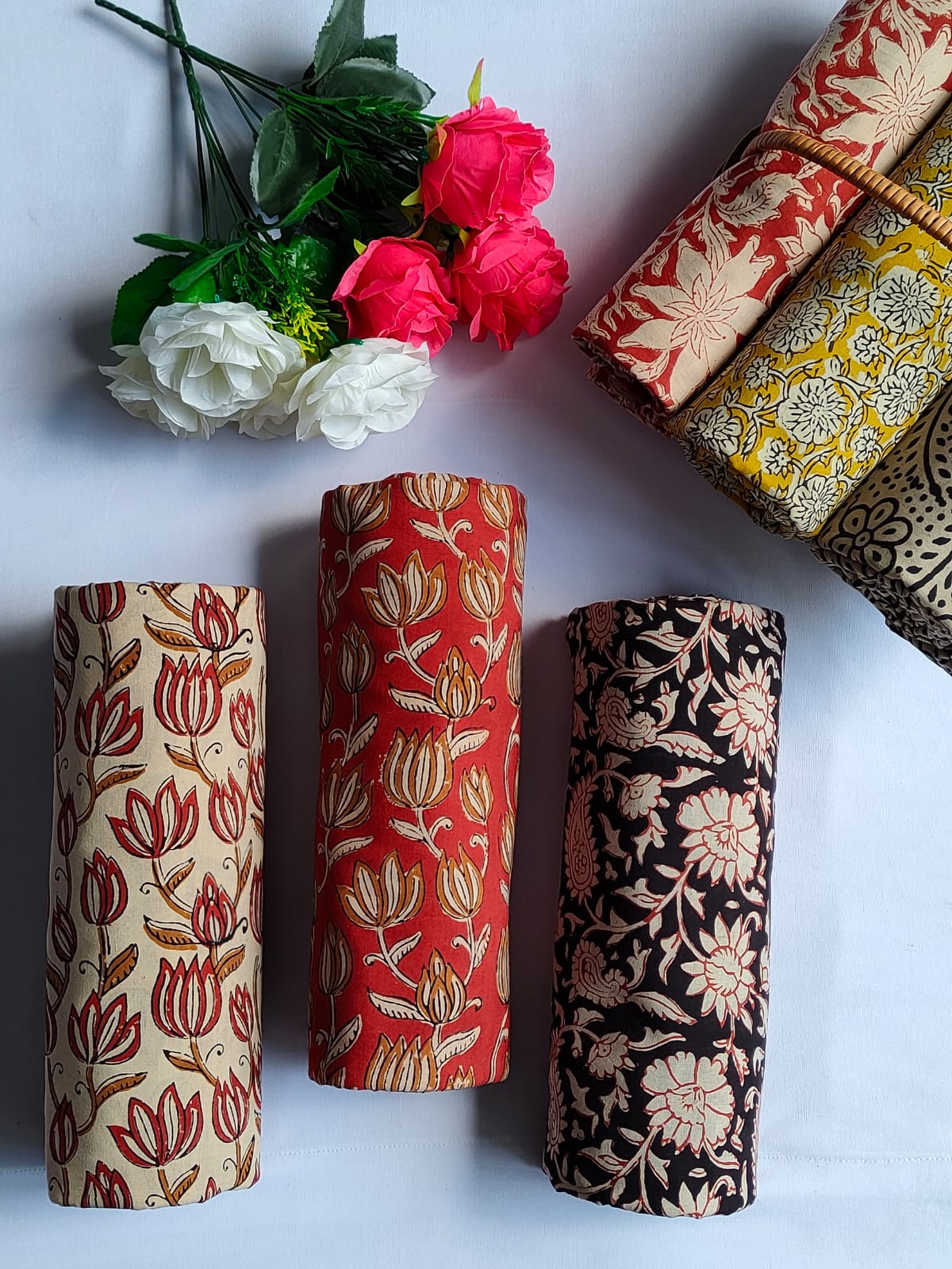


Floral printed cotton fabric has a timeless appeal. It can make a simple dress look more interesting, add color to a living room, or turn a small piece of fabric into a useful handmade accessory. From delicate flowers and leafy botanical patterns to bold blooms and traditional Indian-inspired prints, floral cotton offers countless possibilities for fashion and home décor.
One of the reasons this fabric remains popular is its versatility. The same floral design can be used in different ways depending on the fabric's weight, color combination, print scale, and construction. A small floral pattern might suit an everyday blouse, while a larger botanical design could become the main feature of a cushion cover or a summer dress.
Floral printed cotton is also a practical option for people who enjoy sewing, designing clothes, decorating their homes, or creating handmade products. It is available in a variety of cotton constructions, so you can select a fabric that suits the project rather than choosing based on appearance alone.
However, not every floral cotton fabric is suitable for every purpose. Lightweight cotton may work well for loose clothing, while a firmer fabric may be more appropriate for bags and certain home accessories. Washing requirements, colorfastness, opacity, and durability also matter when selecting material.
In this guide, we will explore the best uses for floral printed cotton fabric in fashion and home décor, share creative project ideas, and explain how to choose and care for the right fabric.
1. Why Floral Printed Cotton Is a Popular Choice
Floral printed cotton combines the familiar qualities of cotton fabric with the visual interest of printed patterns. This makes it useful for both everyday products and more decorative projects.
A wide range of designs
Floral cotton is available in many different styles, including:
-
Small ditsy florals with tiny repeating flowers.
-
Large botanical prints with prominent leaves and blooms.
-
Vintage-inspired floral patterns.
-
Tropical designs with oversized foliage.
-
Traditional Indian-inspired floral motifs.
-
Minimal florals in neutral colors.
-
Bright, contrasting prints for statement pieces.
Each style creates a different effect. Small flowers can look subtle and delicate, while oversized blooms can make a garment or decorative item stand out.
Suitable for different projects
Depending on the fabric's weight and construction, floral cotton can be used for dresses, shirts, kurtas, skirts, tote bags, cushion covers, table runners, curtains, pouches, and other handmade products.
This variety makes it useful for people who enjoy working with fabric across different creative projects.
Easy to coordinate with plain cotton
Floral fabric does not have to be used on its own. It can be paired with plain cotton to create contrast and balance.
For example, a floral top can be combined with plain trousers, while a printed cushion cover can be paired with solid-color cushions. This approach allows you to introduce patterns without making the overall design feel too busy.
Explore printed cotton fabrics at Jaipur Bazar to discover different designs for clothing and creative projects.
2. Best Uses for Floral Printed Cotton in Fashion
Fashion is one of the most popular applications for floral cotton. The print can become the main feature of an outfit or add detail to selected parts of a garment.
The most suitable fabric depends on the garment's shape, intended use, and construction. Always check the fabric's weight, drape, opacity, and care requirements before selecting it for a particular design.
2.1 Summer dresses
Floral printed cotton is a natural option to consider for casual dresses, shirt dresses, gathered dresses, and relaxed summer styles.
A lightweight cotton may suit a loose silhouette, while a more substantial cotton can offer additional structure. The best choice depends on the dress pattern and the fabric's actual properties.
Small floral prints can create a soft everyday appearance. Larger flowers can give a simple dress a more expressive look.
Design idea: Make a knee-length dress with a small floral print, a simple neckline, and short sleeves. Pair it with plain accessories so the fabric remains the main feature.
For a more dramatic look, choose a large botanical pattern and a clean silhouette that gives the print enough space.
2.2 Kurtas and tunics
Floral cotton works well for many kurta and tunic styles when the fabric is suitable for the intended garment.
Traditional-looking floral prints can give a kurta a familiar Indian textile character, while contemporary botanical patterns can create a more modern appearance.
You can use floral fabric throughout the garment or introduce it in selected areas such as sleeves, cuffs, yokes, and borders.
Design idea: Pair a floral cotton kurta with plain trousers in a color taken from the print. This creates a coordinated outfit without requiring an exact matching set.
If you prefer traditional print styles, browse hand block print cotton fabrics.
2.3 Shirts and blouses
Floral printed cotton can be used for casual shirts, blouses, relaxed tops, and oversized shirt styles.
Small repeating motifs may suit everyday clothing, while larger floral patterns can create a statement piece. The choice depends on the intended look and how the print sits across the garment.
For shirts with collars, button plackets, and pockets, consider the pattern placement before cutting. A large flower may look attractive on the main body but could be interrupted by a pocket or seam.
Design idea: Sew a relaxed button-down shirt in floral cotton and pair it with plain jeans or trousers. For a subtler design, use the floral print only on the collar and cuffs.
2.4 Skirts and coordinated outfits
Floral cotton can be used for gathered skirts, straight skirts, and relaxed separates, depending on its weight and construction.
A floral skirt paired with a plain top is an easy way to introduce a pattern into an everyday wardrobe.
The same print can also be used for a coordinated outfit. For example, a printed top and skirt can create a matching set, while a floral shirt paired with plain trousers offers a more understated combination.
When making coordinated outfits, consider how the print will look across the different garments. You may want to use the same fabric throughout or select a plain cotton that complements the main design.
2.5 Children's clothing
Floral cotton can be suitable for children's dresses, shirts, skirts, and other everyday garments when the fabric's construction, finish, and care requirements match the intended use.
Small flowers can create a delicate appearance, while brighter colors and larger motifs can look playful.
Comfort and practical care should guide the selection. Check the fabric's softness, opacity, seam requirements, and suitability for regular washing.
2.6 Scarves and fabric accessories
Depending on its weight and feel, floral cotton can be used for selected scarves, headbands, scrunchies, fabric belts, and other accessories.
Smaller pieces of fabric are especially useful for accessories because the print can remain visible on a compact surface.
A floral scrunchie can coordinate with a dress, while a headband can add color to a simple outfit. You can also use contrasting floral and plain fabrics to create more distinctive designs.
2.7 Jackets and layering pieces
A firmer floral cotton may work for selected lightweight jackets, overshirts, and layering pieces.
For these garments, check whether the fabric has enough body to support the pattern. Some cotton fabrics are soft and drapey, while others are more structured.
A floral overshirt can be paired with plain clothing to create contrast. For a more understated style, use the print on selected panels rather than throughout the garment.
3. Best Uses for Floral Cotton in Home Décor
Floral printed cotton can also bring color and pattern into living spaces. It can be used for decorative accessories, soft furnishings, and selected household textiles when the fabric is suitable for the intended application.
The print scale and color palette make a difference. Small florals may create a gentle decorative effect, while larger botanical designs can become a focal point.
3.1 Cushion covers
Cushion covers are one of the easiest ways to introduce floral patterns into a room.
You can use one floral print across several cushions or combine different patterns from a shared color palette. Pairing printed cushions with plain ones can create balance.
For example, a room with neutral furniture might benefit from cushions in muted floral prints. A more colorful space could use stronger patterns that complement the existing colors.
Before choosing fabric for frequently used cushions, consider its durability, colorfastness, and washing requirements.
Design idea: Use a large floral print for the front of a cushion cover and plain cotton for the back. This gives the cushion a decorative front while keeping the construction straightforward.
3.2 Curtains and window panels
Floral cotton may be suitable for certain curtains and decorative window panels, depending on the fabric's weight, opacity, construction, and the amount of light control required.
Lightweight cotton can create a softer appearance, but it may allow considerable light through. If privacy or light blocking is important, you may need an appropriate lining or a different fabric.
Small floral prints can work well in subtle interiors, while large botanical patterns can make a stronger statement.
Before purchasing, measure the window and account for the desired fullness, hems, and heading style. Also check whether the fabric's width allows the planned layout.
3.3 Table runners and placemats
Floral cotton can be used for table runners, placemats, and selected table linen products.
These are useful projects for people who enjoy sewing simple rectangular pieces. A coordinated set can be made using one floral print and a plain fabric in a complementary shade.
For table textiles, practical considerations matter. The fabric should suit repeated handling and the expected cleaning method. Check its colorfastness and care requirements before using it for products that will be washed regularly.
Design idea: Make a floral table runner with plain cotton borders. Choose a color from the floral print for the border so the finished piece looks coordinated.
3.4 Bedside accessories and decorative panels
Smaller floral cotton pieces can be used for bedside organizers, fabric storage pockets, decorative panels, and other accessories.
These projects can introduce a print into a room without changing larger items such as curtains or bedding.
You can coordinate the pattern with cushion covers or use a contrasting print for a more varied look.
Choose a fabric with suitable strength and construction for the intended purpose. An organizer that will hold heavier objects may need lining or reinforcement.
3.5 Kitchen accessories
Depending on the fabric's properties and the intended use, floral cotton can be used for decorative kitchen accessories such as table linen, storage bags, and fabric organizers.
For items that will be handled frequently or exposed to spills, prioritize easy care and suitable construction.
Not every cotton fabric is appropriate for every kitchen application. For products involving heat or direct food contact, choose materials specifically suitable for that use rather than assuming ordinary printed cotton will be adequate.
3.6 Reusable fabric storage bags
Floral cotton can be used to make storage bags for craft supplies, accessories, and other household items.
A simple drawstring design is relatively easy to sew, while lined bags can provide a more finished appearance.
For heavier contents, choose a suitable fabric and reinforce the seams where needed. You can use a floral print for the outside and plain cotton for the lining.
4. Creative Floral Cotton Projects for Everyday Use
Beyond clothing and larger home furnishings, floral cotton can be turned into useful small products.
These projects are often suitable for sewing enthusiasts who want to practise basic techniques or use leftover fabric.
4.1 Tote bags
A tote bag is a practical project for floral printed cotton.
Choose a fabric with enough strength for the intended load. Lightweight cotton may need lining or interfacing to help the bag hold its shape.
You can create a simple design using one print or combine floral cotton with plain fabric for the handles and pockets.
For a coordinated set, use leftover fabric to make a small pouch or matching accessory.
4.2 Cosmetic bags and pouches
Small pouches can be used for cosmetics, stationery, sewing supplies, chargers, and travel essentials.
A floral exterior paired with a plain lining can create a neat, coordinated look. You can add a zipper, button closure, or drawstring depending on your sewing skills.
When choosing fabric for a pouch, consider the amount of structure required. Some designs may benefit from interfacing or a lining.
4.3 Scrunchies and headbands
Scrunchies and headbands are good options for using smaller pieces of floral cotton.
Small repeating prints can work particularly well because the pattern remains visible even on a narrow strip of fabric.
You can make accessories that match a dress or use a contrasting print to add a small pop of color to a plain outfit.
4.4 Fabric-covered notebooks and organizers
Floral cotton can be used to cover notebooks, create pencil cases, or make small desk organizers.
For a notebook cover, choose a fabric that can be attached neatly and does not add too much bulk. For organizers, a lining or firmer base may help the finished product maintain its shape.
These items can also make thoughtful handmade gifts.
4.5 Patchwork projects
If you have several floral cotton fabrics, you can combine them in patchwork cushion covers, tote bags, notebook sleeves, or decorative panels.
Choose prints that share one or two colors. This creates a visual connection even when the patterns differ.
Try combining small florals with plain cotton and one larger botanical print. The variety can make the finished project interesting without allowing every pattern to compete for attention.
5. How to Choose the Right Floral Print for Your Project
A floral print may look attractive online but still be unsuitable for the project you have in mind. Consider the following factors before buying.
Print scale
Small flowers can be useful for narrow garment pieces and smaller accessories. Large flowers often work better when the finished product has enough space to display the motif.
Think about how the pattern will look on the final product, not just on the full fabric image.
Color palette
Choose colors that complement your wardrobe, interior, or wider product collection.
For clothing, consider which colors you already wear. For home décor, think about your existing furniture, walls, and soft furnishings.
A print that coordinates with several plain fabrics may be more useful than one that matches only a single item.
Fabric weight
Lightweight cotton may suit loose clothing and certain accessories. A firmer cotton may be more suitable for bags or structured projects.
Always check the fabric's actual construction and weight. The words “cotton fabric” alone do not tell you exactly how the material will drape or perform.
Weave and finish
The weave and finish influence the feel, appearance, and behaviour of cotton.
A fabric that feels smooth may behave differently from a more textured one. If possible, inspect a sample or request additional details before buying.
Print direction
Some floral patterns have a clear direction, while others are designed to look similar when rotated.
Directional prints require more planning during cutting, particularly for garments with multiple panels. Make sure you have enough fabric to position the motifs as intended.
Printing method
If you specifically want handblock-printed cotton, verify the production method with the seller. A traditional-looking floral design may also be created using other printing techniques.
Similarly, do not assume that all printed cotton uses natural dyes. Check the product details if the printing or dyeing process is important to you.
6. How to Combine Floral Cotton with Plain Fabrics
Floral fabric can make a strong visual statement, so combining it with plain cotton is a useful way to create balance.
Use one print as the focal point
Choose one main floral fabric and pair it with a solid color. For example, a floral blouse with plain trousers can create a coordinated outfit without adding too much visual detail.
For home décor, use a floral cushion cover with plain cushions or pair a printed table runner with solid-color placemats.
Match a color from the print
Look at the background, flowers, and leaves. Select a plain fabric that complements one of those colors.
If the floral print includes cream, green, and pink, you might use cream for a subtle effect or green for a stronger contrast.
Compare fabrics in person when possible, as screen colors can vary.
Consider fabric weight
When sewing two fabrics together, check whether they have compatible weights and construction.
A very lightweight cotton paired with a stiff, heavy fabric may behave differently at the seam. This may be appropriate for some designs, but it should be an intentional choice.
Explore plain cotton fabrics at Jaipur Bazar to compare options for coordinated clothing and creative projects.
7. How to Care for Floral Printed Cotton
Proper care can help keep your finished garments and home accessories looking their best. The correct method depends on the fabric's construction, dyes, printing process, and finishing.
Always follow the supplier's instructions when available.
Wash according to the care guidance
Do not assume every floral cotton fabric can be washed in the same way. Check the care label or product instructions before laundering.
If the fabric is unfamiliar, test a small piece first when possible. Look for color transfer, shrinkage, or changes in texture.
Prewash before sewing when appropriate
Some cotton fabrics shrink during their first wash. If you are making a fitted garment or a product that needs precise measurements, prewashing may be appropriate.
Follow the fabric's care guidance and allow it to dry before cutting.
Avoid unnecessary heat
High washing, drying, or ironing temperatures may affect some cotton fabrics or printed surfaces.
Use a temperature appropriate to the particular material and test an inconspicuous area if you are unsure.
Separate colors when needed
For new printed fabrics with deep or contrasting colors, a separate first wash may help reduce the risk of color transfer to other items.
This is especially useful when the fabric's colorfastness is not yet known.
Store fabric correctly
Keep unused fabric clean and dry. Avoid prolonged direct sunlight, which may fade some colors over time.
If you are saving fabric for future repairs or matching accessories, label it so you can identify the print and source later.
8. Common Mistakes to Avoid When Using Floral Cotton
A few common mistakes can affect the appearance and usefulness of a finished project.
Choosing fabric based only on the print: A beautiful pattern may not suit the garment's weight, drape, or construction requirements.
Ignoring the scale of the flowers: Large motifs may be difficult to position on narrow panels or small accessories.
Skipping fabric preparation: Some cotton fabrics shrink during washing, which can affect the finished dimensions.
Forgetting pattern direction: Directional florals can look inconsistent if pattern pieces are cut in different orientations.
Combining incompatible fabrics: Cotton fabrics with very different weights may behave differently when stitched together.
Assuming every printed cotton is colorfast: Printing and dyeing methods vary, so check care instructions and test a sample when possible.
Buying too little fabric: Pattern matching, hems, and cutting waste can increase the amount required for a project.
Planning ahead helps avoid unnecessary waste and makes sewing more predictable.
9. Where to Buy Floral Printed Cotton Fabric Online
Shopping online allows you to compare many designs, but product photographs do not always show the exact fabric texture, color, or weight.
Before purchasing, check the product details carefully.
Read the description
Look for information about fibre composition, fabric width, selling unit, available quantity, and care requirements.
If you need the fabric for a specific garment, confirm whether its weight and construction suit the pattern.
Check the print scale
Look for close-up photographs or ask the seller for additional information if the motif size matters to your project.
This is particularly important when choosing large floral prints for dresses, cushion covers, or accessories.
Confirm the quantity and selling unit
Fabric may be sold by the metre, yard, piece, or another stated unit. Confirm what the listed price covers and check the width before calculating how much to order.
For sewing projects, allow extra material for seams, hems, pattern matching, and cutting waste.
Review delivery and return information
Check the seller's current shipping estimates and return or exchange policies before placing an order.
If you need fabric for a deadline, confirm the expected dispatch and delivery schedule.
Explore Jaipur Bazar's cotton collections
Jaipur Bazar offers several cotton fabric collections that you can explore for clothing, accessories, and home décor projects.
Compare the product details and choose a fabric that suits the needs of your project.
10. Floral Cotton for Designers and Small Businesses
Floral printed cotton can also be useful for designers, boutique owners, and small businesses developing clothing or handmade product collections.
A consistent print style can help create a recognizable visual identity across several products.
Build a coordinated collection
Choose a small group of prints that share a color palette or design theme. You might use one floral for dresses, another for shirts, and a complementary plain cotton for trousers or panels.
This approach creates variety while helping the products feel connected.
Develop products across categories
A clothing brand might use a floral cotton for a dress and then use suitable leftover fabric for scrunchies or pouches. A home décor business might create matching cushion covers and table runners.
The exact applications depend on the fabric's weight, construction, and available quantity.
Test before larger production
Before purchasing fabric for a larger order, make a sample product and evaluate the finished result.
Check the print placement, sewing performance, color stability, shrinkage, and care requirements.
Calculate costs carefully
Include the fabric, cutting waste, sewing, lining, trims, packaging, and other production costs.
A fabric that looks attractive may not be economical if it requires extensive pattern matching or creates a lot of unusable offcuts.
Confirm repeat availability
If a print is central to your collection, ask whether more fabric is likely to be available later. Repeat availability can vary, especially for specific prints and production batches.
11. Frequently Asked Questions
What are the best uses for floral printed cotton fabric?
Floral printed cotton can be used for dresses, shirts, kurtas, skirts, children's clothing, tote bags, cushion covers, table runners, pouches, and selected curtains or decorative panels. The best application depends on the fabric's weight and construction.
Is floral cotton suitable for both home décor and fashion?
Yes. Different floral cotton fabrics can be suitable for both categories. Clothing often requires attention to comfort, drape, and opacity, while home décor products may need additional consideration for durability, cleaning, and structure.
Which floral prints are best for dresses?
Small florals can work well for everyday dresses, while large botanical patterns can create a stronger statement. The fabric's weight, drape, and opacity should match the dress pattern.
Can I use floral cotton for cushion covers?
Yes, if the fabric is suitable for the intended use. Check durability, colorfastness, and care requirements, especially for cushions that will be used frequently.
How do I choose floral cotton for curtains?
Consider fabric weight, opacity, width, print scale, and how much light control you need. Some cotton fabrics may require lining or may not provide the desired level of privacy on their own.
How do I keep floral printed cotton looking good?
Follow the supplier's care instructions, avoid unsuitable heat, and test unfamiliar fabrics for shrinkage or color transfer. Store unused fabric in a clean, dry place away from prolonged direct sunlight.
Can floral printed cotton be combined with plain cotton?
Yes. Plain cotton can be used for garment panels, sleeves, cuffs, trousers, bag handles, cushion backs, and other coordinating elements. Choose colors and fabric weights that work with the printed material.
Where can I buy floral printed cotton fabric online?
You can browse Jaipur Bazar's printed cotton fabric collection and compare it with the hand block print and plain cotton collections. Review the product specifications and current shopping policies before ordering.
Conclusion
Floral printed cotton fabric offers a wide range of uses in fashion and home décor. It can become the main feature of a summer dress, add character to a shirt, brighten a cushion cover, or provide the material for a handmade bag or accessory.
The key is to choose the fabric according to the finished product. Consider the print scale, color palette, fabric weight, construction, and care requirements before buying. A small floral may be suitable for everyday clothing, while a bold botanical print can work well on larger garments and decorative items.
For sewing projects, prepare the fabric carefully, plan the cutting layout, and allow extra material when pattern placement matters. For home textiles, consider how frequently the product will be handled and washed.
If you are looking for floral cotton for your next project, explore the Jaipur Bazar printed cotton fabric collection. Compare the available designs and choose a fabric that fits your creative idea, whether you are sewing clothing, making accessories, or adding a fresh pattern to your home.