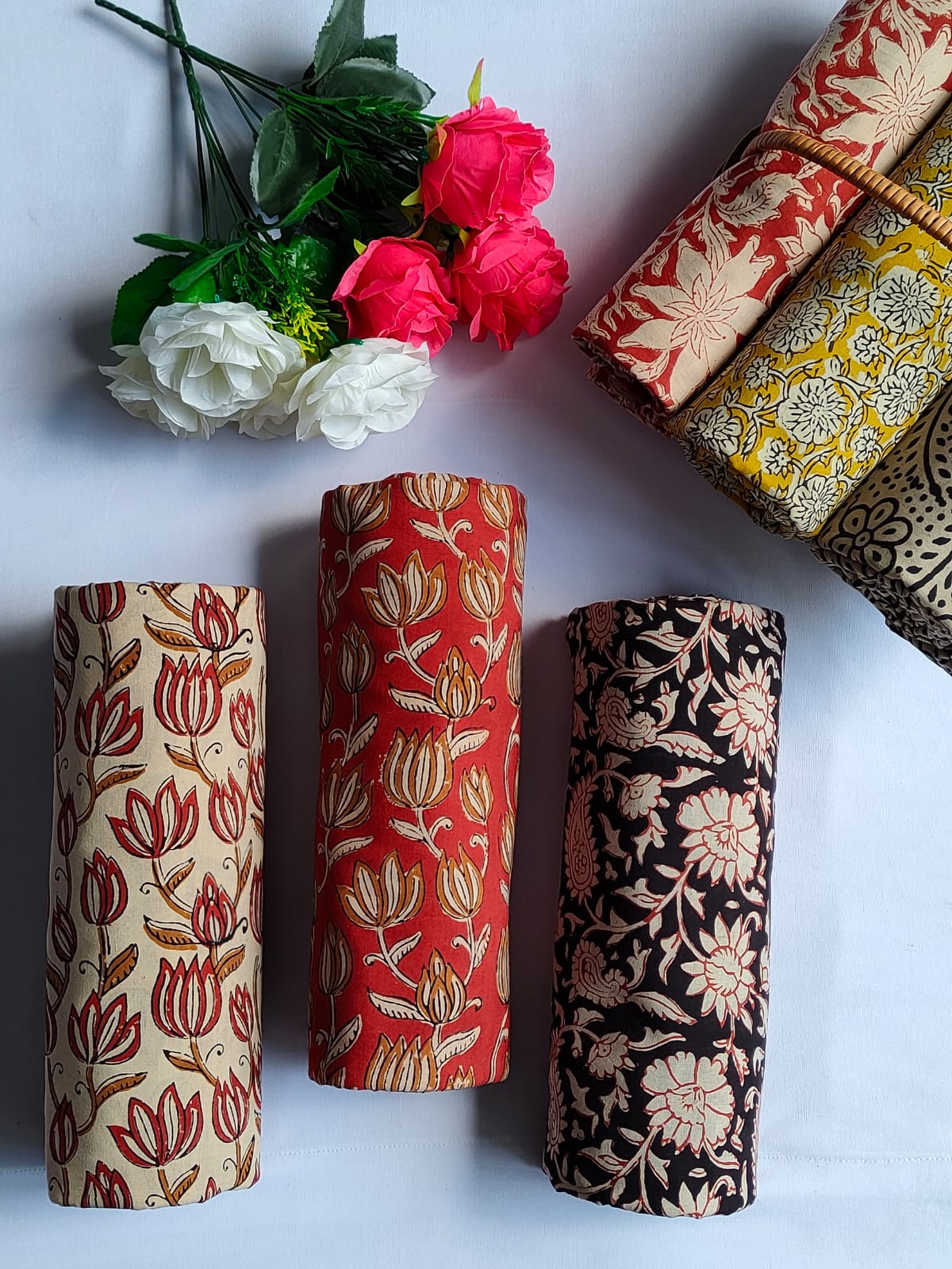


Floral printed cotton fabric is a favorite among sewing enthusiasts for good reason. It combines the familiar feel of cotton with patterns that can make even a simple sewing project look special. From summer dresses and everyday kurtas to cushion covers, tote bags, scrunchies, and handmade gifts, floral cotton offers plenty of ways to bring creative ideas to life.
Whether you are learning to use a sewing machine or have been stitching for years, floral printed cotton is a useful fabric to keep in your collection. It comes in a wide range of colors, flower sizes, and pattern styles. You can choose delicate little blossoms for a subtle look, bold botanical designs for statement pieces, or traditional floral prints inspired by Indian textile traditions.
However, sewing with printed fabric requires a little more planning than working with a plain material. You need to think about the scale of the flowers, the direction of the print, the placement of motifs, and how the fabric will behave when washed and stitched. A little preparation can make a big difference to the finished result.
In this guide, we will explain how to choose floral printed cotton, prepare it for sewing, cut and stitch it neatly, and use it for clothing, accessories, and home décor. You will also find practical tips for avoiding common sewing mistakes and caring for your finished projects.
1. Why Choose Floral Printed Cotton Fabric for Sewing?
Floral printed cotton is a versatile choice for both beginner and experienced sewers. It gives you the opportunity to work with color and pattern while using a fabric that is available in many different weights and constructions.
The right cotton fabric can work for relaxed clothing, structured accessories, and decorative projects. Its suitability depends on the weave, thickness, finish, and intended use, so it is always worth checking the actual material before starting.
A wide variety of floral designs
Floral cotton is available in many styles, including:
-
Small ditsy florals with tiny repeating flowers.
-
Large botanical prints with prominent leaves and blossoms.
-
Vintage-inspired floral patterns.
-
Tropical flowers and oversized botanical designs.
-
Traditional Indian-inspired floral motifs.
-
Minimal floral prints in neutral or muted colors.
-
Bright, contrasting prints for statement garments.
Each style creates a different effect. Small flowers can give a garment a delicate appearance, while large blooms can become the main feature of a dress or accessory.
Suitable for many sewing projects
Depending on the fabric's construction, floral printed cotton can be used for dresses, shirts, skirts, kurtas, children's clothing, tote bags, cushion covers, table runners, pouches, and other handmade products.
This variety makes it useful for people who want to experiment with different projects without changing their preferred print style.
Easy to coordinate with plain fabrics
Floral fabric can look attractive on its own, but it also works well with plain cotton. A floral blouse paired with a plain skirt, for example, creates a balanced outfit. You can also use floral fabric for sleeves, collars, pockets, or panels while keeping the rest of the garment simple.
Explore printed cotton fabrics at Jaipur Bazar to discover patterns that could work for your next sewing project.
2. Choose the Right Floral Print for Your Project
Before buying fabric, think about what you plan to make. The best floral print for a loose summer dress may not be the best choice for a small pouch or a structured bag.
The pattern, fabric weight, and color combination should all work with the finished product.
Small floral prints
Small floral prints feature tiny flowers, leaves, or repeating botanical motifs. They are often a practical choice for beginners because the pattern may be less noticeable when seams and panels meet.
Small florals can work well for:
-
Everyday dresses and blouses.
-
Children's clothing.
-
Shirts and tunics.
-
Scrunchies and headbands.
-
Small pouches and fabric accessories.
-
Cushion covers with a subtle look.
They are particularly useful when you want an all-over pattern that does not dominate the garment.
Large floral prints
Large floral prints make a stronger visual statement. They can feature oversized roses, tropical flowers, large leaves, or bold botanical illustrations.
These designs can look striking on garments with larger panels, such as maxi dresses, skirts, loose shirts, and kaftans. They can also work well on tote bags and cushion covers.
However, large motifs need more planning during cutting. If a prominent flower falls awkwardly across a neckline, pocket, or seam, it may change the appearance of the finished garment.
Before cutting, lay the pattern pieces over the fabric and decide where you want the most noticeable flowers to appear.
Vintage-inspired floral prints
Vintage-inspired designs often feature delicate flowers, repeating vines, muted shades, or classic combinations of colors.
They can work well for blouses, gathered skirts, dresses, aprons, and home décor projects. Pairing a vintage-looking print with a simple silhouette can create a timeless appearance without requiring complicated construction.
Traditional Indian floral prints
Indian printed cotton fabrics include a wide range of floral and botanical motifs. Some are associated with regional textile traditions, while others are contemporary designs inspired by traditional patterns.
These fabrics can be used for kurtas, tunics, dresses, scarves, cushion covers, and accessories. If the specific printing method or region of production matters to you, check the supplier's product information rather than assuming every traditional-looking print was made using the same process.
For more pattern options, explore hand block print cotton fabrics.
3. Understand Fabric Weight Before You Start Sewing
The floral print may catch your attention first, but the base fabric determines how the finished product will feel and behave.
Cotton fabric is available in different weights, weaves, and finishes. Two floral cotton fabrics can have very different drapes even when their patterns look similar.
Lightweight cotton
Lightweight cotton can be suitable for loose blouses, summer tops, gathered skirts, and relaxed dresses. It may drape more softly than a heavier fabric, depending on its construction.
When sewing with lightweight cotton, use a suitable needle and avoid pulling the fabric as it moves through the sewing machine. Fine fabrics may shift more easily, so careful pinning or fabric clips can help.
Medium-weight cotton
Medium-weight cotton can be a useful option for everyday dresses, shirts, tunics, skirts, and many accessories.
It may provide a balance between drape and structure, but the exact result depends on the fabric's weave and finish.
More structured cotton
A firmer cotton may work better for tote bags, aprons, boxy tops, and projects that need to hold their shape.
For bags and other items that carry weight, you may also need lining, interfacing, or reinforced seams. The printed cotton itself should be selected according to the amount of structure the project requires.
Compare the fabric with the sewing pattern
If you are using a commercial sewing pattern, check its fabric recommendations. A pattern designed for a fluid fabric may not produce the same result when made from a stiff cotton, and a structured pattern may not hold its intended shape in a very lightweight material.
When possible, handle a fabric sample before buying enough material for the full project.
4. Gather the Essential Sewing Tools
You do not need an elaborate sewing room to start working with floral printed cotton. A few reliable tools are enough for many beginner projects.
Sewing machine: A basic machine with straight-stitch and zigzag-stitch options is suitable for many cotton projects.
Fabric scissors or rotary cutter: Use sharp cutting tools reserved for fabric. Blunt scissors can make uneven edges and affect the accuracy of your pattern pieces.
Measuring tape: Essential for taking body measurements and checking project dimensions.
Ruler and cutting mat: Useful for straight edges, rectangular accessories, and accurate seam allowances.
Fabric pins or clips: These help keep layers aligned while sewing. Clips can be useful when pins leave unwanted holes or when working with several layers.
Sewing needles: Choose a needle suitable for the fabric's weight and weave. A universal needle works for many everyday cotton fabrics, but a different size or type may be better for particularly fine or dense material.
Matching thread: Choose thread suitable for the fabric and the expected use of the finished item. A color that blends into the background is often a good starting point.
Seam ripper: Helpful for correcting mistakes without damaging the fabric.
Iron and ironing surface: Pressing seams as you work helps create neater garments and accessories.
Pattern paper or a sewing pattern: Useful for accurately cutting garments and projects with multiple pieces.
Before beginning, check that your sewing machine is threaded correctly and that the needle is in good condition. A small test seam on a scrap of the same fabric can help you confirm the stitch length and thread tension.
5. Prepare Floral Cotton Before Cutting
Fabric preparation is one of the most important steps in sewing. Skipping it can lead to garments that shrink after washing or seams that no longer sit as intended.
Prewash when appropriate
Some cotton fabrics shrink during their first wash. If the finished garment needs to retain its measurements, prewashing may be necessary.
Follow the supplier's care instructions. If they are unclear, test a small piece before washing the entire length. This can help you check for shrinkage, color transfer, or changes in texture.
Use the washing and drying method you expect the finished product to receive, provided it is suitable for the fabric.
Dry and press the fabric
After washing, dry the fabric according to its care instructions. Press it gently to remove wrinkles before laying out your pattern.
Wrinkles can make a pattern piece appear longer or shorter than it actually is, which may affect cutting accuracy.
Avoid stretching the fabric while ironing. Move the iron carefully and use a suitable temperature for the material.
Check the grainline
Most sewing patterns include a grainline marking that shows how each piece should be positioned in relation to the fabric's woven threads.
Aligning the grainline correctly helps the finished garment hang as intended. Cutting pieces at an unintended angle can affect fit and drape.
Inspect the print
Before cutting, look for visible defects, uneven areas, or sections where the print differs from your expectations.
If the fabric has a directional floral pattern, identify which way the flowers should face. This is particularly important for garments with several panels.
Taking a few minutes to inspect the fabric can prevent problems later in the project.
6. How to Cut Floral Printed Cotton Accurately
Cutting is where your fabric choice begins to take shape. Floral prints add an extra consideration because the position of flowers can affect the final look.
Lay out the fabric carefully
Place the fabric on a flat surface and smooth out wrinkles. If your sewing pattern requires the fabric to be folded, make sure the fold is even and the printed design is aligned as intended.
Avoid pulling the fabric while positioning the pattern pieces.
Follow the pattern markings
Use the pattern's grainline, fold line, and cutting instructions. Mark notches and other important points using a method suitable for the fabric.
Check the required seam allowances before cutting. Some patterns include them, while others require you to add them.
Pay attention to large flowers
If the fabric has oversized flowers, take a moment to decide where the most prominent motifs should sit.
For a dress, you might want a large flower to appear on a main front panel rather than directly across a seam. For a tote bag, you could position a central motif where it will be visible on the finished front.
You will not always be able to control every flower's placement, especially when fabric quantities are limited. Prioritize the most visible areas and plan the rest of the layout around them.
Check matching points
When a design needs to look balanced, compare the placement of the print on adjoining pieces.
Matching a large floral motif across a center-front opening or side seam can require additional fabric. If perfect matching is not essential to your design, you can save material by using a layout that looks balanced without aligning every flower.
Keep fabric waste in mind
Plan the cutting layout before making the first cut. Large floral patterns may require more fabric than a small repeating print if you want to position motifs carefully.
For clothing production, calculate fabric consumption with enough allowance for matching patterns and replacing any unsuitable sections.
7. Sewing Tips for Neat Results
Once your pieces are cut, a few basic techniques can make the sewing process easier.
Use the right needle
Choose a needle appropriate for the fabric's weight and construction. A needle that is too large may leave visible holes in lightweight cotton, while an unsuitable needle can cause skipped stitches or damage to the fabric.
If you are unsure, test a suitable needle on a fabric scrap first.
Test your stitch settings
Begin with a straight stitch for ordinary seams, then adjust the stitch length according to the fabric and project.
Very short stitches can make seams harder to unpick, while overly long stitches may not provide the finish you need. Test the settings on a scrap before sewing the main pieces.
Sew slowly around curves
Necklines, armholes, curved pockets, and rounded bag corners need more control than long straight seams.
Guide the fabric gently and avoid pulling it through the machine. Use the pattern's instructions for clipping, trimming, or finishing curved seams where necessary.
Press as you go
Pressing is different from simply ironing the fabric. Pressing usually means lifting and lowering the iron onto an area rather than dragging it across the material.
Press seams according to the construction instructions before sewing the next section. This helps reduce bulk and makes the finished item look more polished.
Finish raw edges
Cotton fabric can fray, particularly along cut edges. Depending on the project, you can finish raw edges with a zigzag stitch, an overlocker, French seams, binding, or another suitable technique.
Choose the finish according to the fabric's thickness, the garment's construction, and how the item will be washed.
Check the print as you sew
Before stitching two pieces together, check that the floral design faces the intended direction and that the fabric has not shifted.
For garments with visible openings, collars, cuffs, or contrasting panels, this simple check can help you avoid unnecessary unpicking.
8. Floral Cotton Sewing Ideas for Beginners
If you are new to sewing, start with a project that has simple shapes and manageable construction. You can learn basic techniques without needing to work with complicated garment patterns.
Project 1: A simple tote bag
A tote bag is a useful first project because it can be made from basic rectangular pieces.
Choose a floral cotton with enough structure for the intended use. If the fabric is lightweight, consider adding a lining or interfacing.
You will need fabric for the front and back, handles, and optional lining. Measure and cut the pieces, sew the side and bottom seams, prepare the handles, and finish the top edge neatly.
For a more interesting design, use plain cotton for the handles and floral cotton for the main body.
Project 2: A cushion cover
A simple cushion cover is another beginner-friendly project. An envelope-style back avoids the need for a zipper and allows the cushion insert to be removed.
Choose a floral print that complements the room's colors. Measure the cushion insert, allow for seams, and cut the fabric according to your chosen construction method.
Press the finished seams and check that the cover fits without excessive pulling.
Project 3: Scrunchies
Scrunchies are useful for practising small seams and working with narrow fabric pieces.
Cut a strip of floral cotton, fold it lengthwise with the right sides together, and sew along the long edge to create a tube. Turn the tube right side out, insert elastic, and secure the ends before closing the opening.
The exact strip and elastic lengths depend on the desired size and fullness. Use a scrap piece first if you are trying a new pattern.
Project 4: A fabric pouch
A small pouch can hold stationery, cosmetics, sewing supplies, or travel accessories.
Choose a floral print for the outer fabric and a coordinating plain cotton for the lining. You can begin with a simple drawstring pouch and move on to zipper styles once you feel comfortable.
Project 5: A simple gathered skirt
A gathered skirt can be a good next step for someone who has mastered straight seams.
The design generally involves a waistband, a skirt panel, and a method of fastening. The amount of gathering and the finished length will affect how much fabric you need.
A small floral print may create a subtle everyday look, while a large print can make the skirt more expressive.
9. Floral Cotton Ideas for More Experienced Sewers
Once you are comfortable with cutting, seams, and finishing, floral printed cotton can be used for more detailed projects.
A shirt dress
A shirt dress combines a shirt-style upper section with a longer body. It may include a collar, button placket, sleeves, and waist shaping.
Floral cotton can give this classic style a softer appearance. Pay particular attention to pattern placement around the button placket, collar, and pocket areas.
A coordinated co-ord set
A matching top and trouser or skirt set can be made from the same floral cotton.
For a balanced result, consider how the pattern will look across both pieces. You might use the main floral print for the top and a coordinating plain fabric for the bottom.
A lined jacket
A structured cotton jacket can be an interesting project if the base fabric has enough body for the design.
Depending on the pattern, you may need lining, interfacing, and careful attention to seams and garment structure. A bold floral print can become the main feature, so a simple silhouette often works well.
Patchwork accessories
Combine several floral prints with plain cotton to create patchwork bags, notebook covers, cushion panels, or decorative pieces.
Choose fabrics with compatible weights and use a consistent seam allowance. Press each seam as you work to keep the patchwork flat.
Curtains and window treatments
Floral cotton may work for selected curtains or decorative window panels, depending on its weight, opacity, durability, and care requirements.
Measure the window carefully and account for the desired fullness, hems, and heading style. If the fabric is lightweight or lets through more light than you want, consider a suitable lining.
10. How to Combine Floral Cotton with Plain Fabric
One of the easiest ways to make a floral sewing project look balanced is to pair the print with a plain fabric.
Floral patterns already contain several visual elements. Adding a plain fabric can give the eye a place to rest and highlight the printed sections.
Use a color from the floral print
Look at the background and the flower colors. Select a plain cotton that matches or complements one of those shades.
For example, if the print has green leaves and a light background, a coordinating green or neutral fabric may work for sleeves, collars, or trousers.
Keep fabric weights compatible
Try to combine fabrics with similar weights and sewing characteristics when they form adjoining garment sections.
A very lightweight floral cotton paired with a stiff, heavy fabric can create uneven seams or a difference in drape. If the fabrics behave differently, consider whether the contrast is intentional and appropriate for the design.
Use plain fabric for structure
Plain cotton can be useful for waistbands, collars, cuffs, bag handles, or sections that need a more uniform appearance.
For accessories, a plain lining can also help the floral exterior remain the main feature.
Explore plain cotton fabrics at Jaipur Bazar to find options that can complement printed designs.
11. Common Mistakes to Avoid When Sewing Floral Cotton
Even a simple sewing project can become frustrating when small details are overlooked. These common mistakes are worth avoiding.
Cutting before checking the print direction
Some floral designs have an obvious top and bottom. If the pieces are cut in different directions, the finished garment may look inconsistent.
Check the print direction before placing each pattern piece.
Ignoring the scale of the flowers
A large flower may land directly on a pocket, neckline, or seam in a way that distracts from the design.
Arrange the pieces before cutting and prioritize important visible areas.
Skipping fabric preparation
If the cotton shrinks after the garment is sewn, the finished item may no longer fit as intended.
Follow the care guidance and test unfamiliar fabric before cutting.
Using unsuitable needles or stitch settings
Incorrect needle choice or stitch settings can lead to skipped stitches, puckering, or visible holes.
Test your machine on a scrap of the same fabric before beginning.
Pulling the fabric while sewing
Pulling can stretch seams and cause uneven stitching, especially with lightweight cotton.
Guide the material gently and allow the machine to feed it through.
Forgetting seam finishing
Unfinished edges may fray over time, particularly after repeated washing.
Choose a seam finish suitable for the fabric and the project's construction.
Buying too little fabric
Pattern matching and motif placement may require extra material, particularly with large floral prints.
Calculate the requirement before buying and allow for cutting waste, hems, and any lining or contrasting sections.
12. How to Wash and Care for Floral Printed Cotton Projects
Once your sewing project is complete, proper care can help preserve its appearance and usefulness.
The correct method depends on the fabric, print, dyes, finishing, and construction. Always follow the product's care instructions.
Wash according to the fabric guidance
Do not assume that every floral cotton fabric should be washed in the same way. Check the care label or supplier guidance before laundering.
For unfamiliar fabric, test a small piece when possible to check for color transfer, shrinkage, and changes in texture.
Separate colors when necessary
New fabrics with deep or contrasting colors may need to be washed separately until their colorfastness is known.
This can reduce the risk of color transfer to other garments.
Avoid excessive heat
High washing, drying, or ironing temperatures may affect shrinkage, color, or the finish of some fabrics.
Use the temperature recommended for the particular material.
Iron carefully
Iron the fabric at a suitable temperature. If you are uncertain, test a hidden area first.
For some prints, ironing on the reverse side can reduce direct contact between the iron and the printed surface. Check the fabric's care instructions before relying on this method.
Store unused fabric properly
Keep leftover cotton clean and dry. Avoid prolonged exposure to direct sunlight, which may fade some colors over time.
If you save fabric for future repairs or matching accessories, label the material and store enough information to identify its print and source.
13. Where to Buy Floral Printed Cotton Fabric Online
Shopping for floral cotton online gives you the chance to compare different patterns and fabric categories. The challenge is understanding how the fabric will look and behave in person.
A few simple checks can make online fabric shopping easier.
Check the product description
Review the fabric composition, width, selling unit, available quantity, and care instructions.
If the printing method, fabric weight, or other important detail is not listed, ask the seller rather than making assumptions.
Look at the print scale
Product photographs may show the overall design without making the size of individual flowers clear.
If the motif scale matters to your project, look for close-up images or ask for measurements where available.
Confirm the selling unit
Fabric can be sold by the metre, yard, piece, or another stated unit. Confirm exactly what the listed price covers before calculating your order.
Also check the fabric width, since this affects the amount required for a sewing pattern.
Review shipping and return policies
Check the seller's current delivery estimates and return or exchange conditions before purchasing.
If you need fabric for a deadline, confirm the expected dispatch and delivery schedule.
Consider ordering a sample
If samples are available, use one to evaluate the color, feel, weight, and print scale.
A sample is particularly useful if you are developing a clothing collection or buying fabric for a project that requires precise measurements.
Explore Jaipur Bazar's cotton collections
Jaipur Bazar offers several cotton fabric categories that can help you compare patterns and base fabrics for different projects.
Start with these collections:
Compare the available product details and choose the fabric that suits your pattern, project, and care requirements.
14. A Simple Checklist Before Starting Your Next Project
Before cutting into your floral cotton, run through this checklist.
-
Confirm that the fabric suits the intended project.
-
Check the fabric width and calculate the required quantity.
-
Read the care instructions and decide whether prewashing is needed.
-
Inspect the fabric for defects or unexpected variations.
-
Identify the direction of the floral pattern.
-
Check whether large motifs need careful placement.
-
Gather the right needle, thread, scissors, pins, and pressing tools.
-
Test the stitch settings on a fabric scrap.
-
Check seam allowances and pattern markings.
-
Plan the cutting layout to reduce waste.
-
Allow extra fabric when matching large motifs.
-
Keep the care instructions for the finished product.
Following this checklist can help you start with more confidence and reduce the number of corrections needed during sewing.
Frequently Asked Questions
1. Is floral printed cotton suitable for beginners?
Yes. Many floral cotton fabrics are suitable for beginner sewing projects, particularly when the fabric has a manageable weight and stable construction. Simple projects such as tote bags, cushion covers, scrunchies, and pouches are good places to start.
2. What can I make with floral cotton fabric?
You can make dresses, kurtas, shirts, skirts, children's clothing, tote bags, pouches, scrunchies, cushion covers, table runners, and selected home décor items. Choose the fabric according to the weight, construction, and care needs of the finished product.
3. Should I wash floral cotton before sewing?
Prewashing may be appropriate because some cotton fabrics shrink during their first wash. Follow the supplier's instructions and test a small piece if you are uncertain about shrinkage or color transfer.
4. How do I cut large floral prints?
Lay out the fabric and pattern pieces before cutting. Decide where the largest flowers should appear on visible areas, such as the front of a dress or the face of a tote bag. Allow extra fabric if you need to match motifs across seams.
5. Which needle should I use for floral cotton?
Choose a sewing machine needle suitable for the fabric's weight and weave. A universal needle works for many everyday cotton fabrics, but lightweight or densely woven materials may need a different size. Test the needle on a scrap first.
6. Can I mix floral cotton with plain cotton?
Yes. Plain cotton can complement floral fabric in sleeves, collars, waistbands, trousers, bag handles, linings, and decorative panels. Choose fabrics with compatible weights and care requirements.
7. How can I stop cotton fabric from fraying?
Finish raw edges using a suitable technique, such as a zigzag stitch, overlocking, French seams, or binding. The best method depends on the project's construction and how the finished item will be used and washed.
8. Is floral printed cotton suitable for dresses?
It can be suitable for many dress styles, including casual dresses, gathered skirts, and shirt dresses. Check the fabric's drape, opacity, weight, and care requirements before choosing it for a specific pattern.
9. How much floral cotton do I need for a dress?
The amount depends on the pattern, garment size, fabric width, sleeve length, skirt fullness, and print layout. Use the pattern's fabric requirements and allow extra material for matching large flowers or replacing unsuitable sections.
10. Where can I buy floral printed cotton online?
You can explore Jaipur Bazar's printed cotton fabric collection and hand block print cotton collection. Check the product specifications, selling unit, available quantity, and care guidance before ordering.
Conclusion
Floral printed cotton is a versatile fabric for anyone who enjoys sewing clothing, accessories, or home décor. Its wide range of patterns makes it possible to create everything from subtle everyday garments to bold statement pieces and coordinated handmade products.
The best results come from choosing the right fabric for the project and preparing it carefully. Check the weight and construction, consider the scale and direction of the print, prewash when appropriate, and test your sewing machine settings before beginning. Careful cutting and neat seam finishing can make even a simple project look more polished.
If you are just starting, begin with a tote bag, pouch, cushion cover, or scrunchie. As your skills grow, you can move on to dresses, shirts, co-ord sets, and more detailed sewing projects.
Ready to start your next creation? Explore the Jaipur Bazar printed cotton collection, compare the available designs, and choose a floral cotton fabric that suits your next sewing idea.