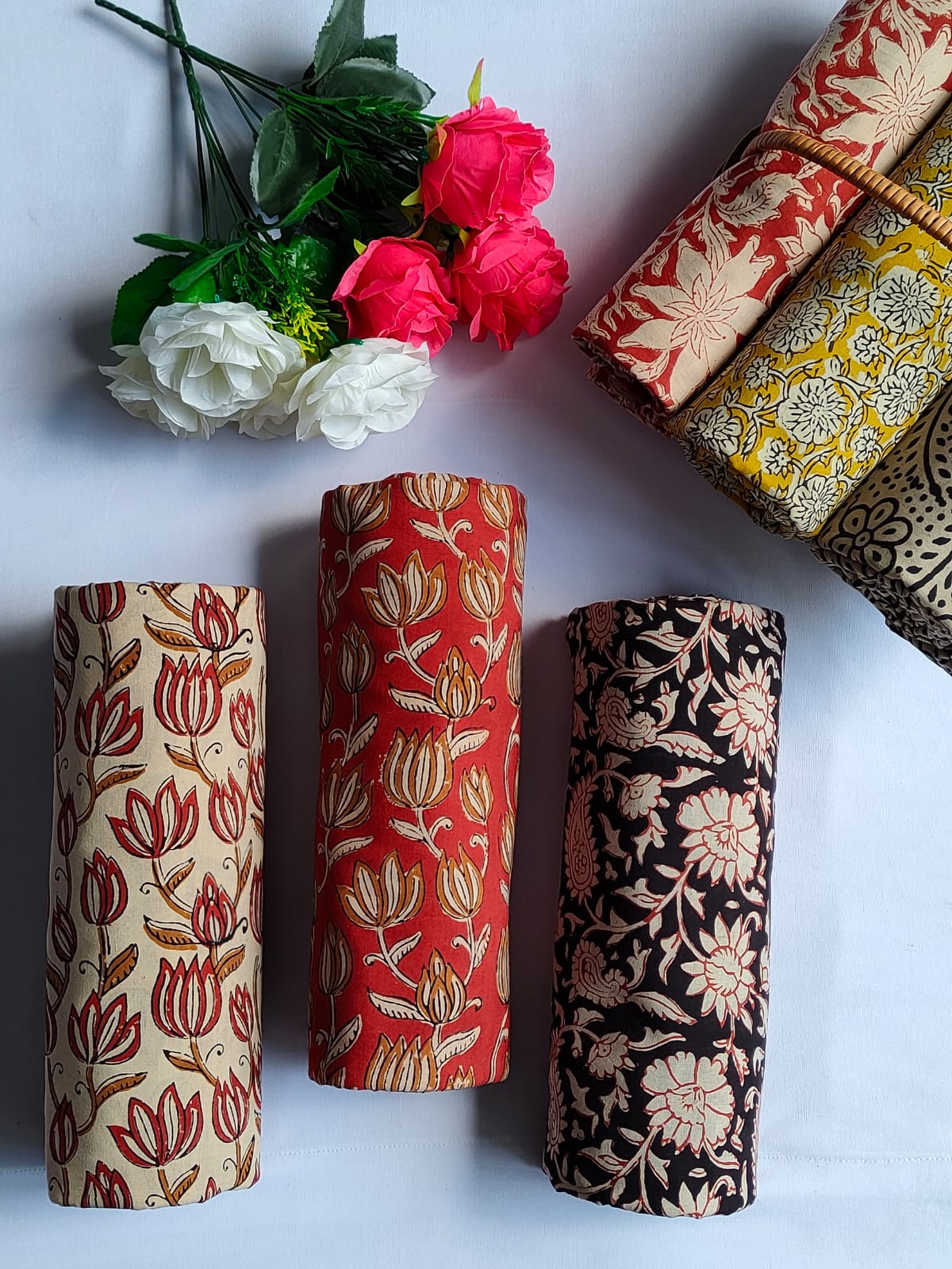


Indian block print fabric is created through a combination of careful preparation, carved wooden blocks, printing colours, and skilled handwork. Although the basic idea is simple, the process can vary considerably from one region to another. A floral cotton fabric made in Sanganer may involve a different preparation and printing sequence from an earthy Bagru textile or a richly patterned Ajrakh fabric from Kutch.
These differences are what make Indian block printing so interesting. Each regional tradition has developed its own approach to colour, motifs, resist printing, fabric preparation, and finishing. Some techniques focus on applying colour directly to the cloth, while others use a resist material to protect selected areas during dyeing.
For anyone interested in textiles, understanding how the fabric is made helps explain why certain prints have delicate floral patterns, why others feature geometric symmetry, and why some traditional processes take considerably longer than others.
In this guide, we explain the complete process of making Indian block print fabric, from preparing the raw cotton and carving wooden blocks to printing, dyeing, washing, and finishing. We also explore the distinctive methods associated with Bagru, Sanganer, Ajrakh, and Bagh, along with practical advice for choosing quality printed cotton for clothing, sewing, crafts, and home décor.
1. What Is Indian Block Print Fabric?
Indian block print fabric is textile material decorated by pressing a carved block against the surface of the cloth to transfer a design. Wooden blocks are commonly used, and a single design may require several blocks to create its different colours and details.
Unlike digital printing, which transfers a design using digital equipment, traditional hand block printing involves repeated manual impressions. The printer positions the block, applies the printing colour, presses it onto the fabric, and repeats the process to build the pattern.
The finished fabric depends on several factors:
-
The quality and construction of the base fabric
-
The design carved into the wooden blocks
-
The printing colours, dyes, and resist materials
-
The precision of block placement
-
The number of printing and dyeing stages
-
The washing, colour-fixing, and finishing process
Cotton is one of the most familiar fabrics used for Indian block printing because it can be adapted to many garments and household products. However, block printing is also used on other textiles, and not every traditional-looking printed fabric is necessarily made from cotton.
Common applications include kurtas, shirts, dresses, scarves, cushion covers, table linen, tote bags, quilts, and other textile accessories.
If you are new to the craft, begin with this complete guide to the art of handblock printing, which introduces the traditional methods and design principles behind the finished fabric.
2. Step One: Selecting and Preparing the Fabric
Before printing begins, the fabric must be prepared to receive the colour. This stage is important because the condition of the cloth affects how evenly printing materials spread and how the finished design develops.
Selecting the base cloth
Artisans and manufacturers select a suitable fabric according to the intended product and printing method.
Cotton is widely used, but its weight, weave, surface, and finish can differ considerably. A fine cotton fabric intended for lightweight clothing may require a different approach from a firmer material used for furnishings.
The choice of base fabric also affects the appearance of the print. A light background can make delicate floral motifs stand out, while a darker or naturally coloured ground may create a more earthy visual effect.
Washing and removing impurities
New fabric may contain starch, oils, dust, or other substances left over from earlier manufacturing stages. These can interfere with printing or dye absorption.
The cloth may therefore be washed, scoured, or otherwise cleaned before printing. The exact method depends on the regional tradition, the fabric, and the colours or materials that will be used later.
Bleaching or preparing the background
Some printing traditions use a white or light-coloured background, so the fabric may undergo bleaching or another preparation process to achieve the required appearance.
Sanganeri printing, for example, is particularly associated with fine motifs on white or light grounds. The preparation process helps create the clean surface needed for these designs.
Other traditions may preserve a natural-looking background or use additional treatments before printing and dyeing.
Drying and inspecting the fabric
After washing or other preparation, the cloth is dried and checked before printing begins. It needs to be sufficiently clean and ready for the chosen printing method.
The cloth may then be spread over a long printing table. It must remain reasonably flat and stable so that the design can be repeated across the material.
For more background on the craft, read what handblock printing is, including its history and process.
3. Step Two: Designing and Carving the Wooden Blocks
The wooden block is one of the most important tools in traditional hand block printing. It determines the shape of the motif and helps the artisan reproduce the design repeatedly across the cloth.
Choosing the wood
Traditional printing blocks are often made from suitable hardwoods, including sheesham and teak. The wood needs to be strong enough to hold fine details and withstand repeated contact with printing materials.
Before carving, the wood is prepared and seasoned according to the block-maker's process. Proper preparation helps make the block suitable for repeated use.
Transferring the design
The chosen motif is drawn or transferred onto the prepared block. Designs may include flowers, leaves, vines, geometric forms, borders, paisleys, and repeating decorative patterns.
The layout must account for how the motif will connect with the impressions around it. If the design is meant to repeat across several metres of fabric, the edges and spacing need to be planned carefully.
Carving the motif
The block-maker uses carving tools to remove the wood around the design, leaving raised areas that transfer the colour onto the fabric.
Fine patterns require careful work because small mistakes can affect the clarity of the finished print.
Some designs use separate blocks for outlines, filling colours, and additional details. This allows the printer to build a multicoloured motif in stages.
Preparing separate blocks for each colour
A complex design may require several blocks that work together. Each one transfers a different part of the pattern.
The printer must align the blocks accurately so that the outlines and colour fills appear in the intended positions. Even a small shift can change the appearance of a detailed motif.
For a closer look at this craft skill, explore how handblock printing works, including its techniques and traditions.
4. Step Three: Preparing Printing Colours and Dyes
The colours used in Indian block printing depend on the regional tradition, the design, the intended result, and the materials available to the producer.
Traditional processes have used natural dyes, mineral-based materials, mordants, and resist pastes. Modern production may also use synthetic dyes and contemporary printing formulations.
It is important not to assume that every hand block-printed fabric uses natural dyes. The method and materials vary between workshops and products.
Natural dye materials
Some traditional printing practices use plant-derived colourants and other naturally sourced materials.
Indigo is associated with deep blue shades. Madder-based materials have been used to produce reds, while other ingredients can contribute to black, brown, yellow, and related colours.
The final shade depends on more than the raw colour source. Preparation, mordants, fabric treatment, dye concentration, and subsequent processing all influence the result.
Mordants and colour development
A mordant helps certain dyes bond with textile fibres or develop their intended colour. Different printing traditions use different materials and sequences.
Mordants are particularly relevant to some traditional dyeing processes, including forms of Ajrakh and Bagh printing.
Synthetic colours and modern formulations
Contemporary textile production may use synthetic dyes and prepared printing pastes. These can be selected to meet particular colour requirements, production schedules, and customer specifications.
The quality of the finished print still depends on suitable materials, correct application, and appropriate finishing.
Why colour preparation matters
If a printing colour is too thin, too thick, or otherwise unsuitable for the block and fabric, the result may be inconsistent. Colour preparation therefore requires practical knowledge of the materials and the printing method.
A fabric's appearance alone cannot reliably tell you whether its colours are natural or synthetic. If this detail matters to your purchase, look for specific information from the seller.
5. Step Four: Setting Up the Printing Table
Before printing begins, the fabric is spread over a flat, prepared surface. Traditional workshops often use long printing tables covered with padding or fabric layers that support the cloth.
The surface needs to be even enough for the block to make good contact with the fabric.
The printer places the cloth in position and ensures it will not move unnecessarily during the printing process. If the fabric shifts, repeated motifs may become misaligned.
The printing table also needs to accommodate the length and width of the cloth. This is especially important when printing long fabric lengths with a continuous pattern.
Why alignment matters
Many Indian block prints rely on a repeating design. The next impression must connect visually with the previous one.
The printer develops a rhythm of loading the block with colour, positioning it, pressing it onto the fabric, and moving to the next position.
For designs using multiple blocks, each colour must align with the impressions already printed.
This is one reason traditional hand block printing requires practice. The task is not simply to make a clear impression, but to maintain the pattern across a large piece of fabric.
6. Step Five: Printing the Design on the Fabric
Once the fabric, blocks, and colours are ready, the printer begins transferring the design.
Applying colour to the block
The raised surface of the wooden block is coated with a suitable amount of printing colour or paste.
The amount needs to be controlled. Too much colour may blur small details, while insufficient colour may produce a weak or incomplete impression.
Pressing the block onto the cloth
The block is positioned over the fabric and pressed firmly enough to transfer the design.
The printer then lifts the block and moves to the next position. This sequence is repeated until the intended section of fabric has been printed.
Building the pattern
For a single-colour design, one block may be sufficient. More complex patterns can require several blocks and repeated printing stages.
A design might begin with an outline, followed by one or more colour fills and small decorative details.
The order depends on the pattern and the printing method.
Allowing the fabric to dry
Depending on the materials used, the fabric may need to dry before the next stage. Drying helps prevent unwanted smudging or interference between printing stages.
The full process can include several cycles of printing, drying, dyeing, and washing.
Why small variations occur
Hand block printing is a manual process. Minor differences in pressure, alignment, or colour application may appear across the cloth.
These differences can be part of the appearance of a handmade textile, but they should not be treated as definitive proof that a fabric is genuinely hand-printed. Product information and reliable production details remain important.
7. Direct Printing and Resist Printing: Two Important Methods
Indian block printing includes several approaches. Two important categories are direct printing and resist printing.
Direct printing
In direct printing, the block transfers colour or printing paste onto selected areas of the fabric.
The pattern becomes visible through the colour applied by the block. Depending on the process, the cloth may then be dried, washed, steamed, or otherwise treated to develop and fix the print.
Many familiar floral and geometric designs use direct printing for at least part of the pattern.
Resist printing
Resist printing works differently. Instead of applying the final colour directly to every printed area, the artisan uses a resist material to protect selected parts of the fabric from dye.
The fabric is then dyed. The protected areas resist the colour, creating a pattern when the resist is removed or the cloth is washed.
Resist materials vary according to the tradition and process. They may include clay-based pastes, gum, wax, or other suitable substances.
The process can produce strong contrasts between dyed and undyed areas. It may also be repeated with different colours to build more complex designs.
Why the distinction matters
Direct printing and resist printing can produce very different visual results.
Direct printing is useful for applying motifs and colours to particular areas of the fabric. Resist printing allows artisans to control which parts of the cloth receive the dye.
Some regional traditions use both methods, sometimes in combination with several rounds of printing and dyeing.
8. How Bagru Block Print Fabric Is Made
Bagru, near Jaipur in Rajasthan, is one of India's best-known traditional printing centres. The craft is closely associated with the Chippa community and is recognised for its floral motifs, earthy colours, and use of direct and resist-printing techniques.
The Government of India's handicrafts resource describes traditional Bagru processes involving cotton preparation, harda treatment, hand-carved sheesham blocks, and printing methods that can include Dabu resist printing. The exact sequence varies by design and workshop. <Cite refs={["turn900286search1"]} />
Preparing the cotton
Traditional Bagru processes may involve repeated washing and other treatments to remove impurities and prepare the cloth for printing.
Some methods include a treatment known as saaj, followed by the application of harda, which gives the fabric a yellowish tone and plays a role in particular traditional dyeing processes.
These stages are specific to certain traditional methods and should not be assumed to apply to every contemporary Bagru-inspired fabric.
Carving and selecting the blocks
Bagru designs often feature flowers, leaves, vines, and geometric patterns.
For multicoloured motifs, different blocks can be used for outlines, colour fills, and decorative details. The blocks must align with one another to create the complete pattern.
Printing the design
The prepared blocks are pressed onto the cloth in sequence. Traditional direct-printing methods apply colour to the fabric, while Dabu printing uses a resist paste to protect selected areas during dyeing.
Depending on the design, the artisan may repeat the process across several printing and dyeing stages.
Developing the colours
Traditional Bagru colour palettes often include black, red, brown, indigo, and other earthy shades. Some traditional processes use natural dye materials, although contemporary Bagru production may also use synthetic colours.
Washing and finishing
After the necessary printing and dyeing stages, the fabric is washed and finished according to the method used. These stages help remove excess materials and reveal the final pattern.
What makes Bagru different?
Bagru is often recognised for its earthy colour combinations and traditional floral or geometric motifs. Dabu resist printing is an important part of the region's craft heritage, but not all Bagru prints use Dabu.
To explore this style, visit the Bagru print cotton fabric collection at Jaipur Bazar.
9. How Sanganeri Block Print Fabric Is Made
Sanganer, near Jaipur, is known for its delicate floral prints, fine motifs, and designs that often appear on white or light-coloured backgrounds.
The Government of India's handicrafts resource describes a process involving fabric preparation, hand printing with wooden blocks, drying, steaming, washing, and ironing. The details vary according to the materials and design. <Cite refs={["turn900286search0"]} />
Preparing the fabric
Sanganeri printing commonly uses light-coloured cloth. The fabric may be washed, scoured, or bleached to prepare a clean background.
The objective is to provide a suitable surface for the fine patterns associated with this tradition.
Creating delicate floral blocks
Sanganeri designs often feature small flowers, leaves, vines, birds, and other nature-inspired motifs.
Traditional terminology includes buti for smaller motifs and buta for larger motifs. Repeating floral arrangements and decorative layouts are also common.
The blocks need to reproduce these details clearly. When a design includes several colours, separate blocks are prepared for the relevant parts of the pattern.
Printing the outlines and colour fills
The printer applies the outline and colour elements in the required sequence.
Because many Sanganeri designs feature fine details, careful block placement is particularly important. The printer must maintain the spacing and alignment of the repeating motifs.
Drying and fixing the print
After printing, the fabric may be dried and undergo further treatment, such as steaming and washing, depending on the process and colours used.
The final stages help develop the print and prepare the fabric for use.
Why Sanganeri prints look distinctive
The tradition is widely recognised for delicate floral designs, fine repeats, and light backgrounds.
These qualities make Sanganeri-style prints popular for dresses, kurtas, shirts, scarves, bed linen, curtains, and other products.
If you enjoy delicate floral patterns, explore the most beautiful handblock designs and pattern inspiration.
10. How Ajrakh Block Print Fabric Is Made
Ajrakh is a traditional textile-printing craft associated with Sindh and western India, particularly Kutch in Gujarat. It is known for intricate geometric patterns, symmetrical layouts, and deep colour combinations.
Traditional Ajrakh printing can involve numerous stages of fabric preparation, mordanting, resist printing, dyeing, washing, and drying. The sequence is more involved than a simple single-colour direct print. <Cite refs={["turn900286search2","turn900286search11"]} />
Preparing the fabric
The cloth is washed and treated to prepare it for subsequent printing and dyeing. Depending on the specific process, this may include scouring and mordanting.
Harda and other materials can be used in traditional methods to prepare the fabric for colour development.
Carving the geometric blocks
Ajrakh designs often use symmetrical arrangements, repeated grids, decorative borders, and motifs inspired by nature and geometry.
Several blocks may be needed to create the complete pattern. Each block must align with the others so that the design remains consistent across the fabric.
Applying the resist
In traditional resist-printing stages, the artisan prints a suitable paste onto selected areas of the fabric.
These protected areas are intended to resist particular dyes, helping create the contrasting sections of the pattern.
Dyeing the fabric
Indigo and red-producing materials are associated with traditional Ajrakh colour palettes. Other materials and stages contribute to the dark outlines and lighter areas.
The fabric may go through several rounds of printing and dyeing. Each stage contributes to the final pattern.
Washing and revealing the design
Washing removes excess materials and helps reveal the contrasting colours and patterns. Drying and other finishing stages prepare the fabric for use.
What makes Ajrakh different?
Ajrakh is known for geometric symmetry, complex borders, and layered patterns. The visual result is created through the relationship between the blocks, resist materials, and dyeing stages rather than by applying one colour in a single pass.
Ajrakh-inspired fabrics can be used for shirts, kurtas, dresses, scarves, jackets, cushion covers, and other textile products.
When purchasing Ajrakh-style material, check whether the product is made using traditional Ajrakh processes or simply features a similar geometric design.
11. How Bagh Print Fabric Is Made
Bagh printing is associated with Bagh in Madhya Pradesh. The tradition is known for distinctive red, black, and lighter colour combinations, along with floral, geometric, and architectural motifs.
The Government of India's handicrafts resource describes traditional Bagh processes involving washing, soaking, mordanting, block printing, dye development, and washing in running water. The exact steps depend on the textile and production method. <Cite refs={["turn900286search13"]} />
Preparing and treating the fabric
The cloth is washed and treated before printing. Traditional methods may use several preparation stages to help the fabric receive the printing materials and dyes.
Applying the motifs
Wooden blocks are used to transfer the design onto the fabric. Some printing pastes contain materials that help produce the desired colour after later processing.
The patterns may include repeating floral forms, geometric arrangements, and motifs influenced by architecture and nature.
Developing red and black colours
Traditional Bagh printing is known for strong red and black patterns. Specific dyeing and mordanting stages help develop these colours.
The precise materials and processing sequence depend on the technique being used.
Washing and finishing
After printing and dyeing, the fabric undergoes further washing and finishing. Traditional methods may involve washing in running water to remove excess materials and help reveal the finished pattern.
Why Bagh printing is distinctive
Bagh prints often feature balanced geometric arrangements and bold contrasts. Their visual character differs from the delicate floral patterns associated with Sanganer, although both traditions use carefully carved blocks and repeated impressions.
Bagh-inspired fabrics can be used for kurtas, shirts, dresses, scarves, cushion covers, table runners, and other textile products.
12. Why Regional Printing Processes Produce Different Results
The regional differences in Indian block printing are not limited to the motifs. The methods used to prepare, print, dye, and finish the cloth also influence its appearance.
Different fabric preparation
Some fabrics are prepared for a light background, while others undergo treatments suited to particular dyes or resist methods.
Different block designs
The size, detail, and arrangement of the carved motifs affect the finished print. A small floral repeat requires a different block design from a large geometric layout.
Different printing sequences
Some designs can be created through direct printing, while others require multiple blocks, resist pastes, and several dyeing stages.
Different colour materials
Traditional dye sources, synthetic dyes, mordants, and printing pastes can produce different colour effects. The exact materials vary by workshop and process.
Different finishing methods
Washing, steaming, drying, and other treatments influence the finished appearance and performance of the fabric.
These differences help explain why two cotton fabrics with similar motifs may still look and behave differently.
13. Hand Block Printing Compared With Screen Printing
Hand block printing is only one way to create printed cotton fabric. Screen printing is also widely used in contemporary textile production.
In hand block printing, a carved block is pressed against the fabric to transfer the pattern. In screen printing, colour is applied through selected areas of a prepared screen.
Both methods can create detailed and attractive designs.
Hand block printing is often chosen when the manual process or a particular traditional printing style is important. Screen printing can be useful for designs and production requirements that benefit from prepared screens and repeatable application.
Neither method automatically determines the quality of the final fabric. Base material, printing colours, process control, and finishing all matter.
For a detailed comparison, read hand block vs screen-printed cotton fabric.
If you are considering screen-printed material, the screen-printed cotton fabric buyer's guide explains what to check before purchasing. You can also explore the best uses for screen-printed cotton fabric in 2026.
14. How to Identify Quality in Hand Block-Printed Cotton
Understanding the process can help you ask better questions when buying printed fabric. However, appearance alone cannot confirm the production method or the overall quality.
Check the fibre composition
Confirm whether the material is cotton, a cotton blend, or another fibre. Product specifications are more reliable than judging the fabric by touch alone.
Examine the pattern
Look at the clarity of the motifs, the arrangement of the repeat, and the consistency of the printing. Consider whether the pattern suits the garment or product you intend to make.
Ask about the printing method
A traditional-looking design may be produced by hand block printing, screen printing, or another method. If the production technique matters to you, ask the seller for clear information.
Review the fabric construction
Check the weight, weave, drape, opacity, and surface finish. A fabric intended for a relaxed shirt may not be appropriate for a structured bag or a heavy-use furnishing.
Check colourfastness and care instructions
Colour performance depends on the dye, printing material, fabric, and finishing process. Follow the product's care instructions and ask about testing when colourfastness is especially important.
Look for reliable production information
If a product is described as a specific regional print, check whether the seller explains its origin or whether the term is being used to describe the visual style.
For a more detailed checklist, read how to choose high-quality handblock fabric in 2026 and how to spot authentic quality in hand block-printed cotton.
15. Choosing Block-Printed Cotton for Sewing and Crafts
Once you understand how the fabric is made, the next step is choosing a suitable print for your project.
For kurtas, shirts, and dresses
Consider the fabric's weight, drape, opacity, and motif scale. Fine floral designs can work well for many everyday garments, while larger patterns may be suitable for statement pieces.
For bags and pouches
Choose a fabric with a construction suitable for the expected use. Depending on the product, lining or interfacing may be needed to provide additional structure.
For cushion covers and table linen
Think about the size of the motifs, the colours in your room, and the fabric's care requirements. For items that will be washed regularly, check the available care and colourfastness information.
For patchwork and smaller crafts
Printed cotton can be useful for patchwork, fabric-covered accessories, and other creative projects. Small pieces of different prints can be combined if their colours and patterns work together.
Plan the layout before cutting
Check whether the pattern is directional or has a border. If you want motifs to align across seams, you may need additional fabric.
For more project ideas, explore hand block print fabric for sewing and crafts and the guide to the best handblock fabric types for sewing and crafts.
You can also find inspiration in creative ways to use block-printed cotton.
16. How to Care for Hand Block-Printed Cotton Fabric
The right care method depends on the actual fabric, dye, printing materials, and finish. Always follow the care instructions supplied with the product.
As a general guide:
-
Wash the fabric using the recommended method and temperature.
-
Use a suitable detergent and avoid harsh products unless the care instructions permit them.
-
Separate colours when necessary, particularly when washing new fabric.
-
Avoid unnecessary high heat during washing, drying, and ironing.
-
Test the ironing temperature on a small area if you are unsure.
-
Store the fabric clean and completely dry.
Do not assume that every hand block-printed fabric uses natural dyes or requires the same washing method. Different materials can respond differently to water, detergents, heat, and sunlight.
For more advice, read how to care for hand block-printed cotton fabric.
17. Where to Buy Indian Block Print Cotton Fabric
When shopping online, look beyond the product photograph. Clear product information makes it easier to select a fabric that matches your project.
Check the following details before ordering:
-
Fibre composition
-
Fabric width and available length
-
Design and motif scale
-
Fabric weight or construction details, where provided
-
Printing method, if specified
-
Care instructions
-
Product availability and shipping information
If you are purchasing fabric for sewing, check that the available length is sufficient for your pattern, including any extra material needed for matching motifs or borders.
Jaipur Bazar offers cotton fabrics for clothing, sewing, crafts, and other creative projects. You can explore the hand block print cotton fabric collection, browse Bagru print cotton fabrics, or view the wider range of cotton fabrics.
Frequently Asked Questions
1. How is Indian block print fabric made?
The fabric is prepared, and the design is carved into wooden blocks. Printing colours or pastes are applied to the blocks, which are pressed repeatedly onto the cloth. Depending on the technique, the fabric may then undergo dyeing, resist printing, washing, steaming, drying, and finishing.
2. Which materials are used for hand block printing?
Common materials include cotton and other suitable fabrics, carved wooden blocks, printing colours or pastes, and materials used for fabric preparation and finishing. Traditional processes may use natural dyes, mordants, and resist pastes, while contemporary methods may use synthetic dyes and modern formulations.
3. What is the difference between Bagru and Sanganeri printing?
Bagru is often associated with earthy colour palettes, floral and geometric designs, and traditional direct and Dabu resist-printing methods. Sanganeri printing is widely recognised for fine floral motifs and light backgrounds. Both traditions involve skilled hand printing, but their characteristic designs and some production methods differ.
4. How is Ajrakh fabric made?
Traditional Ajrakh printing involves several stages of fabric preparation, block printing, resist application, dyeing, washing, and drying. Geometric patterns are built through carefully aligned blocks and repeated processing stages.
5. What makes Bagh printing different?
Bagh printing is associated with Bagh in Madhya Pradesh and is known for red, black, and lighter colour combinations. Traditional production involves fabric preparation, block printing, dye development, and washing stages that help reveal the finished pattern.
6. Are all hand block prints made with natural dyes?
No. Some traditional processes use natural dyes and other traditional materials, while modern production may use synthetic dyes. Check the product information if the dye source is important to you.
7. Why are several wooden blocks sometimes needed for one design?
Different blocks can transfer the outline, fill colours, and smaller details of a design. Using separate blocks allows the artisan to build a multicoloured pattern, provided the impressions are aligned correctly.
8. How long does it take to make block-printed fabric?
The time depends on the design, fabric length, number of colours, printing method, and finishing requirements. A relatively simple design may require fewer stages than a traditional resist-printed textile involving repeated dyeing and washing.
9. Is hand block printing the same as screen printing?
No. Hand block printing uses a carved block to transfer the design, while screen printing applies colour through selected areas of a prepared screen. Both can produce attractive fabric, but their processes differ.
10. How can I choose good-quality block-printed cotton?
Check the fibre composition, fabric construction, print clarity, care instructions, and product specifications. If you want genuine hand block printing or a particular regional textile, look for reliable information about the production method and origin.
Conclusion
Indian block print fabric is created through a series of connected skills, from preparing the cloth and carving the blocks to applying colours, developing patterns, washing, and finishing the material.
The process differs across India's regional traditions. Bagru is known for earthy patterns and its association with Dabu resist printing, Sanganer for delicate floral designs, Ajrakh for intricate geometric layouts and layered dyeing, and Bagh for distinctive red and black patterns.
These differences reflect the knowledge and experience of the artisans who maintain each craft. They also explain why two printed fabrics can have similar motifs but very different production histories.
For buyers, understanding how block printing works makes it easier to choose fabric with the right design, construction, and care requirements. Whether you are making a kurta, sewing a dress, creating accessories, or decorating your home, the most suitable fabric is the one that combines the appearance you want with the practical qualities your project needs.
Explore Jaipur Bazar's hand block print cotton fabric collection to find printed cotton designs for your next project.