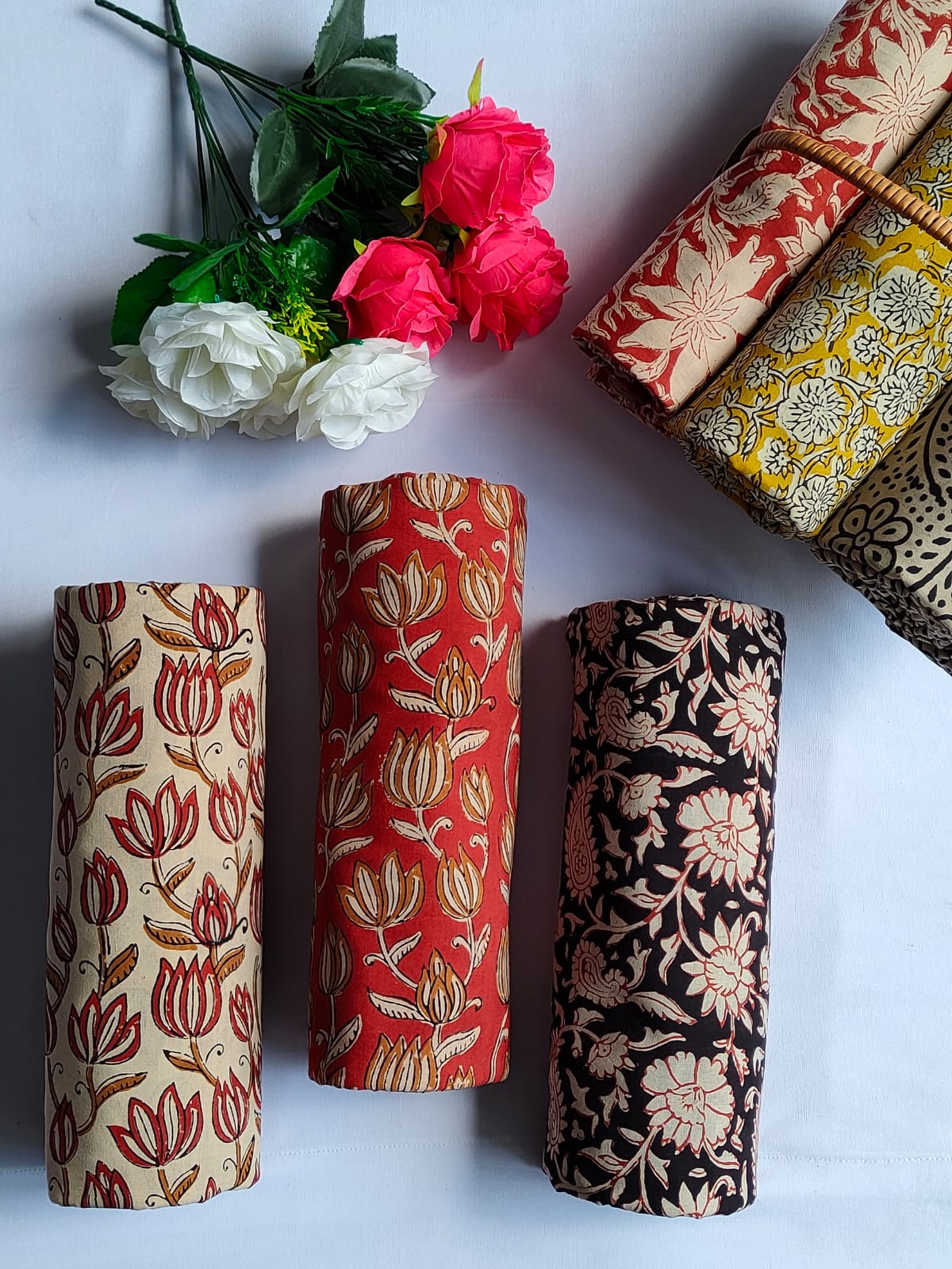


100% cotton fabric is one of the most widely used textiles for clothing, home furnishings, and everyday products. Known for its natural fibre composition, comfortable feel, moisture absorption, and versatility, pure cotton fabric is a popular choice for people who want practical materials for daily use. From summer kurtas and casual shirts to dresses, bedsheets, tote bags, and cushion covers, cotton can be used for a wide range of products.
However, not all 100% cotton fabrics have the same characteristics. Some are lightweight and airy, while others are thick, firm, or closely woven. The differences depend on factors such as fibre quality, yarn construction, weave, fabric weight, dyeing, printing, and finishing.
For example, mulmul cotton is often selected for lightweight garments, while cotton cambric is generally more closely woven and suitable for clothing that requires a smoother surface. Cotton poplin can provide a firmer structure, while printed cotton fabrics offer a wide range of designs for apparel and home projects.
Understanding the main characteristics of 100% cotton fabric helps you choose the right material for your requirements. Whether you are buying fabric for personal sewing, designing a clothing collection, or selecting textiles for home décor, knowing what to look for can help you make a more informed decision.
In this guide, we will explain the key characteristics of pure cotton fabric, its benefits and limitations, how it behaves during washing, and how to identify suitable cotton for different applications.
What Is 100% Cotton Fabric?
100% cotton fabric is made entirely from cotton textile fibres, without other fibres such as polyester, nylon, or viscose being blended into the fabric's fibre composition.
Cotton fibres come from the seed hairs of the cotton plant. These fibres are processed into yarn, which is then woven or knitted to produce fabric. Depending on the yarn and construction, cotton can be made into materials ranging from fine, lightweight fabrics to thick, durable textiles.
Common cotton fabric types include plain cotton, cotton cambric, mulmul, cotton voile, cotton poplin, and printed cotton. Although all can be made from cotton, their appearance, thickness, texture, and uses can differ considerably.
You can explore all cotton fabrics at Jaipur Bazar to compare different styles for clothing and creative projects.
It is also important to understand that the term "100% cotton" describes fibre composition. It does not automatically mean the fabric is organic, preshrunk, wrinkle-resistant, or manufactured using a particular process. These qualities depend on additional production and finishing details.
1. Soft and Comfortable Feel
One of the best-known characteristics of cotton fabric is its comfortable feel against the skin. Depending on the quality of the fibres, yarn construction, weave, and finishing, cotton can feel soft, smooth, crisp, or slightly textured.
Lightweight cotton varieties are often chosen for everyday clothing because they can feel gentle and comfortable when worn. Smooth cotton fabrics may be suitable for shirts and dresses, while softer constructions can work well for loose-fitting kurtas, nightwear, and summer garments.
However, softness is not identical across every cotton fabric. A tightly woven cotton may feel crisp, while a lightweight cotton may feel softer and more flexible. Traditional printed cotton can also have a slightly different surface feel depending on the printing and finishing process.
What affects cotton's softness?
Several factors influence how cotton fabric feels:
-
Fibre quality: Fibre length and fineness can affect yarn smoothness and strength.
-
Yarn construction: Evenly spun yarn can help create a more consistent surface.
-
Fabric construction: The weave or knit affects texture, flexibility, and thickness.
-
Finishing: Washing, brushing, and other finishing processes can change the fabric's hand feel.
-
Dyeing and printing: Some treatments may affect the surface texture.
When buying cotton fabric, consider its actual feel and intended use rather than assuming every fabric labelled pure cotton will have the same softness.
For more guidance, read Jaipur Bazar's article on how to identify high-quality soft cotton fabric.
2. Breathability and Air Circulation
Breathability is another important characteristic of cotton. Air can pass through many cotton fabric constructions, helping heat and moisture move away from the body. This makes suitable cotton fabrics a popular option for everyday clothing, particularly in warm weather.
Lightweight cotton is often used for summer dresses, shirts, kurtas, tunics, and loose-fitting trousers. These garments can feel more comfortable when the fabric allows sufficient airflow and the design does not fit too tightly.
However, breathability depends on more than fibre composition. A thin, loosely constructed cotton fabric will generally behave differently from a thick, dense cotton fabric. Yarn thickness, weave density, fabric weight, finishing, and garment fit all influence how breathable the final product feels.
Is all 100% cotton fabric breathable?
Cotton is commonly associated with breathability, but not every cotton fabric provides the same level of airflow. Thick cotton fabrics may feel warmer than lightweight varieties because of their construction and weight.
If breathability is your priority, consider lightweight options such as mulmul, voile, lawn, and some varieties of cotton cambric. Check the fabric's opacity and structure as well, particularly if you are making dresses or shirts that need adequate coverage.
You can browse mulmul cotton fabrics for lightweight options and cotton cambric fabrics for smoother, closely woven materials.
For a deeper explanation of fabric weight and airflow, read how the thickness of cotton fabric affects its breathability.
3. Good Moisture Absorption
Cotton fibres naturally absorb moisture. This property makes cotton useful for clothing, towels, bedding, and other products that come into contact with the body.
Cotton can absorb perspiration, which is one reason it is commonly used in everyday clothing. However, moisture absorption should not be confused with rapid drying. Cotton can retain moisture after becoming wet, and the time it takes to dry depends on fabric thickness, construction, humidity, airflow, and other conditions.
For example, a lightweight cotton garment may feel comfortable during warm weather, but it can still feel damp after heavy sweating. A thick cotton textile may take longer to dry than a thinner fabric.
Where is cotton's absorbency useful?
Cotton's moisture-absorbing properties make it suitable for several applications:
-
Everyday clothing and casual wear
-
Nightwear and comfortable home clothing
-
Towels and washcloths
-
Bedsheets and pillowcases
-
Certain kitchen and household textiles
-
Reusable fabric accessories
When choosing cotton for clothing, consider the climate and intended use. For hot and humid conditions, the fabric's weight, airflow, and drying time are just as important as its ability to absorb moisture.
4. Natural Fibre Composition
A defining characteristic of 100% cotton fabric is that its textile fibre content consists entirely of cotton. Unlike a cotton-polyester blend, pure cotton does not include polyester as part of its fibre composition.
This distinction matters to buyers who specifically want plant-based textile fibres for garments, home products, or craft projects.
However, "100% cotton" should not be confused with claims such as organic, chemical-free, or environmentally certified. These refer to other aspects of cultivation, processing, or manufacturing and require separate verification.
If fibre composition is important for your project, check the product label or supplier specification. For commercial orders, request written confirmation of the composition and relevant test documentation when necessary.
To learn more about fibre varieties, read the main types of cotton used in fabric production.
5. Versatility Across Different Applications
Cotton is a versatile textile because it can be produced in different weights, textures, patterns, and constructions. It can be used for lightweight summer clothing, structured shirts, decorative accessories, and a variety of home textiles.
The construction of the fabric determines much of its final performance. A lightweight cotton may suit a flowing dress, while a more closely woven fabric may be better for a shirt that needs a defined shape. A heavier cotton construction may be more appropriate for some bags and household products.
Common uses of 100% cotton fabric
Clothing: Cotton is commonly used for kurtas, shirts, dresses, skirts, tunics, pyjamas, children's clothing, and everyday trousers.
Summer wear: Lightweight cotton varieties are often selected for loose-fitting garments intended for warm weather.
Home textiles: Depending on its construction, cotton can be used for bedsheets, pillowcases, table linen, curtains, and cushion covers.
Accessories: Suitable cotton fabrics can be used for tote bags, pouches, fabric organisers, and other sewn products.
Craft projects: Cotton is popular for quilting, embroidery, patchwork, fabric painting, and other textile crafts.
For a broader overview, read common uses of cotton fabric in clothing.
If you prefer patterned materials, explore printed cotton fabrics. For traditional decorative designs, Jaipur Bazar also offers collections of hand block print cotton fabrics, Bagru print cotton fabrics, and Dabu cotton fabrics.
6. Durability and Everyday Strength
Cotton can be a durable fibre, and well-made cotton fabrics can withstand regular wear and washing when cared for correctly. However, durability varies according to fibre quality, yarn construction, weave or knit, finishing, and intended use.
A closely woven cotton may perform well in everyday garments, while a fine, lightweight fabric may require gentler handling. This does not mean lightweight cotton is poor quality. It means different constructions are designed for different purposes.
What affects cotton fabric durability?
-
Fibre quality: The characteristics of the cotton fibres influence yarn strength.
-
Yarn construction: Spinning quality and yarn thickness affect resistance to wear.
-
Fabric density: The arrangement and closeness of yarns influence how the fabric handles friction and stress.
-
Processing: Dyeing and finishing can affect strength, colour retention, and surface appearance.
-
Care routine: Harsh washing, excessive heat, and rough handling can shorten fabric life.
For clothing that will be worn frequently, inspect the weave, surface consistency, and stitching requirements. For tote bags or other products exposed to pulling and abrasion, select a suitable heavier cotton construction rather than assuming every pure cotton fabric will be equally strong.
You can also read how to identify high-quality woven cotton fabric for additional fabric-selection guidance.
7. Natural Drape and Different Levels of Structure
Drape describes how fabric falls and hangs when made into a garment. Cotton is available in a wide range of constructions, allowing designers to create garments that are soft and flowing or crisp and structured.
A lightweight cotton may fall gently around the body, while a closely woven cotton can provide a more defined silhouette. Some cotton fabrics have a crisp hand feel that works well for shirts, skirts, and structured dresses.
The final drape depends on fabric weight, yarn construction, weave, finishing, and garment design. It is not determined by fibre composition alone.
How to choose cotton based on drape
If you want a flowing dress or a loose summer kurta, look for lightweight cotton with a soft hand feel. If you need a structured shirt or tunic, consider cotton with a firmer construction.
For projects requiring a smooth surface and relatively close weave, cotton cambric may be suitable. For softer, lighter garments, mulmul or voile may be worth considering, depending on the desired coverage and design.
Before cutting a large quantity of fabric, test a sample by holding it vertically or draping it over a hanger. This helps you understand whether the fabric falls as expected.
8. Wrinkles and Creasing
One practical characteristic of 100% cotton fabric is that it can wrinkle during wear, washing, and storage. Cotton fibres respond to moisture and heat, and creases can form when the fabric is folded, compressed, or bent.
The amount of wrinkling varies between fabrics. Some lightweight cotton materials crease noticeably, while certain finishes or denser constructions may help the fabric maintain a neater appearance.
Wrinkling is not automatically a sign of poor quality. It is a common characteristic of cotton that should be considered when selecting material for a particular garment.
How can you reduce wrinkles in cotton clothing?
-
Remove garments from the washing machine promptly.
-
Shake out the fabric before drying.
-
Dry garments according to their care instructions.
-
Fold or hang clothing neatly after drying.
-
Iron at a suitable temperature when necessary.
-
Avoid leaving damp cotton garments tightly packed for long periods.
If low maintenance is important, check whether the product has a wrinkle-resistant finish. Do not assume that every 100% cotton fabric will be wrinkle-free.
9. Possible Shrinkage After Washing
Cotton fabric can shrink during its first few washes, particularly when it has not been preshrunk or appropriately finished. Shrinkage occurs as yarns and fabric structures relax when exposed to water, heat, and mechanical movement.
The amount of shrinkage varies according to construction, finishing, and washing conditions. Fibre composition alone cannot tell you exactly how much a fabric will shrink.
How to manage cotton fabric shrinkage
Wash a sample first: Measure a small piece before and after washing it using the intended care method.
Prewash before cutting: If you are making washable garments, prewashing can help account for some shrinkage before cutting the pattern.
Follow care instructions: Use the recommended washing temperature and avoid excessive heat during drying.
Ask about preshrinking: If you are buying cotton for commercial garment production, ask the supplier whether the fabric has been preshrunk and whether shrinkage information is available.
Prewashing is particularly important when accurate garment measurements matter. A shirt or dress cut before shrinkage may become smaller after laundering if the fabric has not been prepared.
For more detailed advice, read the best ways to care for and wash woven cotton fabrics.
10. Suitable for Dyeing, Printing, and Decoration
Cotton is widely used for coloured and printed textiles because it can be dyed and decorated using suitable textile processes. It is available in solid colours, repeating patterns, floral motifs, geometric designs, and traditional prints.
Different printing methods create different visual effects. Screen printing can produce repeated designs, while hand block printing creates patterns through the application of carved wooden blocks. Resist-printing methods create distinctive effects by preventing dye from reaching selected areas of the fabric.
The final result depends on the printing technique, dye or pigment, fabric preparation, and finishing. Print quality and colourfastness can vary, so it is useful to check supplier specifications and care instructions.
Choosing printed cotton fabric
Printed cotton can be used for kurtas, dresses, shirts, skirts, children's clothing, cushion covers, and accessories. When choosing printed fabric, examine the clarity of the design, consistency of the print, and suitability of the fabric weight for your intended use.
Explore the printed cotton fabrics collection for a variety of patterned materials. If you prefer traditional Indian motifs, browse hand block print cotton fabrics.
For larger projects, request a sample when possible so you can check the colour, texture, and print before ordering the full quantity.
11. Comfortable for Everyday Clothing
Cotton is a popular choice for everyday clothing because it can combine a comfortable feel with moisture absorption and breathability. Depending on its construction, cotton can be used for casual dresses, shirts, kurtas, tunics, nightwear, and other garments.
Comfort depends on the entire garment, not just the fibre. Fabric weight, seams, fit, lining, and weather conditions all influence how clothing feels during use.
For example, a loose cotton kurta made from lightweight fabric may feel airy in warm weather. A heavier cotton garment may feel more substantial and provide greater coverage, but it may also feel warmer.
When choosing cotton for daily wear, consider:
-
The climate in which the garment will be worn
-
Whether the fabric feels soft or crisp against the skin
-
The desired level of coverage and opacity
-
The garment's fit and design
-
How frequently the garment will be washed
-
Whether the fabric requires ironing or special care
Lightweight cotton is often a practical starting point for summer garments, while denser cotton can be suitable for structured clothing and other applications.
For more information, read the benefits of soft cotton fabric for clothing.
12. Care and Maintenance Requirements
Most everyday cotton fabrics are relatively straightforward to maintain, but the correct washing method depends on the construction, dye, print, and finish.
Some cotton fabrics can be machine-washed, while delicate weaves or certain printed and dyed materials may require gentler handling. Always check the care label or supplier's instructions, especially if the fabric has a decorative finish.
General cotton fabric care tips
Sort by colour: Wash dark, bright, and light-coloured items separately when colour bleeding is a concern.
Use a suitable detergent: Choose a detergent appropriate for the garment and avoid unnecessarily harsh washing conditions.
Avoid excessive heat: High washing or drying temperatures may increase shrinkage or affect the fabric's appearance.
Dry carefully: Follow care instructions and avoid leaving damp garments packed together for long periods.
Iron at the right temperature: Cotton often tolerates moderate to high ironing temperatures, but the appropriate setting depends on the specific fabric, dye, and finish. Test an inconspicuous area when unsure.
Store clean and dry: Make sure cotton textiles are fully dry before long-term storage.
Printed cotton requires particular attention because some dyes and printing methods may be more sensitive to repeated washing than others. Following the recommended care method can help preserve colour and fabric quality.
For more guidance, read how to care for and wash soft cotton clothing.
13. Different Weights, Weaves, and Cotton Fabric Types
Another important characteristic of 100% cotton fabric is the variety of constructions available. Two fabrics may both contain only cotton but behave very differently because their yarns, weave density, and finishing are different.
Understanding common cotton types helps you select a suitable material for your project.
| Cotton fabric type | General characteristics | Common uses |
|---|---|---|
| Plain cotton | Versatile and available in different weights and textures | Everyday garments, crafts, basic sewing |
| Cotton cambric | Usually smooth and closely woven | Kurtas, shirts, dresses, children's clothing |
| Mulmul cotton | Often lightweight and soft | Summer garments, scarves, lightweight clothing |
| Cotton poplin | Typically has a firm, closely woven surface | Shirts, dresses, structured garments |
| Cotton voile | Lightweight and often semi-sheer | Blouses, dresses, overlays, scarves |
| Printed cotton | Available in many patterns and constructions | Kurtas, dresses, home décor, accessories |
| Hand block print cotton | Decorative patterns made using block printing | Traditional clothing, accessories, home textiles |
These descriptions are general rather than fixed rules. Actual fabric weight, softness, opacity, and durability depend on the particular product.
Explore plain cotton fabrics, cotton cambric fabrics, and mulmul cotton fabrics to compare different options.
You can also read the different types of cotton fabrics available for a broader overview.
14. How to Identify Good-Quality 100% Cotton Fabric
Fibre composition and fabric quality are related but separate considerations. A fabric can be made from 100% cotton and still vary in yarn quality, construction, colourfastness, and finishing.
When selecting cotton, inspect several characteristics rather than relying on one quick test.
Check the fibre composition
Start with the product label or supplier specification. Look for a clear statement that the fabric is 100% cotton. If you are buying for commercial use, ask for written specifications or appropriate laboratory testing when verification is important.
Feel the fabric
Touch the fabric to assess its surface, softness, and stiffness. Remember that pure cotton can feel smooth, crisp, soft, or textured depending on its construction and finishing.
Inspect the weave
Look for consistent yarn spacing and an even surface. Irregular yarns, visible weak areas, or unusual gaps may be relevant depending on the intended application.
Examine the print and colour
For printed cotton, examine whether the design is clear and consistent. If colourfastness is important, ask about testing or wash a sample according to the intended care method.
Test for shrinkage
Measure a sample before and after washing to understand how its dimensions change. This is particularly useful for garment production and projects requiring precise measurements.
Assess suitability for the project
A fine, lightweight fabric may be ideal for a summer blouse but unsuitable for a heavy-duty tote bag. Choose a construction that matches the stress, coverage, and finish required.
Do not rely on a burn test alone
A burn test is sometimes used as a preliminary fibre-identification method, but it is not a reliable substitute for supplier documentation or laboratory testing. Finishes, dyes, blends, and test conditions can affect the result. Avoid conducting burn tests unless you can do so safely and understand their limitations.
For a more detailed guide, read how to identify high-quality cotton fabric.
15. What Are the Limitations of 100% Cotton Fabric?
Although cotton has many useful properties, it is important to understand its limitations before buying it.
It can wrinkle: Pure cotton often creases more readily than some synthetic fabrics, depending on its construction and finishing.
It may shrink: Some cotton fabrics shrink during washing, especially if they have not been preshrunk.
It can take time to dry: Cotton absorbs moisture, which can mean longer drying times when the fabric becomes wet.
It may fade with repeated washing: Colour retention depends on the dyes, printing method, finishing, and care routine.
It is not always lightweight: Cotton can be made into thick, dense fabrics that feel very different from airy summer materials.
Quality can vary: Fibre composition alone does not guarantee a smooth surface, strong yarns, consistent printing, or long service life.
These limitations do not make cotton unsuitable. They show why fabric selection should consider the intended use, construction, and maintenance requirements.
If you are comparing cotton with synthetic materials, read cotton fabric vs synthetic fabrics: comfort and durability.
16. Is 100% Cotton Fabric Good for Summer?
100% cotton can be a good choice for summer clothing, especially when the fabric is lightweight, breathable, and suitable for the garment design. Cotton's moisture absorption and the availability of airy constructions make it popular for everyday clothing in warm weather.
However, not every cotton fabric is equally suitable for summer. A heavy, densely woven cotton may feel warmer than a lightweight voile or mulmul fabric. Similarly, a close-fitting garment may feel less airy than a loose design made from the same material.
When choosing summer cotton, consider these points:
-
Choose a lightweight construction if airflow is a priority.
-
Check the fabric's opacity to determine whether a lining is needed.
-
Select a weave and drape that suit the garment.
-
Consider how the material feels against the skin.
-
Check washing instructions and possible shrinkage before cutting.
-
Choose prints and colours that fit your design preferences.
For lightweight options, explore mulmul cotton fabrics and cotton cambric fabrics. For patterned summer garments, browse the printed cotton fabrics collection.
You can also read the best lightweight cotton fabrics for summer clothing for more advice on selecting fabric for warm weather.
17. What to Consider Before Buying 100% Cotton Fabric Online
Buying cotton fabric online gives you access to a wide variety of colours, prints, and constructions. However, photographs alone may not reveal the exact texture, thickness, opacity, or drape.
Before placing an order, review the product details carefully.
Confirm the fibre composition: Make sure the listing clearly identifies the fabric as 100% cotton if pure cotton is essential to your project.
Check the fabric width: Fabric width affects pattern placement, cutting efficiency, and the total quantity you need.
Review the product description: Look for information about fabric type, weight if available, print, colour, and care requirements.
Consider the intended use: Choose the construction based on whether you are making clothing, accessories, or home textiles.
Calculate the required quantity: Estimate fabric needs using the pattern, garment size, fabric width, and any print-matching requirements.
Ask about shrinkage: If you are producing garments, ask whether the fabric has been preshrunk or whether shrinkage information is available.
Request a sample when needed: A sample can help you evaluate softness, thickness, opacity, and colour before committing to a larger order.
If you are looking for fabric for your next sewing project, begin with Jaipur Bazar's all cotton fabrics collection. Compare the available styles and review the product details before selecting a material.
Conclusion
The main characteristics of 100% cotton fabric include its natural cotton fibre composition, comfortable feel, breathability, moisture absorption, versatility, and availability in many different weights and constructions. Depending on how it is made and finished, cotton can be soft and lightweight, smooth and structured, or thick and durable.
At the same time, pure cotton may wrinkle, shrink during washing, and take longer to dry than some other fabrics. Its performance depends on fibre and yarn quality, weave or knit, finishing, dyeing, and care.
The best way to choose 100% cotton fabric is to match its construction to your intended use. Lightweight varieties may suit summer dresses and kurtas, while closely woven cotton can be more appropriate for shirts and structured garments. Printed and hand block printed cotton offer additional choices for clothing, accessories, and home décor.
If you are looking for cotton fabric for your next sewing or clothing project, explore Jaipur Bazar's all cotton fabrics collection. Compare the available fabric styles, review product details, and choose the material that best fits your design, comfort, and maintenance requirements.