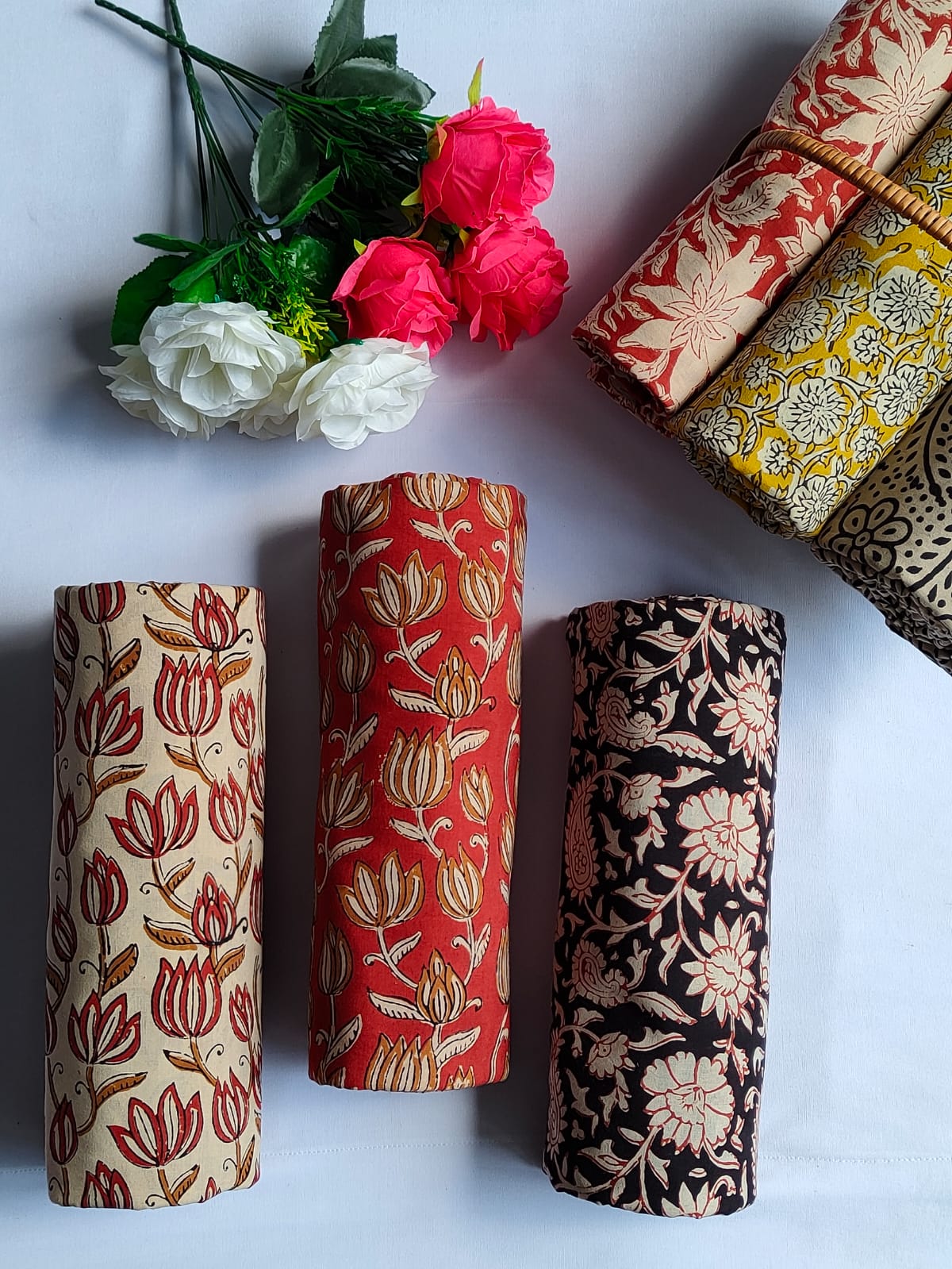


Cotton is one of the most widely used fabrics in the world. From everyday clothing and ethnic wear to home furnishings and premium fashion collections, cotton remains a preferred choice because of its comfort, versatility, and natural feel. However, not all cotton fabrics are created equal. Two fabrics may look similar at first glance, yet their quality, durability, comfort, and performance can be completely different.
Whether you're a fashion brand, boutique owner, garment manufacturer, designer, reseller, or someone buying fabric for personal use, knowing how to identify high-quality cotton fabric can help you make better purchasing decisions.
At Jaipur Bazar, we work with a wide range of cotton fabrics, including hand block prints, Bagru prints, Dabu prints, Indigo fabrics, Kalamkari cotton, Shibori cotton, dress materials, suit fabrics, and premium cotton textiles. One of the most common questions buyers ask is, "How do I know if a cotton fabric is truly good quality?"
This guide will help you understand the key factors that separate premium cotton fabrics from average-quality materials.
Why Cotton Quality Matters
The quality of cotton fabric affects everything from comfort and appearance to durability and customer satisfaction.
Higher-quality cotton fabrics generally offer:
- Better comfort
- Improved breathability
- Longer lifespan
- Better stitching performance
- Superior drape
- Reduced pilling
- Better color retention
- Enhanced garment appearance
For businesses, fabric quality directly impacts customer reviews, repeat purchases, and brand reputation.
Start with the Feel of the Fabric
One of the simplest ways to assess cotton quality is by touching the fabric.
High-quality cotton usually feels:
- Soft
- Smooth
- Comfortable
- Natural
- Pleasant against the skin
Poor-quality cotton may feel:
- Rough
- Stiff
- Scratchy
- Thin
- Artificial
Premium cotton should feel comfortable even before washing.
However, softness alone should not be the only factor. Some low-quality fabrics are chemically treated to feel soft initially but lose their texture after a few washes.
Check the Fabric Weight
Fabric weight often provides clues about quality.
This does not mean heavier fabrics are always better. Instead, the weight should match the intended use.
Lightweight Cotton
Suitable for:
- Summer Dresses
- Tops
- Scarves
- Tunics
Medium Weight Cotton
Suitable for:
- Kurtas
- Shirts
- Co-Ord Sets
- Everyday Apparel
Heavy Cotton
Suitable for:
- Jackets
- Structured Garments
- Home Décor
- Upholstery
A quality fabric feels balanced and appropriate for its purpose.
Look at the Weave Structure
The weave affects durability, texture, and appearance.
Examine the fabric closely.
A well-made cotton fabric usually has:
- Consistent Weaving
- Uniform Texture
- Even Yarn Distribution
- No Visible Gaps
- No Loose Threads
Poor weaving can lead to:
- Uneven Surfaces
- Weak Areas
- Reduced Durability
- Fabric Distortion After Washing
A tighter and more consistent weave often indicates better quality.
Understand Cotton Thread Count
Thread count refers to the number of threads woven into a specific area of fabric.
While thread count is commonly discussed in bedding, it also affects fabric quality.
However, higher thread count does not automatically mean better fabric.
Quality depends on:
- Yarn Quality
- Weaving Technique
- Cotton Fiber Quality
- Fabric Construction
A medium thread count using premium cotton fibers often performs better than a very high thread count made with inferior materials.
Examine the Cotton Fibers
The length of cotton fibers plays a major role in fabric quality.
Long-Staple Cotton
Produces:
- Smoother Fabric
- Stronger Yarns
- Better Durability
- Less Pilling
Short-Staple Cotton
Often produces:
- Rougher Texture
- More Lint
- Lower Durability
- Increased Pilling
Premium cotton fabrics are generally made using longer fibers because they create stronger and smoother yarns.
Check Fabric Density
Hold the fabric against light.
High-quality cotton generally shows:
- Consistent Density
- Even Construction
- No Irregular Thin Areas
Low-quality fabrics may reveal:
- Uneven Thickness
- Weak Spots
- Poor Yarn Consistency
Density affects durability and overall fabric performance.
Observe the Surface Texture
A quality cotton fabric should have a clean and uniform surface.
- Smooth Finish
- Consistent Texture
- Clear Printing
- Minimal Fuzziness
Excessive fuzz on a new fabric may indicate lower-quality yarns.
Test Breathability
Cotton is naturally breathable.
Good-quality cotton allows air to pass through easily while still maintaining fabric integrity.
- Better Comfort
- Improved Moisture Management
- Enhanced Wearability
- Suitable for Warm Climates
Examine the Print Quality
If you are buying printed cotton fabrics, the quality of the print is just as important as the fabric itself.
Look for:
- Sharp Designs
- Clear Motifs
- Consistent Color Coverage
- Proper Alignment
Poor-quality printing often results in blurry designs, uneven coloring, misaligned patterns, and color bleeding.
At Jaipur Bazar, collections such as Hand Block Print Fabrics and Printed Cotton Fabrics are selected with attention to both fabric quality and print clarity.
Check Color Consistency
A premium cotton fabric should display:
- Uniform Coloring
- Consistent Dye Absorption
- Even Print Application
Avoid fabrics with patchy coloring, uneven shades, or visible color variations.
Assess Color Fastness
Color fastness refers to how well fabric retains color over time.
Quality cotton fabrics typically perform better in:
- Washing
- Sunlight Exposure
- Daily Wear
Reliable suppliers prioritize proper dyeing processes to improve color retention.
Evaluate Fabric Recovery
Gently squeeze the fabric in your hand and observe how it behaves after releasing it.
Quality cotton usually recovers naturally, maintains structure, and resists excessive wrinkling.
Check Stitching Performance
If you're purchasing fabric for garment production, stitching performance matters.
- Better Seam Strength
- Cleaner Stitching
- Reduced Fabric Damage During Sewing
Understand GSM in Cotton Fabrics
GSM stands for grams per square meter and measures fabric weight and density.
80–120 GSM
Lightweight Fabrics
120–180 GSM
Medium-Weight Apparel Fabrics
180+ GSM
Heavy-Duty Applications
The ideal GSM depends on the product being created.
Compare Different Cotton Fabric Types
Pure Cotton Fabrics
Pure Cotton Fabrics are versatile, breathable, and suitable for a wide range of applications.
Cotton Dress Materials
Cotton Dress Material fabrics are designed for ethnic wear, suits, and fashion garments.
Cotton Suit Fabrics
Cotton Suit Fabrics balance comfort and style for traditional and modern clothing.
Premium Cotton Fabrics
Premium Cotton Fabrics are often selected for designer collections and higher-end apparel.
Traditional Prints and Fabric Quality
Many buyers focus only on the print design. However, quality depends on both fabric and printing.
Hand Block Prints
Bagru Prints
Dabu Prints
Indigo Prints
Sanganeri Prints
A beautiful print becomes even more valuable when paired with premium-quality cotton.
Questions to Ask Your Fabric Supplier
- Is the fabric 100% cotton?
- What is the GSM?
- What type of cotton is used?
- Is the fabric pre-shrunk?
- How should it be washed?
- Is the print colorfast?
- What applications is it recommended for?
- Can samples be provided?
Common Mistakes Buyers Make
Focusing Only on Price
The cheapest fabric is not always the best value.
Ignoring Fabric Construction
Many buyers evaluate only the print design.
Not Requesting Samples
Samples help assess quality before larger purchases.
Overlooking Intended Use
Different projects require different fabric characteristics.
Assuming All Cotton Is Equal
Cotton quality varies significantly depending on fiber, weaving, finishing, and printing.
Why Quality Cotton Matters for Businesses
For brands and businesses, fabric quality directly influences:
- Product Performance
- Customer Satisfaction
- Brand Image
- Repeat Purchases
- Product Longevity
Why Buyers Trust Jaipur Cotton Fabrics
Jaipur has earned a strong reputation for cotton textiles because of its textile heritage, skilled craftsmanship, traditional printing techniques, diverse fabric offerings, and manufacturing expertise.
Final Thoughts
Identifying high-quality cotton fabric becomes easier once you understand what to look for. The best fabrics typically combine premium fibers, consistent weaving, comfortable texture, strong construction, good print quality, and reliable durability.
At Jaipur Bazar, we believe great cotton fabric should not only look beautiful but also perform well in real-world applications. Whether you're sourcing fabrics for fashion brands, boutiques, garment manufacturing, home décor projects, or personal creations, paying attention to quality can help you make smarter purchasing decisions and achieve better results.
Explore our collections of Pure Cotton Fabrics, Premium Cotton Fabrics, Hand Block Print Fabrics, Bagru Print Fabrics, Dabu Cotton Fabrics, Kalamkari Cotton, Shibori Cotton, and Indigo Cotton Fabrics to discover premium-quality cotton fabrics sourced from Jaipur's rich textile heritage.
Please find the Related Blogs: