
When shopping for cotton fabric, it's easy to get overwhelmed by the number of options available. A fabric may look beautiful in photos, feel soft at first touch, or come with an attractive price tag, but that doesn't always mean it's high quality.
Whether you're a fashion designer, boutique owner, garment manufacturer, home sewer, or simply someone who appreciates good textiles, knowing how to identify high-quality woven cotton fabric can save time, money, and disappointment.
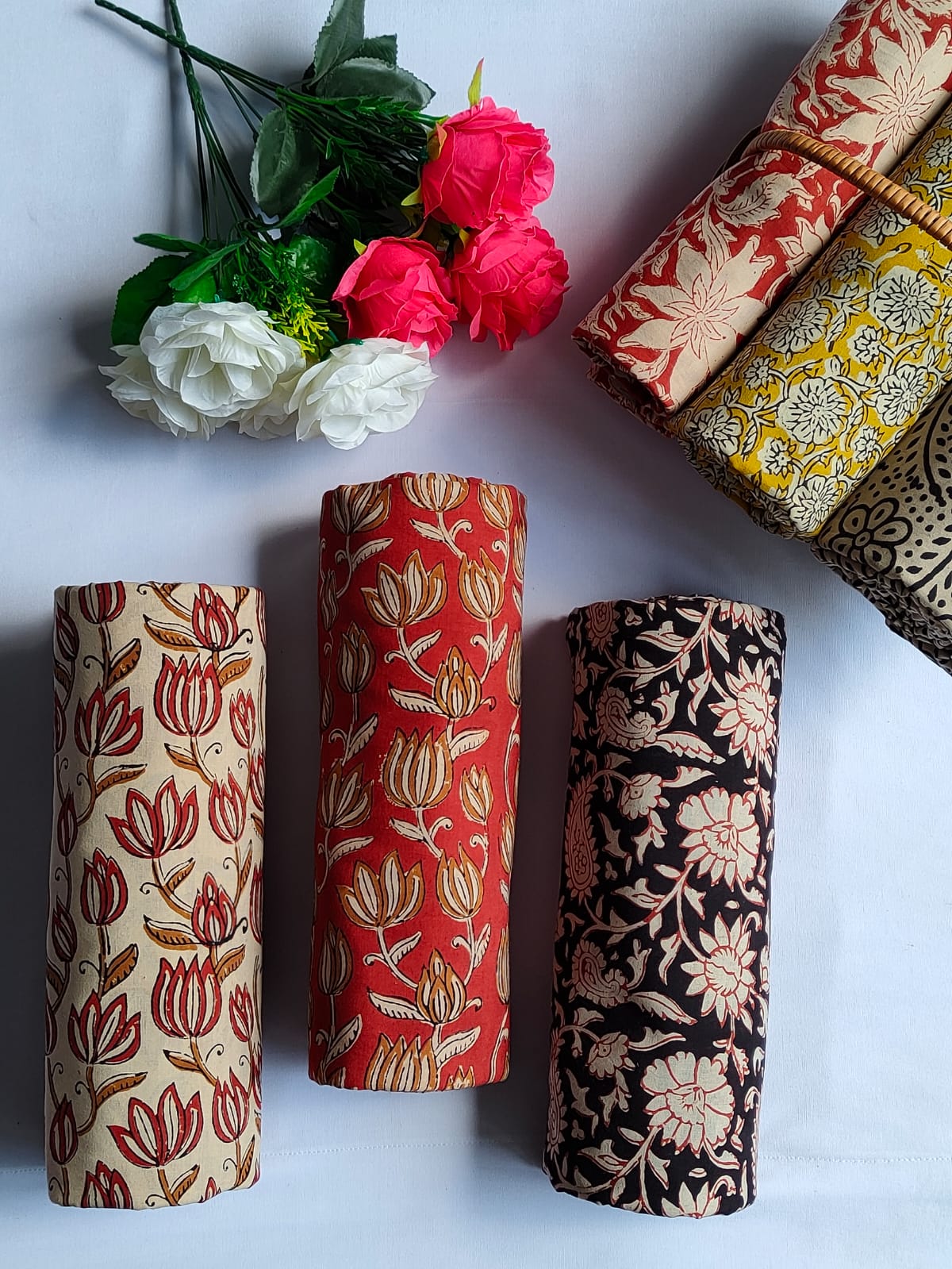
At Jaipur Bazar, we work closely with a wide range of woven cotton fabrics, including Hand Block Print Fabrics, Bagru Print Fabrics, Dabu Print Fabrics, Indigo Fabrics, Cotton Cambric, Premium Cotton Fabrics, Kalamkari Cotton, and Shibori Cotton.
This guide will help you identify high-quality woven cotton fabric by examining the characteristics that matter most.
What Is Woven Cotton Fabric?
Before evaluating quality, it helps to understand what woven cotton fabric actually is.
Woven cotton fabric is created by interlacing two sets of yarns:
- Warp Yarns (Running Lengthwise)
- Weft Yarns (Running Crosswise)
These yarns are woven together on a loom to create a stable fabric structure.
Unlike knitted fabrics, woven cotton fabrics generally have:
- Better Structure
- Greater Dimensional Stability
- Less Stretch
- More Durability for Many Applications
Common examples include:
- Cotton Cambric
- Poplin
- Voile
- Lawn
- Hand Block Print Cotton
- Bagru Cotton
- Dabu Cotton
- Indigo Cotton
- Premium Woven Cotton Fabrics
Why Fabric Quality Matters
High-quality cotton fabric offers benefits beyond appearance.
Better quality fabrics typically provide:
- Longer Garment Life
- Improved Comfort
- Better Drape
- Enhanced Durability
- Superior Sewing Performance
- More Professional Finished Products
Choosing quality fabric often means fewer issues during production and better customer satisfaction after the garment is completed.
Start with the Fiber Quality
Every great fabric starts with quality cotton fibers.
The quality of raw cotton significantly affects:
- Softness
- Strength
- Durability
- Appearance
- Longevity
Higher-quality cotton fibers tend to be:
- Longer
- Stronger
- More Uniform
These characteristics allow manufacturers to spin finer, smoother yarns.
Feel the Fabric Surface
One of the easiest ways to evaluate woven cotton fabric is through touch.
High-quality cotton usually feels:
- Smooth
- Comfortable
- Consistent
- Pleasant Against the Skin
Run your hand across the fabric surface and look for:
- Even Texture
- Minimal Roughness
- Consistent Finish
- Uniform Feel
A premium cotton fabric often feels refined without being overly processed.
Examine the Weave Consistency
Quality woven cotton fabrics display consistent weaving throughout the fabric.
Hold the fabric up and inspect the weave closely.
Look for:
- Uniform Spacing
- Even Yarn Distribution
- Consistent Construction
- No Obvious Weaving Defects
Signs of poor quality may include:
- Uneven Yarn Spacing
- Irregular Weave Patterns
- Visible Gaps
- Distorted Sections
Check Fabric Density
Fabric density often provides clues about quality.
Higher-quality woven cotton typically demonstrates:
- Balanced Construction
- Good Yarn Coverage
- Appropriate Weight for Its Intended Use
Density does not always mean heavier fabric.
Cotton Cambric
- Lightweight
- Fine Weave
- Smooth Finish
Premium Shirting Cotton
- Medium Weight
- Balanced Density
- Comfortable Structure
The key is consistency rather than simply thickness.
Look at the Fabric Under Light
Holding fabric against a light source can reveal important details.
Observe:
- Weave Uniformity
- Yarn Consistency
- Fabric Density
- Construction Quality
High-quality woven cotton generally shows:
- Consistent Transparency
- Even Construction
- Balanced Yarn Placement
Check for Excessive Surface Fuzz
While some cotton fabrics naturally have a soft texture, excessive fuzz can indicate lower-quality yarns.
Look for:
- Loose Fibers
- Excessive Pilling Tendency
- Surface Irregularities
Premium woven cotton fabrics usually appear cleaner and more refined.
Evaluate the Fabric's Drape
Drape refers to how fabric hangs and moves.
High-quality woven cotton often demonstrates:
- Natural Flow
- Balanced Structure
- Comfortable Movement
The ideal drape depends on the fabric type.
For example, Cotton Cambric Fabrics offer a softer drape, while heavier cotton fabrics provide more structure.
Test Wrinkle Recovery
Cotton naturally wrinkles, but quality fabrics often recover better than lower-grade alternatives.
Gently squeeze a section of fabric in your hand and then release it.
Observe:
- Wrinkle Severity
- Recovery Speed
- Surface Appearance
Inspect the Print Quality
If you're purchasing printed cotton fabrics, print quality becomes extremely important.
High-quality printed cotton should feature:
- Sharp Details
- Consistent Color Coverage
- Clean Outlines
- Good Registration
Explore Jaipur Bazar's collections of:
- Hand Block Print Fabrics
- Bagru Print Fabrics
- Dabu Print Fabrics
- Indigo Cotton Fabrics
- Kalamkari Cotton
- Shibori Cotton
Check Color Consistency
Consistent coloration is another sign of quality manufacturing.
Inspect the fabric carefully for:
- Even Dye Coverage
- Consistent Shades
- Uniform Printing
Avoid fabrics with:
- Patchy Color
- Uneven Dyeing
- Visible Streaks
Evaluate Fabric Strength
Strength is an important indicator of quality.
Without damaging the fabric, gently test:
- Resistance to Pulling
- Stability of the Weave
- Structural Integrity
High-quality woven cotton should feel durable and secure.
Examine the Edges
Fabric edges often reveal valuable information.
Look at:
- Selvage Quality
- Edge Stability
- Weaving Consistency
Quality cotton fabrics generally maintain clean and stable edges throughout the roll.
Consider Yarn Quality
Yarn quality influences almost every aspect of fabric performance.
Better yarns typically produce fabrics that are:
- Smoother
- Stronger
- More Durable
- More Attractive
Understand Thread Count and Fabric Quality
Many buyers focus heavily on thread count.
While thread count can matter, it is not the only measure of quality.
Other factors often have greater impact:
- Fiber Quality
- Yarn Quality
- Weaving Expertise
- Finishing Processes
Check the Fabric Finish
Finishing processes influence how fabric looks and feels.
Quality finishes should enhance the fabric without masking defects.
Look for:
- Smooth Appearance
- Comfortable Feel
- Natural Texture
- Consistent Surface
Assess Breathability
One of cotton's greatest strengths is breathability.
Quality woven cotton should allow air circulation while maintaining structure.
This is especially important for:
- Summer Clothing
- Children's Wear
- Everyday Apparel
- Home Textiles
Examine Handcrafted Cotton Fabrics Differently
Traditional artisan fabrics require a different evaluation approach.
Collections such as:
may include slight variations that reflect genuine craftsmanship and handmade production techniques.
Why Cotton Cambric Is Often Considered Premium
Cotton Cambric remains one of the most popular woven cotton fabrics.
Its appeal comes from:
- Fine Weave
- Smooth Finish
- Lightweight Feel
- Excellent Print Compatibility
This makes it ideal for:
- Dresses
- Kurtas
- Tunics
- Tops
- Premium Fashion Garments
Understanding Premium Cotton Fabrics
Premium cotton fabrics generally combine:
- Better Fibers
- Superior Yarns
- Consistent Weaving
- Refined Finishing
Browse Jaipur Bazar's Premium Cotton Fabrics Collection to explore high-quality options for apparel and home décor projects.
Common Signs of Low-Quality Cotton Fabric
Knowing what to avoid is just as important as knowing what to seek.
- Uneven Weaving
- Excessive Fuzz
- Weak Construction
- Poor Print Quality
- Inconsistent Dyeing
- Rough Texture
- Thin Spots
- Distorted Edges
Questions to Ask Before Buying Cotton Fabric
- What type of cotton is used?
- Is the fabric suitable for my intended project?
- How was it printed or dyed?
- Is it suitable for garments or home décor?
- What care instructions apply?
- Is it handcrafted or machine printed?
Why Quality Matters for Fashion Brands
Fashion brands depend on fabric quality because it directly influences:
- Customer Satisfaction
- Product Durability
- Brand Reputation
- Garment Appearance
Why Jaipur Is Known for High-Quality Cotton Fabrics
Jaipur has earned a reputation as one of India's leading textile hubs.
The city is famous for:
- Hand Block Printing
- Bagru Printing
- Dabu Printing
- Indigo Dyeing
- Sanganeri Prints
- Artisan Craftsmanship
These traditions continue to attract buyers from around the world who appreciate quality cotton fabrics and authentic textile heritage.
Final Thoughts
Identifying high-quality woven cotton fabric becomes much easier once you know what to look for. The best fabrics typically combine quality fibers, strong yarns, consistent weaving, comfortable texture, good breathability, and reliable construction.
Whether you're sourcing fabric for clothing, home décor, boutique collections, or custom sewing projects, taking the time to evaluate fabric quality can make a significant difference in the final result.
At Jaipur Bazar, we believe that quality woven cotton fabric should do more than simply look attractive. It should feel comfortable, perform reliably, showcase beautiful craftsmanship, and provide lasting value.
Explore our collections of Pure Cotton Fabrics, Cotton Cambric Fabrics, Printed Cotton Fabrics, Hand Block Print Fabrics, Bagru Print Fabrics, Dabu Print Fabrics, Indigo Fabrics, Kalamkari Cotton, and Shibori Cotton to find premium woven cotton fabrics for your next project.