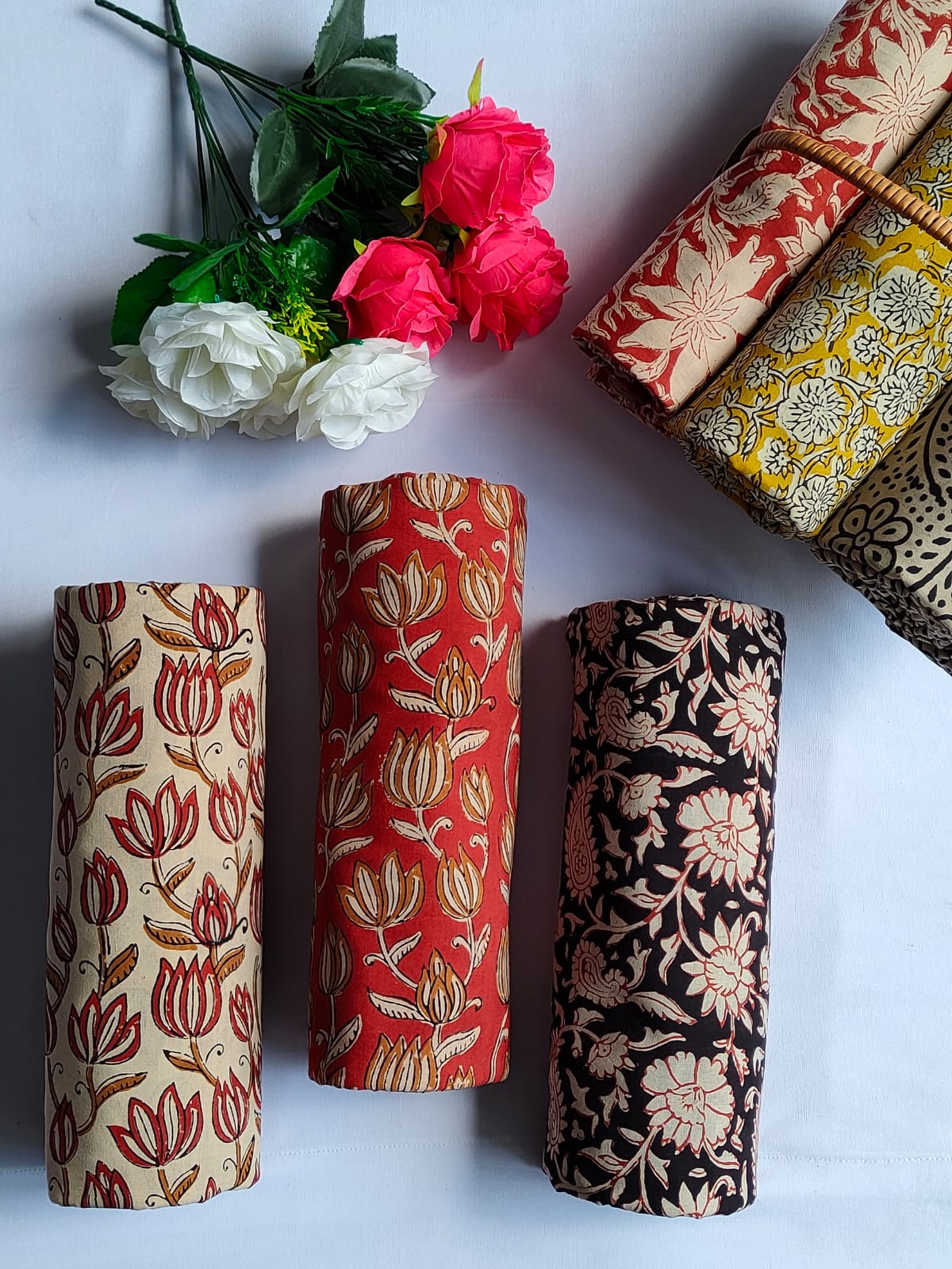


Cotton clothing is a popular choice for everyday wear because it can feel comfortable against the skin, absorb moisture, and suit a wide range of climates and styles. From casual T-shirts and summer dresses to kurtas, shirts, trousers, and children's clothing, cotton garments are available in countless designs.
However, identifying genuine cotton clothing can be confusing when shopping online or in stores. Some garments are made from 100% cotton, while others contain a blend of cotton and polyester, viscose, elastane, or other fibres. Certain synthetic fabrics are also designed to resemble the softness and appearance of cotton, making it difficult to identify the material by touch alone.
So, how can you tell whether the clothing you are buying is made from genuine cotton?
The best approach is to examine the garment's fibre-composition label, product description, texture, construction, and care instructions. You can also use simple observations, such as how the fabric wrinkles or absorbs moisture, to gather additional clues. However, no single touch test or visual check can reliably confirm that a garment contains 100% cotton.
In this guide, we will explain how to identify genuine cotton clothing when shopping, how to distinguish pure cotton from cotton blends, what to check when buying online, and which common mistakes to avoid.
1. Check the Fibre-Composition Label First
The fibre-composition label is one of the most useful places to start when identifying genuine cotton clothing. Clothing manufacturers generally provide information about the fibres used in a garment, allowing shoppers to understand whether the product is made from cotton, a synthetic material, or a blend.
Look for descriptions such as:
-
100% cotton
-
100% cotton fabric
-
Pure cotton
-
95% cotton and 5% elastane
-
60% cotton and 40% polyester
These descriptions are not interchangeable. A garment labelled 100% cotton indicates that the declared textile fibre composition is entirely cotton. A garment containing 60% cotton and 40% polyester is a cotton blend, even if it looks and feels similar to pure cotton.
What does 100% cotton actually mean?
When a garment is labelled 100% cotton, its declared fibre composition consists entirely of cotton fibres rather than a blend with other textile fibres.
However, the label does not automatically guarantee that the garment is high quality. Two garments made from 100% cotton can differ significantly in softness, durability, thickness, stitching, colourfastness, and finishing.
It is also important to distinguish the main fabric from other garment components. Sewing thread, buttons, zippers, elastic, linings, and decorative elements may have different compositions.
If you want to understand the difference between pure cotton and other materials in more detail, read Jaipur Bazar's guide on how to tell if a fabric is made of pure cotton.
Shopping tip: If fibre composition is important to you, prioritise clear labelling and reliable product information rather than relying only on how the garment feels.
2. Understand the Difference Between Pure Cotton and Cotton Blends
One of the most common shopping mistakes is assuming that any soft, breathable garment must be made from 100% cotton. In reality, cotton blends can also feel comfortable and may offer characteristics that some shoppers prefer.
A cotton blend combines cotton with one or more other fibres. The resulting fabric's performance depends on the proportion of each fibre and how the material is constructed.
For example, cotton-polyester blends may wrinkle less than comparable pure cotton fabrics. Cotton-elastane blends can provide stretch, while certain cotton-viscose blends may have a softer drape.
Common fabric compositions
| Fabric composition | General characteristics |
|---|---|
| 100% cotton | Often breathable and absorbent; may wrinkle or shrink depending on construction and finishing |
| Cotton-polyester blend | May offer improved crease resistance and quicker drying than comparable cotton fabrics |
| Cotton-elastane blend | Can provide stretch and improved flexibility |
| Cotton-viscose blend | May offer a soft feel and fluid drape, depending on construction |
| 100% polyester | Often dries relatively quickly and may resist wrinkles, but its feel varies by construction and finishing |
These are general tendencies rather than universal rules. The exact characteristics depend on the fabric weight, yarn construction, weave or knit, and finishing.
Which is better: pure cotton or a cotton blend?
Neither option is automatically better for every purpose.
Pure cotton may be preferable if you specifically want clothing made entirely from cotton fibres. Cotton blends can be useful when you need stretch, reduced wrinkling, or particular performance characteristics.
The important thing is to understand what you are purchasing. If you want genuine 100% cotton clothing, check the composition instead of assuming that a garment marketed as cotton contains no other fibres.
For a more detailed comparison, read cotton fabric vs synthetic fabrics: comfort and durability.
3. Feel the Fabric, but Do Not Depend on Touch Alone
Touching the fabric is one of the easiest ways to evaluate clothing while shopping in a physical store. Cotton can feel soft, smooth, crisp, lightweight, or slightly textured, depending on the type of fabric and its finishing.
However, touch alone cannot confirm whether a garment is made from genuine cotton. Modern synthetic fibres and blended fabrics can be manufactured to resemble the feel of cotton.
Instead of looking for one specific texture, assess the fabric's overall feel and compare it with the product description.
What should you look for?
Softness: Many cotton garments have a comfortable surface feel, but softness varies with yarn quality and finishing.
Texture: Some cotton fabrics have a natural-looking woven texture, while others have a smooth, even surface.
Flexibility: Cotton fabrics may bend and fold easily, but the amount of flexibility depends on the weave, knit, and garment construction.
Thickness: Cotton clothing can be lightweight or heavy. Thickness alone does not determine fibre composition.
Surface consistency: Examine whether the fabric has an even appearance, consistent stitching, and a finish appropriate for the garment.
Do not assume that rough fabric is genuine cotton or that silky fabric must be synthetic. Cotton can be finished to feel very smooth, and some synthetic fabrics are deliberately designed to imitate natural fibres.
For additional guidance, read Jaipur Bazar's article on how to identify high-quality cotton fabric.
4. Examine the Fabric's Breathability
Cotton is commonly chosen for everyday clothing because many cotton fabric constructions allow air to circulate through the material. This can make suitable cotton garments comfortable in warm weather.
When shopping, consider whether the fabric feels airy or dense. Hold the garment up to the light and examine its weave or knit. You may also notice differences in how loosely or tightly the yarns are arranged.
However, breathability is not a reliable way to identify fibre composition on its own. Some synthetic fabrics are highly breathable, while thick cotton fabrics may allow less airflow than lightweight cotton varieties.
How to assess breathability while shopping
-
Check whether the fabric is lightweight or heavyweight.
-
Examine the closeness of the weave or knit.
-
Consider whether the garment has a lining that may affect airflow.
-
Look at the fit and design of the clothing.
-
Read the fabric composition and product description.
If you are shopping for summer wear, lightweight cotton garments may be a practical option. However, choose based on the combination of fibre composition, fabric construction, and garment design.
You can learn more from the guide on how fabric thickness affects cotton's breathability.
5. Check How the Fabric Handles Moisture
Cotton fibres naturally absorb moisture. This is one reason cotton is widely used in T-shirts, casual shirts, kurtas, underwear, and other everyday garments.
Some shoppers try to identify cotton by placing a small drop of water on the fabric and observing how it behaves. This may provide a clue, but it is not a conclusive test.
Cotton often absorbs water, but the result can be influenced by dyes, water-repellent finishes, fabric coatings, and construction. Some synthetic fabrics can also absorb or spread moisture depending on their design.
Can a water-drop test prove that clothing is cotton?
No. A water-drop test cannot reliably confirm that a garment is made from 100% cotton.
If you are shopping in a store, avoid wetting clothing without permission. If you own the garment and want to observe its absorbency, check the care instructions and test an inconspicuous area if appropriate.
For online shopping, a better approach is to review the stated fibre composition and ask the seller for clarification if the listing is incomplete.
Remember that absorbency and drying speed are different properties. Cotton can absorb moisture but may take longer to dry than some synthetic fabrics.
6. Observe How the Fabric Wrinkles
Cotton fabric can wrinkle during wearing, folding, washing, and storage. This happens because cotton fibres respond to moisture and heat, allowing creases to form when the fabric is compressed or bent.
Some shoppers use wrinkling as a way to identify cotton clothing. For example, they may gently squeeze a small section of fabric and observe whether creases remain.
Although this can provide a clue about the fabric's behaviour, it cannot confirm that the material is pure cotton.
Why is the wrinkle test unreliable?
Several factors influence how easily a garment wrinkles:
-
Fibre composition
-
Yarn construction
-
Weave or knit
-
Fabric weight
-
Finishing treatments
-
Moisture and temperature
Some cotton garments are treated to improve crease resistance. Certain synthetic fabrics can also wrinkle, while some blends are designed to maintain a smooth appearance.
Therefore, a garment that wrinkles easily is not necessarily 100% cotton, and a garment that stays smooth is not necessarily synthetic.
Use wrinkling as a secondary observation rather than a deciding factor.
7. Look at the Weave or Knit Construction
Examining the fabric construction can help you understand the garment's quality and intended use, although it cannot establish the fibre composition by itself.
Cotton clothing is made using different fabric constructions. Woven cotton is commonly used for shirts, dresses, trousers, and kurtas. Knitted cotton is widely used for T-shirts, casual tops, and comfortable everyday garments.
Both woven and knitted fabrics can be made from pure cotton, synthetic fibres, or blends.
What should you inspect?
Woven fabrics: Look for reasonably consistent yarn spacing and an even surface. Check whether the fabric has visible irregularities that might affect its appearance or durability.
Knitted fabrics: Examine the loops for consistency and look for loose areas or unwanted distortions.
Seams: Check whether the stitching is secure, particularly around the shoulders, armholes, side seams, and stress points.
Surface quality: Look for holes, pulled yarns, excessive loose threads, or visible defects.
These checks help you assess garment construction and quality. They do not replace fibre-composition verification.
For a more detailed discussion of fabric construction, read how to identify high-quality woven cotton fabric.
8. Understand the Difference Between Cotton Fabric Types
Not all genuine cotton clothing looks the same. Cotton can be made into a wide range of fabric types, each with different textures, weights, and uses.
Understanding these differences can help you choose clothing that meets your preferences without mistakenly assuming that a particular texture proves the fibre composition.
Common cotton fabric types used in clothing
Plain cotton: A versatile category available in different weights and constructions. It is commonly used for everyday garments and sewing projects.
Cotton cambric: Generally smooth and closely woven, making it suitable for shirts, kurtas, dresses, and other garments.
Mulmul cotton: Often lightweight and soft, making it a popular choice for airy clothing and lightweight textiles.
Cotton poplin: Usually has a smooth, relatively firm surface and is frequently used for shirts and structured garments.
Printed cotton: Available in many patterns and constructions for casual clothing, dresses, kurtas, and accessories.
Hand block print cotton: Features designs created through block-printing techniques and is used for traditional and contemporary clothing.
The exact characteristics of each type depend on the product. A fabric's name does not automatically confirm that it is 100% cotton, so check the composition when buying a garment or fabric.
Explore plain cotton fabrics, cotton cambric fabrics, and mulmul cotton fabrics to learn about different cotton options.
You can also read the different types of cotton fabrics available for a broader overview.
9. Read the Product Description Carefully When Shopping Online
Online shopping makes it easy to compare clothing styles, colours, and prices. However, product photographs may not reveal the exact fibre composition, texture, or thickness of a garment.
This makes the product description particularly important when buying cotton clothing online.
What should you check in a product listing?
Fibre composition: Look for an explicit statement such as 100% cotton rather than relying on general phrases such as cotton feel or cotton touch.
Fabric type: Check whether the garment is described as cotton poplin, cotton jersey, cotton cambric, or another specific material.
Product details: Review the fabric weight, fit, lining, and other details when provided.
Care instructions: These can help you understand the garment's maintenance requirements, although they do not independently verify fibre composition.
Seller information: Buy from sellers who provide clear product descriptions and can answer questions about the material.
Return policy: Review the terms before ordering, particularly if the fabric composition or feel is important to your purchase.
If the product page says only "cotton blend" or "cotton-like fabric," do not assume it is 100% cotton.
When information is missing, ask the seller to confirm the fibre composition in writing before placing your order.
10. Be Careful With Marketing Terms Such as "Cotton Feel"
Some product descriptions use phrases such as "cotton feel," "cotton touch," "cotton-rich," or "cotton blend." These expressions can describe the feel or composition of a fabric, but they do not necessarily mean that the product contains 100% cotton.
For example, a polyester fabric may be designed to feel similar to cotton. A cotton-rich garment may contain a high percentage of cotton but still include other fibres.
The important distinction is between a description of the fabric's feel and a statement of its fibre composition.
Common terms to understand
| Product term | What to check |
|---|---|
| 100% cotton | The declared fibre composition is entirely cotton |
| Cotton blend | Cotton is combined with one or more other fibres |
| Cotton-rich | Usually indicates a high cotton content, but check the exact percentage |
| Cotton feel | May describe texture rather than fibre composition |
| Cotton touch | Does not independently confirm that the garment is made from cotton |
| Organic cotton | Refers to cotton produced under applicable organic standards; look for credible certification when relevant |
Marketing language can help describe a product, but it should not replace a clear composition statement.
If you are unsure about a product, ask the seller: "What is the exact fibre composition of this garment, and is the main fabric 100% cotton?"
11. Do Not Rely on a Burn Test
A burn test is sometimes discussed as a way to distinguish cotton from synthetic fibres. Cotton generally behaves differently from many common synthetic fibres when exposed to flame, but the results can be affected by blends, dyes, finishes, and other garment components.
More importantly, a burn test involves an open flame and can cause burns, fire, or the release of irritating fumes. It is not an appropriate routine shopping test.
Even if a sample appears to behave like cotton, this does not establish that the entire garment is made from 100% cotton.
What is a more reliable alternative?
For ordinary shopping, check the fibre-composition label and request clear product specifications from the seller.
For situations where composition must be verified, such as commercial purchasing, product disputes, or compliance requirements, suitable textile laboratory testing is more reliable than a home burn test.
You do not need to damage clothing to make a more informed purchase. Start with documentation, seller transparency, and a careful inspection of the garment.
12. Check Shrinkage and Care Instructions
Cotton clothing may shrink during washing, particularly if the fabric has not been preshrunk or appropriately finished. However, shrinkage is not proof that a garment is made from genuine cotton.
Other fibres and blended fabrics can also change dimensions during laundering, depending on their construction and finishing.
Care instructions are useful because they tell you how the manufacturer recommends washing, drying, and ironing the garment. They can also help you assess whether the clothing suits your lifestyle.
What should you look for?
-
Recommended washing temperature
-
Whether machine washing is permitted
-
Instructions for tumble drying or air drying
-
Ironing temperature
-
Warnings about colour bleeding or special finishes
Do not assume that a garment requiring gentle washing must be cotton or that a machine-washable garment must be synthetic. Many factors influence care requirements.
If you purchase pure cotton clothing, following the care label can help reduce unnecessary shrinkage, fading, and wear.
For practical advice, read how to care for and wash soft cotton clothing.
13. Evaluate Overall Garment Quality, Not Just Fibre Composition
Identifying genuine cotton is important if you specifically want pure cotton clothing. However, fibre composition is only one part of garment quality.
A 100% cotton garment can still have poor stitching, uneven seams, weak fabric, inconsistent dyeing, or an unsuitable fit. Similarly, a well-made cotton blend may perform better for a particular activity than a poorly constructed pure cotton garment.
Before purchasing clothing, evaluate the complete product.
Garment-quality checklist
Stitching: Check whether seams are straight and secure, without excessive loose threads.
Fit: Make sure the garment fits comfortably and allows the movement you need.
Fabric consistency: Look for obvious defects, holes, pulled yarns, or uneven areas.
Colour and print: Check whether the colour and pattern appear consistent with the product description.
Construction: Examine buttons, zippers, collars, cuffs, hems, and other details.
Care requirements: Consider whether you are comfortable with the maintenance the garment requires.
For more advice, read how to identify high-quality cotton apparel.
The best purchase is one that meets your requirements for fibre composition, comfort, construction, style, and maintenance.
14. Why Genuine Cotton Clothing Is Popular
Many shoppers prefer cotton clothing because of its comfort, versatility, and wide range of fabric options. Pure cotton can be made into garments suitable for different seasons and occasions, depending on the fabric's construction.
Comfortable everyday wear
Suitable cotton fabrics can feel comfortable against the skin and are widely used in casual clothing, shirts, kurtas, and nightwear.
A wide range of fabric choices
Cotton is available in lightweight, medium-weight, and heavier constructions. This makes it useful for different garment styles, from flowing dresses to more structured shirts.
Moisture absorption
Cotton fibres absorb moisture, which can be useful in everyday clothing. However, cotton can retain moisture and may dry more slowly than some synthetic fabrics.
Easy to style
Cotton garments are available in solid colours, prints, patterns, and traditional designs. They can be used for casual outfits, workwear, festive clothing, and many other styles.
Suitable for different sewing projects
Cotton fabric is widely used by home sewers, designers, boutiques, and clothing brands because it comes in a range of constructions and designs.
To explore the broader advantages of cotton, read the benefits of 100 percent cotton fabric.
Remember that these benefits depend on the specific fabric and garment. Pure cotton is not automatically the best option for every use, but it can be an excellent choice when its properties match your needs.
15. A Practical Checklist for Buying Genuine Cotton Clothing
If you are shopping for cotton clothing, use the following checklist before making a purchase.
-
Read the composition label. Look for an explicit declaration of 100% cotton.
-
Distinguish pure cotton from blends. Check the percentage of cotton and any additional fibres.
-
Inspect the fabric. Consider its texture, thickness, weave, and overall consistency.
-
Treat touch tests as clues. Softness alone cannot prove fibre composition.
-
Review the product description. Confirm that the details match the claims made in the title or advertisement.
-
Check the care instructions. Make sure the maintenance requirements suit your routine.
-
Evaluate garment construction. Inspect stitching, seams, buttons, hems, and fit.
-
Ask the seller questions. Request written confirmation if the composition is unclear.
-
Review return terms. Understand your options if the product differs from its description.
-
Seek testing when necessary. For important commercial or compliance decisions, use appropriate textile testing rather than informal home tests.
These steps can help you shop more confidently and reduce the risk of confusing cotton-like fabrics with genuine cotton.
Conclusion
Identifying genuine cotton clothing when shopping starts with understanding the difference between fibre composition and fabric appearance. Although cotton is often associated with softness, breathability, and moisture absorption, these characteristics alone cannot confirm that a garment is made from 100% cotton.
The most useful first step is to check the fibre-composition label or product specification. Look for a clear declaration of 100% cotton, and distinguish it from cotton-polyester blends, cotton-rich fabrics, and materials described only as having a cotton-like feel.
You can also examine the fabric's texture, construction, and care instructions to understand its quality and suitability. However, simple observations such as wrinkling, water absorption, or thickness should be treated as supporting clues rather than definitive proof.
Finally, remember that genuine cotton and high-quality clothing are not exactly the same thing. Fibre composition, stitching, durability, fit, finishing, and maintenance all matter when choosing a garment.
By checking labels, reviewing product details, and buying from transparent sellers, you can make better-informed decisions and choose cotton clothing that suits your preferences and everyday needs.