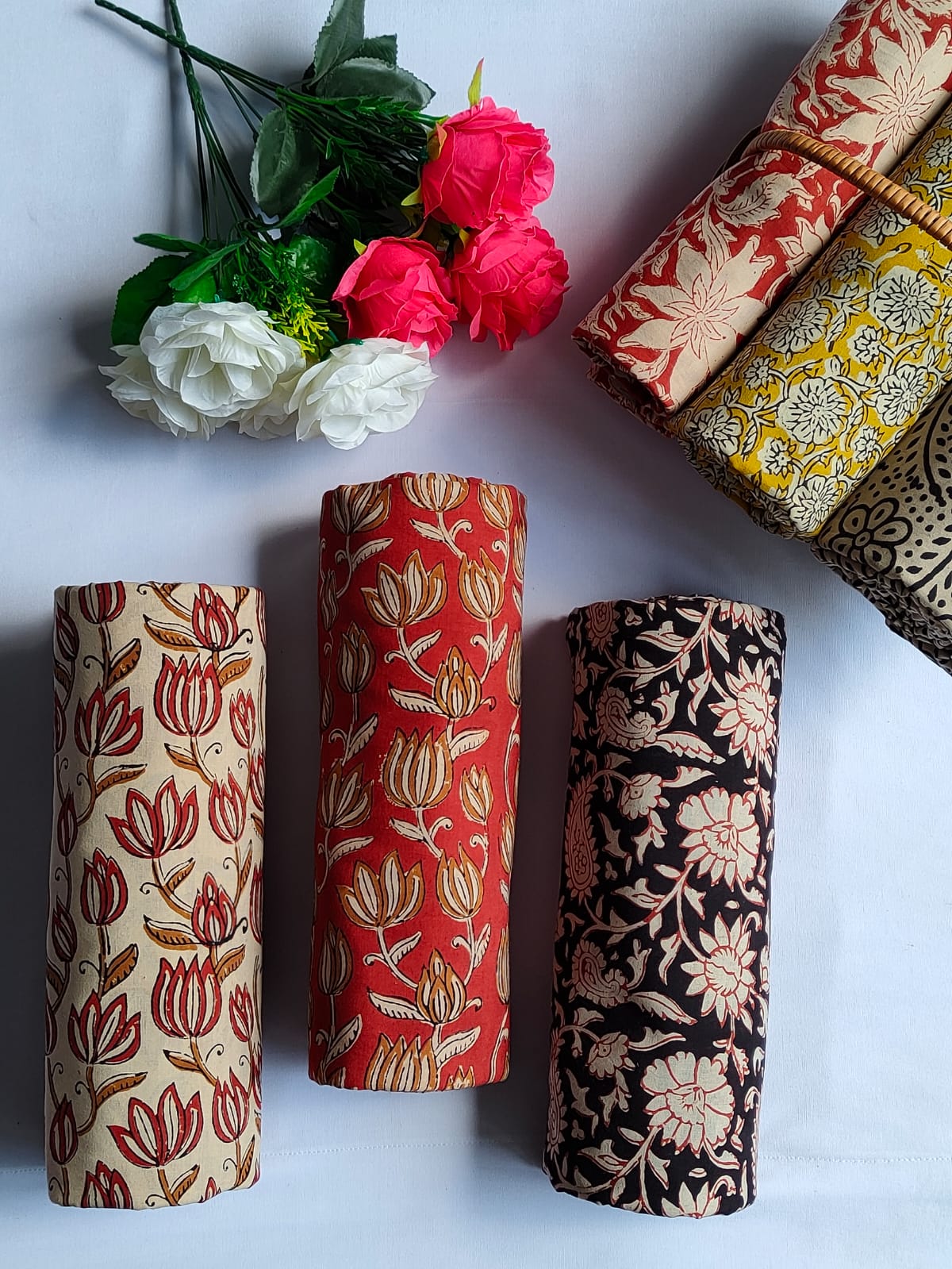


Cotton fabric is one of the most widely used textiles in the world. From everyday clothing and bedsheets to curtains, home décor, and handcrafted fabrics, cotton is a material that most people interact with daily. Yet few people stop to think about the journey cotton takes before it becomes the fabric used in a favorite shirt, a comfortable dress, or a beautifully printed textile.
The transformation from a cotton plant growing in a field to a finished fabric ready for sewing is a fascinating process involving agriculture, engineering, craftsmanship, and textile expertise. Every stage plays an important role in determining the quality, durability, comfort, and appearance of the final fabric.
At Jaipur Bazar, we work with a wide range of cotton fabrics, including Pure Cotton Fabrics, Cotton Cambric, Hand Block Print Fabrics, Bagru Prints, Dabu Prints, Indigo Fabrics, Kalamkari Cotton, and Shibori Cotton.
Understanding how cotton is produced and processed helps buyers, designers, manufacturers, and fabric enthusiasts appreciate the craftsmanship behind every meter of fabric.
In this guide, we'll walk through the complete journey of cotton fabric production, from the farm to the finished textile.
Understanding Cotton as a Natural Fiber
Cotton is a natural fiber that comes from the cotton plant.
The soft fibers grow around the seeds inside cotton bolls. Once mature, the bolls open and reveal fluffy white cotton ready for harvesting.
Cotton has remained popular for centuries because it offers a combination of qualities that consumers value:
- Softness
- Breathability
- Comfort
- Durability
- Versatility
- Easy Maintenance
These characteristics make cotton suitable for everything from fashion garments to household textiles.
Stage 1: Growing the Cotton Plant
The journey begins in agricultural fields where cotton plants are cultivated.
Cotton grows best in regions with:
- Warm Temperatures
- Plenty of Sunshine
- Moderate Rainfall
- Long Frost-Free Seasons
Countries such as India, China, the United States, Brazil, and Pakistan are among the world's largest cotton producers.
In India, cotton cultivation plays a significant role in the textile industry and supports millions of farmers and workers.
Preparing the Soil
Before planting begins, farmers prepare the land to create favorable growing conditions.
- Soil Testing
- Land Preparation
- Nutrient Management
- Irrigation Planning
Healthy soil contributes directly to the quality of the cotton crop.
Planting Cotton Seeds
Cotton seeds are planted once environmental conditions become suitable.
After planting:
- Seeds Germinate
- Seedlings Emerge
- Plants Develop Leaves and Stems
Flowering and Boll Development
The flowering stage is a critical part of cotton production.
Cotton flowers bloom and eventually develop into seed pods known as cotton bolls.
Inside each boll, cotton fibers grow around the seeds. As the fibers mature, the bolls gradually dry and open.
This is when the familiar fluffy white cotton becomes visible.
Stage 2: Harvesting Cotton
Once the cotton bolls have fully matured, harvesting begins.
Manual Harvesting
In some areas, cotton is harvested by hand.
Advantages include:
- Careful Picking
- Reduced Contamination
- Selective Harvesting
Mechanical Harvesting
Large-scale farms often use harvesting machinery.
Benefits include:
- Faster Collection
- Greater Efficiency
- Reduced Labor Requirements
Modern harvesting equipment can process large fields within a relatively short period.
Stage 3: Transporting Cotton to Ginning Facilities
After harvesting, raw cotton is transported to ginning facilities.
At this stage, harvested cotton contains:
- Cotton Fibers
- Seeds
- Plant Debris
- Leaves
- Dirt Particles
The cotton must be cleaned before it can be processed into yarn.
Stage 4: Cotton Ginning
Ginning is one of the most important stages in cotton processing.
The purpose of ginning is to separate cotton fibers from the seeds.
During the ginning process:
- Seeds Are Removed
- Foreign Materials Are Separated
- Fibers Are Cleaned
The result is clean cotton lint ready for textile production.
Cotton seeds are often used for:
- Cottonseed Oil Production
- Animal Feed
- Agricultural Purposes
Stage 5: Cleaning the Cotton Fibers
Even after ginning, cotton fibers may still contain small impurities.
Additional cleaning helps remove:
- Dust
- Fine Debris
- Remaining Plant Particles
Cleaner fibers generally produce better yarns and higher-quality fabrics.
Stage 6: Fiber Classification and Quality Assessment
Before spinning, cotton fibers are evaluated.
Manufacturers assess:
- Fiber Length
- Fiber Strength
- Fiber Fineness
- Color
- Cleanliness
Higher-quality cotton fibers typically produce smoother yarns, stronger fabrics, better durability, and improved comfort.
Stage 7: Carding
Carding is often described as one of the most important steps in yarn preparation.
During carding:
- Fibers Are Separated
- Fibers Are Cleaned Further
- Fibers Are Aligned
The output from carding is known as a sliver, which is a continuous strand of loosely aligned fibers.
Stage 8: Combing (Optional)
Not all cotton fabrics undergo combing. Combing is generally used for premium-quality fabrics.
During combing:
- Short Fibers Are Removed
- Remaining Fibers Are Aligned Further
- Yarn Quality Improves
Benefits of combed cotton include:
- Greater Softness
- Better Strength
- Smoother Texture
- Reduced Pilling
Stage 9: Drawing
Drawing helps improve fiber consistency.
Several slivers are combined and drawn together to:
- Improve Uniformity
- Reduce Variations
- Enhance Yarn Quality
Stage 10: Spinning Cotton into Yarn
Spinning transforms cotton fibers into yarn.
The spinning process involves:
- Drafting Fibers
- Twisting Fibers
- Winding Yarn
Different yarn types influence the final appearance and performance of the fabric.
Stage 11: Yarn Quality Inspection
Before weaving begins, yarns undergo inspection.
Manufacturers evaluate:
- Strength
- Uniformity
- Thickness Consistency
- Appearance
Stage 12: Preparing Yarns for Weaving
Weaving requires two sets of yarns:
- Warp Yarns
- Weft Yarns
Before weaving starts, warp yarns must be carefully prepared and arranged to ensure smooth operation during fabric production.
Stage 13: Weaving the Fabric
Weaving is the stage where fabric begins to take shape.
Different weaving patterns create different fabric characteristics.
Plain Weave
- Strong Construction
- Balanced Appearance
- Versatility
Common examples include Cotton Cambric, Poplin, and Voile.
Twill Weave
- Durability
- Structure
- Strength
Satin Weave
- Soft Feel
- Lustrous Appearance
Stage 14: Fabric Inspection
Once woven, the fabric undergoes inspection.
- Weaving Defects
- Broken Yarns
- Uneven Construction
- Surface Imperfections
Stage 15: Fabric Pretreatment
Before dyeing or printing, woven cotton fabric often undergoes pretreatment.
This stage may include:
- Cleaning
- Desizing
- Scouring
- Bleaching
Desizing
Desizing removes protective coatings used during weaving.
Scouring
Scouring removes natural waxes, oils, dirt, and residues.
Bleaching
Bleaching creates a cleaner and brighter fabric base for dyeing and printing.
Stage 16: Dyeing Cotton Fabric
After pretreatment, fabric may be dyed.
Popular methods include:
- Piece Dyeing
- Yarn Dyeing
- Fiber Dyeing
Quality dyeing aims for color consistency, good colorfastness, and an attractive appearance.
Stage 17: Printing Cotton Fabric
Printing transforms plain cotton into decorative textiles.
Hand Block Printing
Traditional artisan printing using hand-carved wooden blocks.
Explore: Hand Block Print Fabrics
Screen Printing
Suitable for larger production runs and vibrant color applications.
Digital Printing
Modern printing technology capable of producing detailed designs and multiple color combinations.
Traditional Cotton Printing in Jaipur
Jaipur is globally recognized for its textile printing heritage.
Bagru Print Fabrics
Known for earthy tones and traditional motifs.
Dabu Print Fabrics
Created using traditional mud-resist printing techniques.
Indigo Fabrics
Produced using traditional indigo dyeing methods.
Kalamkari Cotton
Features artistic hand-drawn and detailed motifs.
Shibori Cotton
Created using resist-dye textile techniques.
Stage 18: Washing and Post-Processing
After dyeing or printing, fabrics undergo washing to remove excess dyes and improve softness.
Stage 19: Finishing Processes
Finishing improves the fabric's final characteristics.
Depending on the intended use, finishing may enhance:
- Softness
- Smoothness
- Appearance
- Drape
- Durability
Stage 20: Final Quality Inspection
Before reaching customers, finished fabric undergoes one final inspection.
- Color Consistency
- Print Quality
- Fabric Width
- Construction Quality
- Surface Appearance
Stage 21: Packaging and Distribution
The finished fabric is folded, rolled, packed, labeled, and distributed to:
- Fashion Brands
- Designers
- Garment Manufacturers
- Retail Stores
- Online Fabric Suppliers
From Fabric to Finished Products
Cotton fabrics eventually become:
- Dresses
- Kurtas
- Shirts
- Tunics
- Kidswear
- Bedsheets
- Curtains
- Cushion Covers
- Table Linens
- Fashion Accessories
Why Understanding Cotton Production Matters
Knowing how cotton fabric is produced helps buyers make better decisions and appreciate the work of farmers, textile manufacturers, artisans, and craftsmen involved in every stage of production.
Final Thoughts
The production of cotton fabric is far more complex than many people realize. From growing cotton plants in agricultural fields to spinning yarn, weaving fabric, dyeing, printing, finishing, and quality inspection, each stage contributes to the final product's quality and performance.
At Jaipur Bazar, we celebrate every part of this journey. Our collections of Pure Cotton Fabrics, Cotton Cambric, Hand Block Print Fabrics, Bagru Prints, Dabu Prints, Indigo Fabrics, Kalamkari Cotton, and Shibori Cotton represent generations of textile knowledge combined with skilled craftsmanship.
Understanding how cotton is produced and processed not only helps you choose better fabrics but also deepens your appreciation for one of the world's most beloved natural fibers.