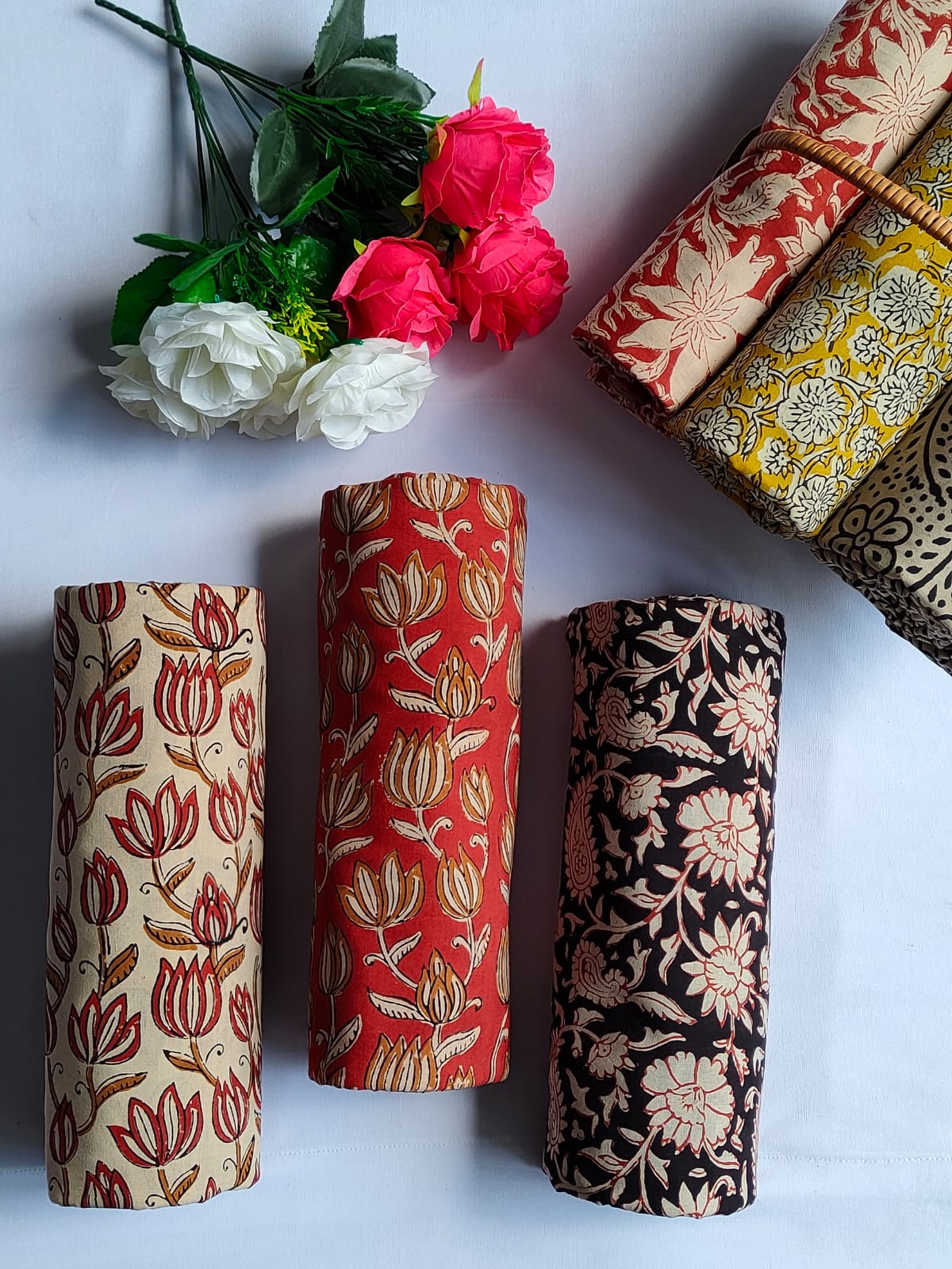


When buying cotton fabric, you may come across materials described as satinised cotton, satin-finish cotton, mercerised cotton, or cotton sateen. These fabrics can have a smoother surface and a more noticeable sheen than ordinary cotton, making them attractive for shirts, dresses, kurtas, linings, and other textile products.
However, identifying satinised cotton is not always straightforward. A glossy appearance does not automatically mean that a fabric is made from cotton or that it has received a particular finishing treatment. Polyester blends, cotton sateen, mercerised cotton, and mechanically polished fabrics can all have different levels of shine.
So, how can you tell if a fabric is satinised cotton?
The most reliable approach is to examine its surface, feel its texture, check the fibre composition, inspect the weave, and ask the supplier about the finishing process. These checks can help you understand what you are buying, whether you need fabric for everyday clothing, a fashion collection, or a sewing project.
In this guide, we will explain the characteristics of satinised cotton, how it differs from other cotton fabrics, and what to check before purchasing it.
1. What Is Satinised Cotton Fabric?
Satinised cotton generally refers to cotton fabric that has been treated or finished to create a smoother, more polished, or slightly lustrous surface. However, the term is not used consistently across all textile markets, so its precise meaning may depend on the manufacturer or supplier.
In some cases, the description may refer to a surface treatment that improves smoothness or shine. In others, sellers may use similar terminology for cotton with a satin-like appearance.
It is therefore important to distinguish satinised cotton from related textile terms.
-
Satinised cotton: A commercial description that may refer to a smoother or glossier finish on cotton fabric.
-
Mercerised cotton: Cotton treated through a chemical finishing process that can improve lustre, dye uptake, and certain strength characteristics.
-
Cotton sateen: Cotton fabric made using a satin-type weave structure that creates a smooth surface with a subtle sheen.
-
Cotton satin: A term that may describe cotton fabric with a satin weave, although usage varies between suppliers.
These terms are related in appearance but do not necessarily describe the same manufacturing process. Mercerisation is a recognised textile treatment, while sateen describes a weave structure.
Understanding this distinction is the first step towards identifying satinised cotton accurately.
2. Look for a Smooth, Slightly Lustrous Surface
One of the first characteristics to examine is the fabric's surface. Cotton described as satinised often has a smoother, more polished appearance than an untreated cotton fabric of a similar construction.
Place the fabric under natural daylight or bright indoor lighting. Tilt it gently from side to side and observe how the surface reflects light.
Look for the following characteristics:
-
A smooth-looking surface
-
A subtle or noticeable sheen
-
Relatively even light reflection
-
Fewer obvious surface irregularities
-
A polished appearance rather than a rough or fuzzy texture
The degree of shine can vary. Some fabrics have a gentle lustre, while others have a more pronounced glossy finish.
Does a shiny surface prove that the fabric is satinised cotton?
No. Shine is a useful clue, but it is not proof of fibre composition or finishing method.
Cotton sateen can reflect light because of its weave structure. Mercerised cotton can develop additional lustre through chemical treatment. Certain mechanical finishing processes can also make a cotton surface appear smoother.
Synthetic fabrics and cotton blends may produce a similar visual effect.
Practical tip: Compare the fabric with a known plain cotton sample of similar colour and weight. This can help you notice differences in surface appearance, but you will still need the product specifications to establish the actual composition and finish.
3. Feel the Fabric to Check Its Smoothness
Texture is another useful characteristic when examining a fabric that may be satinised cotton.
Run your fingers gently across the surface. A fabric with a polished finish may feel smoother than an untreated fabric with a similar weave and weight.
Depending on the construction, you may notice:
-
A smooth surface with relatively little fuzz
-
A soft or polished feel
-
A more refined texture
-
A difference between the front and reverse sides
-
A slightly different feel from ordinary plain-weave cotton
However, not every satinised cotton fabric will feel silky or slippery. The result depends on the cotton yarn, weave, finishing process, and fabric weight.
Why texture alone is not enough
Some ordinary cotton fabrics are naturally smooth because of their yarn quality and construction. Other fabrics receive softening treatments that change how they feel without necessarily creating a satinised finish.
Similarly, a fabric may feel smooth because it contains polyester or another synthetic fibre.
If you are buying fabric for a particular garment, assess whether the texture is appropriate for that use. A smooth cotton fabric may be useful for a polished shirt or dress, while a crisp cotton fabric may be preferable for a structured design.
For other cotton options, you can explore plain cotton fabrics at Jaipur Bazar and compare their surface texture with the material you are considering.
4. Check the Fabric Label for Fibre Composition
If you want to confirm whether a fabric is made from cotton, checking the fibre composition is more reliable than judging its appearance.
A fabric that looks shiny or feels smooth may be made from cotton, polyester, a cotton-polyester blend, or another fibre combination.
Before purchasing satinised cotton, look for a clear product description or label stating the composition.
Examples include:
-
100% cotton
-
Cotton-polyester blend
-
Cotton with elastane
-
Another clearly identified fibre blend
If the product is advertised as satinised cotton, ask the supplier whether the material is 100% cotton or contains other fibres.
Why fibre composition matters
The fibre content affects how the fabric feels, absorbs moisture, responds to heat, wrinkles, and behaves during washing.
For example, a pure cotton fabric and a cotton-polyester blend may have a similar appearance but different care requirements and performance characteristics.
If you are purchasing fabric for commercial garment production, request a technical specification or composition declaration. For higher-assurance requirements, suitable laboratory fibre identification can help verify the composition.
Remember: A glossy surface does not prove that a fabric is pure cotton, and the term “satinised” does not by itself establish the fibre content.
5. Examine the Weave Structure
The weave can help explain why a fabric has a smooth surface or satin-like appearance.
Cotton fabrics are available in different weave structures, including plain weave, twill, and satin-type weaves. Each construction affects the way yarns sit on the fabric surface.
Cotton sateen, for example, uses a satin-type weave with longer yarn floats on one side. These floats create a relatively smooth surface and can contribute to its characteristic sheen.
A fabric with a satin-like finish may have a different construction or may have received a separate finishing treatment.
What should you inspect?
If you have access to a fabric sample, examine it closely under good lighting. A magnifying glass can help you observe the yarn arrangement.
Check whether:
-
The yarns are arranged consistently.
-
The surface has a distinct weave pattern.
-
One side appears smoother or shinier than the other.
-
The material has visible irregularities or damaged yarns.
-
The weave appears appropriate for the intended garment.
Do not assume that every smooth cotton fabric uses a satin weave. A polished finish and a satin-type weave are different characteristics.
If the precise weave matters to your purchase, ask the supplier to identify the construction rather than relying on visual inspection alone.
6. Understand the Difference Between Satinised and Mercerised Cotton
Satinised cotton and mercerised cotton are sometimes confused because both descriptions can be associated with a smoother or more lustrous appearance.
However, mercerisation is a specific textile finishing process.
During mercerisation, cotton yarn or fabric is treated with a concentrated sodium hydroxide solution under controlled conditions, followed by washing and other necessary processing. The treatment changes the cotton fibres' structure and can improve lustre, dye affinity, and certain mechanical properties. Characteristics of mercerised cotton
Mercerised cotton may have:
-
A more noticeable lustre
-
Improved dye uptake
-
A smoother-looking surface
-
A more refined appearance
-
Changes in strength and dimensional behaviour, depending on the process
These characteristics vary with the manufacturing conditions and the original fabric.
How is satinised cotton different?
The term satinised cotton may be used more broadly by sellers. It does not necessarily mean that the cotton has undergone mercerisation.
A fabric could have a polished surface due to another finishing treatment or be described using commercial terminology that does not specify the exact process.
How to confirm the difference: Ask the manufacturer whether the cotton has been mercerised, mechanically polished, treated with a softener, or finished using another process.
The appearance can help you narrow down the possibilities, but supplier documentation is the better way to confirm the treatment.
7. Distinguish Satinised Cotton from Cotton Sateen
Cotton sateen is another fabric that can be mistaken for satinised cotton.
Sateen is defined by its weave construction rather than a particular finishing treatment. Its satin-type weave creates longer yarn floats across the surface, contributing to a smooth appearance and subtle sheen.
Depending on its weight and construction, cotton sateen may be used for bedding, dresses, skirts, shirts, and other textile products.
Key differences
| Characteristic | Satinised cotton | Cotton sateen |
|---|---|---|
| Meaning | Commercial term that may describe a smooth or lustrous finish | Cotton fabric made with a satin-type weave |
| Main identifying feature | May have a polished surface | Weave structure contributes to the sheen |
| Fibre content | Must be checked separately | Often cotton, but composition should still be verified |
| Finishing | Depends on the manufacturer's process | May also receive additional finishing |
| Verification | Ask for details of the finish | Ask for weave and composition specifications |
These terms are not necessarily mutually exclusive. A cotton sateen fabric may also receive additional finishing, so the supplier should explain the construction and treatments used.
When buying fabric, ask for the exact product specification rather than relying on a name that may be used differently by different sellers.
8. Observe How the Fabric Drapes
Drape describes how a fabric hangs and folds under its own weight. It is useful to assess because a smooth or lustrous finish does not tell you exactly how the fabric will behave in a finished garment.
Some satin-like cotton fabrics have a relatively fluid drape, while others are crisp and structured.
To examine drape, hold a fabric sample vertically and observe how it falls. Then place it over your hand or a smooth surface and notice the shape of its folds.
Consider the following:
-
Does the fabric fall softly or hold its shape?
-
Does it form broad folds or sharper creases?
-
Does it feel heavy or lightweight?
-
Does it appear suitable for the garment you want to make?
-
Does the front surface remain smooth when folded?
Choosing fabric based on drape
For a flowing dress or skirt, you may prefer a fabric with a softer drape. For a structured shirt or tailored garment, a fabric with more body may be a better option.
Neither result automatically indicates better quality. The right choice depends on the garment's design.
If you are buying fabric for a fashion collection, test a sample by creating a small draped section or sewing a basic prototype before ordering a large quantity.
9. Check Whether the Fabric Has an Artificial or Coated Feel
Some finishing processes can make fabric feel unusually slick, stiff, or coated. This does not automatically mean the fabric is poor quality, but it is worth understanding what creates the surface effect.
A fabric's feel can be influenced by mechanical polishing, softeners, resins, starches, or other finishing agents.
If the surface feels very slippery or has a coating-like texture, ask the supplier about the finishing process.
Look for:
-
Unusual stiffness
-
A surface that feels coated rather than woven
-
A noticeable difference between the front and reverse sides
-
A finish that changes after handling
-
Any product information describing special surface treatments
A smooth feel alone cannot identify the chemicals or finishing methods used.
If you are concerned about a particular treatment, request relevant product information or test documentation. Avoid making assumptions about safety or durability based only on how the fabric feels.
10. Check Colour Depth and Dye Uniformity
Satinised or polished cotton may display colour differently from a more matte cotton fabric because surface smoothness influences how light is reflected.
However, colour depth is not a reliable standalone test for identifying satinised cotton.
When inspecting dyed fabric, look for consistent colour across the sample and check for unwanted streaks, patches, or uneven areas.
For printed fabric, inspect the design for clear pattern definition and consistency.
What to check
-
Is the shade consistent across the fabric?
-
Are there obvious colour streaks?
-
Does the surface have unexplained patches?
-
Is the print clear and evenly applied?
-
Does the colour appear consistent when viewed from different angles?
A sheen may make some colours appear brighter or darker depending on the angle of the light. This is a visual effect and does not necessarily indicate better dye quality.
If colour performance matters, request colourfastness information for washing, rubbing, or other relevant conditions. Visual inspection cannot reliably confirm how well the colour will last.
For printed cotton options, explore printed cotton fabrics at Jaipur Bazar.
11. Test the Fabric's Behaviour After Washing
If you are purchasing satinised cotton for garments that will be washed regularly, its behaviour after washing is an important consideration.
Cotton can shrink or change in texture during laundering. Certain finishing effects may also change depending on the process used and the care conditions.
Before cutting a large quantity of fabric, consider testing a representative sample.
A simple wash test
-
Record the sample's original length and width.
-
Wash it according to the supplier's care instructions.
-
Dry it using the method intended for the finished garment.
-
Allow it to settle before taking new measurements.
-
Compare the dimensions and surface appearance.
Observe whether the fabric has changed in:
-
Length or width
-
Surface smoothness
-
Shine or lustre
-
Colour
-
Texture
-
Drape
A wash test can help reveal practical changes, but it does not identify the exact finishing process. For commercial quality requirements, request relevant test reports or dimensional-stability specifications.
Do not use harsh chemicals or extreme heat to test the fabric, as these may damage it and produce misleading results.
12. Check Whether the Fabric Is Suitable for Your Clothing Project
Identifying satinised cotton is only part of the buying process. You should also check whether the material is appropriate for the garment you intend to make.
Different fabric weights, finishes, and constructions are suited to different uses.
Shirts and Blouses
A smooth cotton fabric may be suitable for shirts and blouses that need a neat appearance. Check the fabric's opacity, crispness, and ease of stitching.
Dresses and Skirts
For dresses and skirts, consider the material's drape, weight, and whether it provides sufficient coverage. A fabric with a glossy finish may create a more formal appearance, depending on the colour and construction.
Kurtas and Tunics
Cotton fabrics can be used for traditional and contemporary kurtas. The best choice depends on the desired structure, print, and comfort.
For a more traditional appearance, you may also want to compare satinised cotton with hand block print cotton fabrics.
Children's Clothing
For children's garments, assess softness, care requirements, construction, and suitability for the intended season. The presence of a shiny finish does not automatically make a fabric more comfortable.
Lining and Decorative Applications
Some smooth cotton fabrics may be suitable for selected lining or decorative applications, depending on their construction and weight. Confirm the fabric's intended use before purchasing.
The best fabric is the one that meets the practical requirements of the finished product, not simply the one with the most noticeable shine.
13. Ask the Supplier These Questions Before Buying
When a fabric is sold as satinised cotton, the product name may not tell you everything you need to know.
Asking a few direct questions can help you establish whether the material matches your requirements.
Questions to ask:
-
Is the fabric made from 100% cotton or a fibre blend?
-
What does “satinised” mean for this particular product?
-
Has the fabric been mercerised or mechanically polished?
-
Is the smooth appearance produced by the weave, finishing, or both?
-
What is the fabric weight in GSM?
-
What is the usable fabric width?
-
Has the fabric been tested for shrinkage?
-
Are colourfastness details available?
-
What care instructions should be followed?
-
Can I obtain a sample before placing a larger order?
These questions are especially useful for garment manufacturers, fashion designers, and businesses sourcing fabric in bulk.
If the supplier cannot explain the finishing process, treat the term “satinised” as a general product description rather than proof of a particular manufacturing treatment.
14. Common Mistakes When Identifying Satinised Cotton
Several common assumptions can lead to incorrect fabric identification.
Mistake 1: Assuming All Shiny Fabric Is Cotton
Polyester, silk, rayon, and blended fabrics can all have a glossy surface. Check the fibre composition instead of relying on shine.
Mistake 2: Confusing Satinised Cotton with Mercerised Cotton
Mercerisation is a specific textile treatment. Satinised cotton may refer to other finishing methods, depending on the supplier.
Mistake 3: Assuming Cotton Sateen Is the Same as Satinised Cotton
Sateen describes a weave structure. A satinised finish describes a surface characteristic or commercial finishing description. The two terms do not necessarily mean the same thing.
Mistake 4: Judging Quality Only by Smoothness
A smooth fabric may still have problems with shrinkage, colourfastness, or durability. Check the relevant specifications.
Mistake 5: Ignoring the Reverse Side
The front and back of a fabric may have different textures or appearances. Inspect both sides to better understand the construction and finish.
Mistake 6: Buying Large Quantities Without a Sample
A sample allows you to assess the actual fabric rather than relying on a photograph or product description.
Avoiding these mistakes can help you choose a material that is better suited to your garment and production needs.
15. A Quick Checklist for Identifying Satinised Cotton
Before purchasing, use this checklist to evaluate the fabric:
-
Check whether the surface has a smooth or lustrous appearance.
-
Feel the fabric to assess its texture.
-
Examine the weave for consistency.
-
Inspect both the front and reverse sides.
-
Confirm the fibre composition.
-
Ask the supplier what “satinised” means for the product.
-
Find out whether the fabric is mercerised, polished, or woven as sateen.
-
Check the fabric's weight, width, and intended use.
-
Review care instructions and available shrinkage information.
-
Request a sample before committing to a large purchase.
No single visual or tactile test can definitively establish that a fabric is satinised cotton. Combining these checks with reliable supplier information gives you a much stronger basis for making a decision.
Conclusion
Identifying satinised cotton requires looking beyond its shiny surface. A smooth, polished appearance can be a useful clue, but it does not confirm the fibre composition or the finishing process.
Start by examining the fabric's surface, texture, weave, and drape. Then check the product label or supplier documentation to determine whether it is pure cotton, a blend, mercerised cotton, cotton sateen, or another fabric with a satin-like finish.
Remember that satinised cotton, mercerised cotton, and cotton sateen are related terms but are not interchangeable. Understanding these differences helps you select the right material for shirts, dresses, kurtas, and other textile projects.
If you are comparing cotton options for your next garment, explore the Jaipur Bazar cotton fabric collection. You can also compare plain cotton fabrics, cotton cambric fabrics, and printed cotton fabrics to understand how different cotton materials vary in appearance and construction.
The most reliable way to buy confidently is to combine physical inspection with accurate product specifications and, whenever possible, a sample test before placing a larger order.