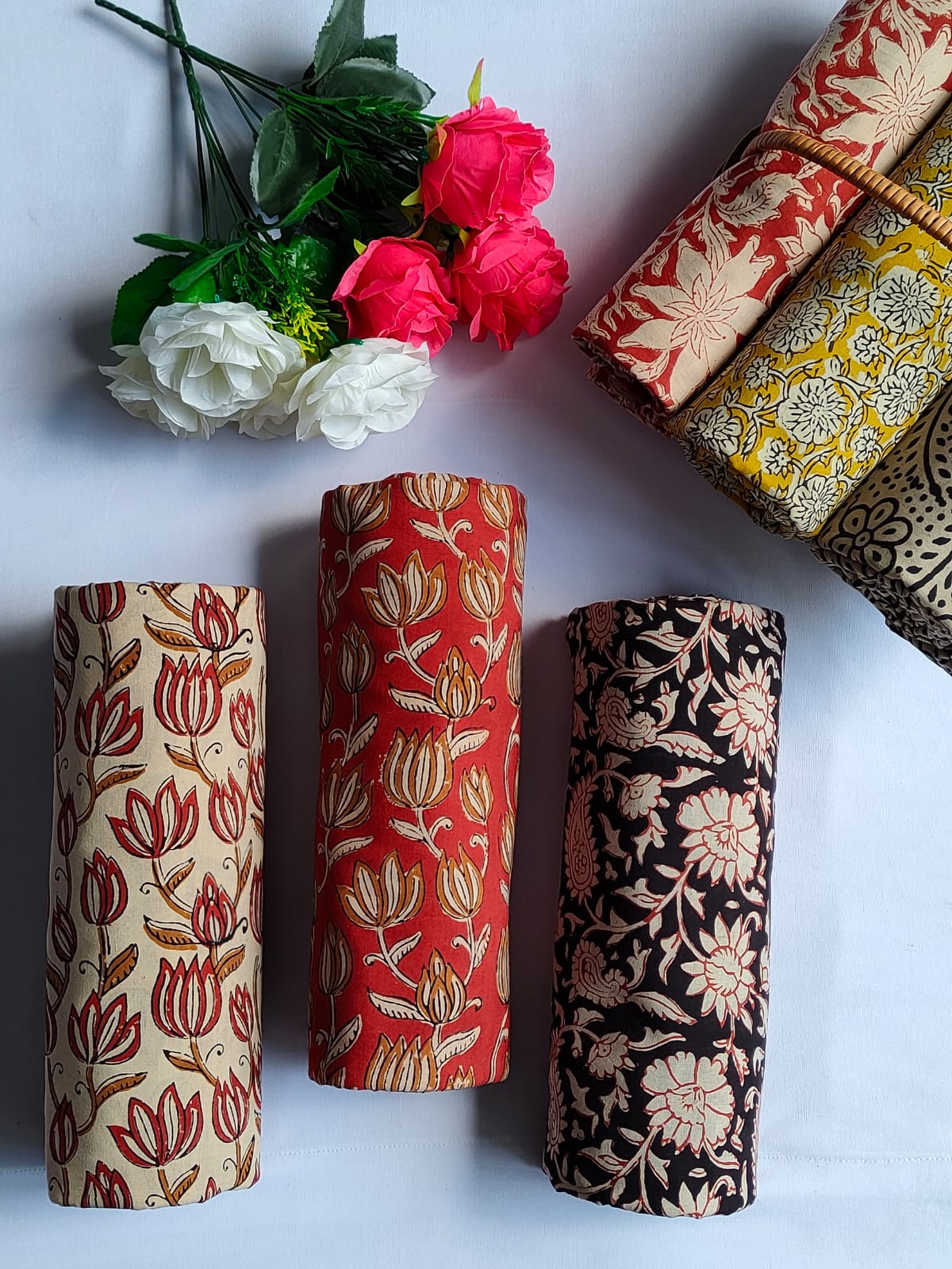


Cotton fabric is used to make a wide range of products, including shirts, dresses, kurtas, trousers, bedsheets, curtains, bags, and other textile items. Although cotton clothing is common in everyday life, the process of turning raw cotton into finished fabric involves several important stages.
From harvesting cotton plants to spinning fibres into yarn, weaving or knitting the yarn into fabric, and applying colour and finishing treatments, each stage influences the final material's appearance, texture, strength, and suitability for different uses.
Understanding how cotton fabric is processed can help consumers make better purchasing decisions. It is also useful for fashion designers, garment manufacturers, textile businesses, and people who buy fabric for sewing or creative projects.
In this guide, we will explain the typical cotton processing journey, the role of each manufacturing stage, the differences between woven and knitted cotton, and how printing and finishing transform plain cotton fabric into products ready for clothing and other textile applications.
1. Cotton Harvesting: Collecting the Raw Fibres
The cotton processing journey begins on a cotton farm. Cotton plants produce fluffy seed fibres known as cotton bolls. When the bolls mature and open, the fibres become ready for harvesting.
Cotton harvesting methods vary depending on the region, farm size, equipment, and local agricultural practices.
Cotton may be harvested mechanically using specialised machinery or picked by hand. In areas where manual harvesting is common, workers collect the open cotton bolls and separate them from the plant material during subsequent processing.
After harvesting, the cotton contains more than just usable fibres. It may include seeds, leaves, stems, dust, and other plant matter that must be removed before the fibres can be used in textile production.
Why Harvesting Matters
The condition of harvested cotton can influence the quality of the fibres entering the manufacturing process. Contamination, moisture, and handling practices can affect subsequent cleaning, spinning, and fabric production.
Good harvesting and handling practices help preserve fibre quality and prepare the cotton for the next stage.
Once collected, the raw cotton is transported for processing, where the fibres are separated from the seeds.
2. Ginning: Separating Cotton Fibres from Seeds
Ginning is one of the first major processing stages after harvesting. It involves separating the cotton fibres, commonly called lint, from the seeds.
Cotton seeds are removed using specialised ginning machinery. Depending on the cotton type and processing system, different types of gin equipment may be used.
The cleaned lint is then prepared for storage and transportation, often in compressed bales.
Cottonseed is also a useful agricultural by-product. It can be processed for products such as cottonseed oil, animal feed ingredients, and other applications, depending on how it is handled and processed.
Why Ginning Is Important
Ginning prepares cotton fibres for textile manufacturing. Effective separation helps remove seeds and other unwanted material while preserving the fibres for subsequent processing.
The quality of ginning can influence the amount of waste, fibre condition, and efficiency of later manufacturing stages.
At this point, the cotton is still a collection of loose fibres. It has not yet been spun into yarn or converted into fabric.
3. Cleaning and Fibre Preparation
After ginning, cotton may undergo additional cleaning and preparation to remove remaining impurities and improve its suitability for spinning.
The exact preparation sequence depends on the condition of the cotton and the machinery used by the textile mill.
Typical preparation operations may include:
-
Removing remaining foreign matter
-
Opening compressed cotton fibres
-
Blending fibres from different bales
-
Aligning and organising fibres
-
Preparing a more uniform supply of material for spinning
Blending can help mills achieve more consistent fibre characteristics across a production batch. It may also be used to combine different cotton sources according to the requirements of the yarn being produced.
What Happens During Fibre Opening?
Cotton arriving at a mill may be compressed into dense bales. Opening machinery loosens the fibres so they can be processed more evenly.
The fibres may then pass through cleaning and blending equipment before entering carding.
Careful preparation is important because uneven fibre distribution or excessive contamination can create problems during yarn production.
4. Carding and Combing: Organising the Cotton Fibres
Carding is an important stage in cotton spinning. During carding, machinery separates and arranges the fibres into a more organised form, helping remove remaining impurities and short fibres.
The result is generally a soft, loosely formed strand known as a sliver.
The sliver contains fibres that are more aligned than they were in the raw cotton, but it still needs further processing before it can become yarn.
What Is Combing?
Combing is an additional process used for certain types of cotton yarn. It removes a greater proportion of short fibres and helps align the remaining fibres more uniformly.
Combed cotton yarn is often used when a smoother, more uniform yarn is desired. It may be suitable for garments and textiles that require particular surface qualities or performance characteristics.
However, not every cotton fabric uses combed yarn. Carded yarn is widely used for many everyday textile applications.
Carded Cotton vs. Combed Cotton
The main difference lies in the additional fibre preparation used for combed yarn.
-
Carded cotton: The fibres are carded and prepared for spinning without the additional combing stage.
-
Combed cotton: The fibres undergo extra processing to remove more short fibres and improve fibre alignment.
Combing generally requires additional processing and can increase production costs. The choice depends on the intended yarn, fabric quality, and product requirements.
The terms "carded" and "combed" describe processing methods. They do not, by themselves, determine every aspect of a finished fabric's softness, durability, or quality.
5. Spinning: Turning Cotton Fibres into Yarn
Once the cotton fibres have been prepared, they are spun into yarn. Spinning transforms the loose fibres into continuous strands that can be used to manufacture fabric.
During spinning, the prepared fibres are drawn out and twisted together to create yarn with the required thickness and characteristics.
Different spinning technologies are used in textile manufacturing, including ring spinning and rotor spinning. The choice depends on factors such as production requirements, yarn properties, and intended fabric application.
Why Yarn Quality Matters
Yarn characteristics influence the final fabric in several ways, including:
-
Surface smoothness
-
Strength and durability
-
Thickness and weight
-
Texture and appearance
-
Suitability for weaving or knitting
Finer yarns can be used to produce lightweight fabrics, while thicker yarns may be suitable for heavier or more textured materials. The relationship is not absolute because fabric construction and finishing also influence the result.
Yarn twist, fibre length, uniformity, and spinning method all contribute to how the finished yarn behaves.
For example, yarn intended for a lightweight cotton shirt may have different specifications from yarn used in a heavier cotton textile.
At the end of spinning, the cotton has been transformed from loose fibres into yarn ready for fabric formation.
6. Yarn Preparation Before Fabric Manufacturing
Before yarn is woven or knitted into fabric, it may require additional preparation. The specific operations depend on the intended construction and the type of textile machinery being used.
For woven fabric, yarn preparation commonly includes winding and warping. Sizing may also be applied to certain warp yarns to help them withstand the stresses of weaving.
Winding
Winding transfers yarn onto packages suitable for subsequent operations. It can also help identify and remove certain yarn defects, depending on the equipment and quality-control system.
Warping
Warping arranges a large number of yarns in parallel to create a warp sheet or beam. These yarns run lengthwise through the woven fabric.
Sizing
Sizing involves applying a protective material to many warp yarns before weaving. It helps reduce friction and yarn breakage during the weaving process.
Sizing is not required in the same way for every yarn or textile construction. Its use depends on the machinery, yarn properties, and manufacturing requirements.
For knitting, yarn preparation follows a different route because knitted fabric is formed by interlooping yarn rather than interlacing warp and weft yarns.
7. Weaving: Creating Woven Cotton Fabric
Weaving is one of the main methods used to turn cotton yarn into fabric. It involves interlacing two sets of yarns at approximately right angles.
The lengthwise yarns are called the warp, while the crosswise yarns are called the weft.
A loom holds the warp yarns in position and inserts the weft yarns according to a selected pattern. The arrangement of these yarns determines the weave structure and contributes to the fabric's appearance, texture, and behaviour.
Common Types of Cotton Weaves
Plain weave: Warp and weft yarns cross over and under one another in a simple repeating pattern. Plain-weave cotton is used in many everyday fabrics.
Twill weave: The yarns interlace in a way that creates diagonal lines. Cotton twill is commonly used for products such as trousers, workwear, and some jackets.
Satin weave: The yarn arrangement creates longer yarn floats on the surface, which can produce a smoother appearance and more lustre, depending on the construction.
Each weave has different characteristics, so the most appropriate option depends on the intended product.
What Is Woven Cotton Used For?
Woven cotton fabric is used in a broad range of textile products, including:
-
Shirts and blouses
-
Dresses and skirts
-
Kurtas and tunics
-
Trousers and shorts
-
Bedsheets and pillowcases
-
Curtains and table linens
-
Tote bags and accessories
The final fabric can vary significantly depending on the yarn, weave, density, and finishing treatments.
Explore plain cotton fabrics to discover cotton materials for clothing and other textile projects.
8. Knitting: An Alternative Way to Make Cotton Fabric
Not all cotton fabric is woven. Knitting is another important fabric-forming method.
Knitted fabric is created by forming interconnected loops of yarn. Unlike woven fabric, which uses interlaced warp and weft yarns, knitted fabric relies on loops that connect with one another.
This structure often gives knitted textiles greater stretch and flexibility than comparable woven fabrics, although the amount of stretch varies according to the knitting construction and any finishing treatments.
Common Uses of Knitted Cotton
Knitted cotton is frequently used for:
-
T-shirts
-
Polo shirts
-
Casual tops
-
Cotton nightwear
-
Sweatshirts and lightweight layers
-
Comfortable children's clothing
Cotton jersey is a familiar example of a knitted fabric. It is widely used for T-shirts because it can offer a comfortable feel and flexibility.
Woven Cotton vs. Knitted Cotton
The main difference is how the fabric is constructed.
-
Woven cotton: Made by interlacing warp and weft yarns. It is often used for shirts, trousers, dresses, and home textiles.
-
Knitted cotton: Made by interlooping yarn. It is commonly used for T-shirts, stretchable casual garments, and comfortable everyday clothing.
Neither construction is automatically better than the other. The right choice depends on the garment design, required stretch, fabric weight, and intended use.
9. Desizing, Scouring, and Bleaching: Preparing Fabric for Colour
After weaving or knitting, cotton fabric may undergo wet processing to prepare it for dyeing, printing, or other finishing treatments.
Freshly manufactured fabric is often referred to as greige fabric. It may contain natural impurities and, in some cases, processing materials introduced during yarn preparation.
Preparation treatments help make the fabric more suitable for subsequent processing.
Desizing
Desizing removes sizing materials that may have been applied to warp yarns before weaving.
Removing these materials helps prepare the fabric for further wet processing.
Desizing is mainly relevant to fabrics that have been sized during manufacture.
Scouring
Scouring is a cleaning treatment that removes natural and processing-related impurities from cotton. It commonly involves an alkaline treatment designed to improve the fabric's cleanliness and wetting properties.
Effective scouring helps prepare the fabric for more uniform dyeing or printing.
Bleaching
Bleaching reduces the natural colour of the cotton and can produce a lighter or whiter base.
This is particularly useful when a manufacturer wants to create a clean white fabric or prepare a pale background for certain printed designs.
Not all cotton fabrics are bleached. Some are intentionally left in a natural-looking shade or receive a different preparation treatment depending on the desired result.
Why Fabric Preparation Matters
If the fabric is not adequately prepared, dyes and printing materials may not perform consistently. Preparation helps improve the reliability of subsequent colouring processes.
The exact sequence can vary depending on the fabric, the dyeing or printing method, and the manufacturer's production requirements.
10. Dyeing: Adding Colour to Cotton Fabric
Dyeing is the process of adding colour to fibres, yarn, or fabric using suitable dyes and processing conditions.
Cotton can be dyed at different stages of production. For example, fibre dyeing colours the cotton before spinning, yarn dyeing colours the yarn before fabric formation, and piece dyeing colours fabric after it has been woven or knitted.
The selected method depends on the desired appearance and manufacturing process.
Piece-Dyed Cotton
In piece dyeing, an already constructed fabric is dyed to produce a particular colour. This is a common approach for producing solid-colour cotton textiles.
Piece-dyed cotton can be used for shirts, trousers, dresses, kurtas, and other products.
Yarn-Dyed Cotton
In yarn dyeing, the yarn is coloured before weaving or knitting. This method is useful for producing stripes, checks, and other designs in which the colours form part of the fabric construction.
Different Dyeing Methods
Cotton may be coloured using different dye classes and dyeing systems. Reactive dyes are commonly used for cotton because they can form chemical bonds with the cellulose fibre under suitable conditions. Other dye systems may be used depending on the desired colour, process, and product requirements.
Dye selection, processing conditions, washing, and after-treatment all influence the final colour and colourfastness.
What Influences the Final Colour?
Several factors affect the appearance of dyed cotton:
-
The original fabric colour
-
The type of dye
-
The fabric's preparation
-
Dye concentration and application
-
Processing temperature and time
-
Washing and after-treatment
Proper processing helps achieve the desired shade and reduce the risk of unwanted colour loss or unevenness.
11. Printing: Transforming Plain Cotton into Patterned Fabric
Printing adds specific patterns, motifs, illustrations, or designs to selected areas of fabric. Unlike solid-colour dyeing, which generally colours a larger portion of the material, printing allows different designs to be applied across the surface.
Printed cotton is widely used for clothing, accessories, and home textiles because it offers many design possibilities.
Common cotton printing techniques include screen printing, roller printing, digital textile printing, and hand block printing.
Screen Printing
Screen printing transfers printing ink or paste through a prepared screen onto fabric. Different screens may be used for different colours or design elements.
It is suitable for a wide range of designs, including graphic prints, repeating motifs, and bold patterns.
Digital Textile Printing
Digital textile printing applies a design to fabric using specialised printing equipment. It can be useful for detailed artwork, complex colour combinations, and designs that require flexibility during development.
The fabric generally needs to be compatible with the printing system, and suitable preparation and post-treatment may be required.
Hand Block Printing
Hand block printing uses carved blocks to apply motifs to fabric. Artisans repeat the impressions to create a pattern, often using separate blocks for different colours.
The technique is associated with traditional Indian textile crafts and can produce a distinctive handcrafted appearance.
Traditional Indian Cotton Printing
Traditional printing methods are used to create a range of distinctive patterns on cotton.
Bagru printing is associated with Bagru in Rajasthan and is known for its traditional block-printing practices.
Dabu printing uses a resist-based method in which selected areas are protected from dye to create contrasting patterns.
These methods connect cotton fabric with regional craftsmanship while offering possibilities for contemporary fashion.
Explore the following Jaipur Bazar collections for different printed cotton styles:
The appearance, durability, and care requirements of printed cotton depend on the printing method, dyes or inks, fabric preparation, and finishing.
12. Finishing: Improving the Appearance and Performance of Cotton
After dyeing or printing, cotton fabric may undergo one or more finishing treatments. Finishing is a broad category of processes that can influence the fabric's softness, surface appearance, dimensional stability, and other properties.
The treatments selected depend on the intended end use.
Mechanical Finishing
Mechanical finishing uses physical processes to change the fabric's surface or structure.
Examples include:
-
Calendering, which uses rollers to modify surface smoothness and appearance
-
Brushing or raising, which creates a softer or more textured surface
-
Compacting, which can help control dimensional change in suitable fabrics
-
Certain softening or surface treatments that alter the fabric's handle
These processes are not applied to every cotton fabric. They are selected according to the required appearance and performance.
Chemical Finishing
Chemical finishes can be applied to give fabric particular properties. Depending on the treatment, these may include improved wrinkle resistance, softness, water repellency, or other specialised characteristics.
The effect depends on the chemistry, application method, and fabric construction.
Some finishes require careful consideration of durability, washing performance, and environmental or safety requirements.
Softening Treatments
A softening treatment may be applied when the manufacturer wants to improve the fabric's feel. The resulting softness depends on the cotton itself, the treatment used, and other processing stages.
A fabric's softness can also change after washing and regular use.
Shrinkage Control
Cotton can shrink when exposed to moisture and heat, particularly if the fabric has not been stabilised. Certain finishing processes help control dimensional changes.
For clothing manufacturers, dimensional stability is important because excessive shrinkage can affect garment measurements and fit.
Finishing helps prepare cotton for its intended use, but the exact treatments vary from one fabric to another.
13. Quality Inspection and Fabric Testing
Before cotton fabric is sold or used for garment manufacturing, it may undergo inspection and quality testing. The level of testing depends on the manufacturer's quality-control system, the product specifications, and the requirements of the buyer.
Inspection can help identify defects that may affect the fabric's appearance or performance.
Common checks include:
-
Fabric width and length
-
Visible weaving or knitting defects
-
Uneven dyeing or colour variation
-
Printing alignment and pattern consistency
-
Holes, stains, or unwanted marks
-
Fabric weight and construction
-
Dimensional stability or shrinkage
-
Colourfastness, where required
Not every fabric undergoes every test. Some checks are performed during production, while others take place after the fabric has been finished.
Why Quality Control Matters
A fabric may look attractive but still have characteristics that affect its suitability for a particular garment. For example, uneven printing may be noticeable in a large dress panel, while unexpected shrinkage can affect the final fit.
For clothing manufacturers, consistent fabric specifications help reduce cutting and production problems.
Consumers can also benefit from checking fabric descriptions, care instructions, and available product details before buying.
14. From Finished Cotton Fabric to Clothing
Once cotton fabric has been processed and inspected, it can be sold as fabric or sent for further manufacturing into finished products.
Garment production involves several additional steps, and the exact workflow depends on the clothing design and production setup.
Pattern Making
A pattern is prepared according to the garment design and required measurements. It provides the shapes used to cut the fabric.
Fabric Spreading and Cutting
Fabric is spread in layers or handled individually, depending on the production method. Pattern pieces are then cut according to the garment requirements.
Fabric placement matters, especially when working with directional prints, stripes, checks, or repeating motifs.
Stitching and Assembly
The cut pieces are sewn together to create the garment. Stitching methods and construction details vary according to the design and fabric.
Finishing and Pressing
Garments may undergo thread trimming, pressing, measurement checks, and other finishing operations before packing.
Final Inspection
The finished garment is checked against the required measurements, appearance, construction, and quality standards.
At this stage, the cotton has completed its journey from raw fibre to a wearable product.
15. How Processing Influences the Feel and Quality of Cotton Fabric
Cotton fabric quality is influenced by several factors throughout the manufacturing process. No single stage determines every characteristic of the finished textile.
Fibre Quality
Fibre length, strength, fineness, and uniformity can affect the yarn that can be produced and the characteristics of the resulting fabric.
Yarn Construction
Yarn thickness, twist, spinning method, and consistency influence the fabric's appearance, strength, and texture.
Fabric Construction
The weave or knitting structure affects drape, stretch, surface texture, and density.
Dyeing and Printing
The colour application process influences shade, pattern clarity, and colourfastness. Suitable preparation and after-treatment are important for achieving consistent results.
Finishing
Finishing treatments can alter the surface feel, smoothness, dimensional stability, and other properties of cotton fabric.
Care and Use
Washing, drying, ironing, and repeated wear can change how a fabric looks and feels over time.
For this reason, the best cotton fabric is not necessarily the most expensive or the softest one. It is the material whose characteristics suit the intended garment or textile product.
16. Common Types of Cotton Fabric and Their Uses
Cotton fabrics are available in many constructions, weights, textures, and finishes. Understanding a few common categories can help you select material for different clothing projects.
| Cotton fabric type | Common applications |
|---|---|
| Plain cotton | Shirts, dresses, kurtas, trousers, and sewing projects |
| Cotton cambric | Shirts, dresses, tunics, and lightweight garments |
| Mulmul cotton | Lightweight tops, loose kurtas, and flowing garments |
| Printed cotton | Dresses, skirts, shirts, kurtas, and co-ord sets |
| Hand block print cotton | Ethnic wear, contemporary clothing, and accessories |
| Bagru print cotton | Shirts, kurtas, dresses, and printed sets |
| Dabu print cotton | Kurtas, dresses, skirts, and casual clothing |
These are general applications rather than strict rules. A fabric's suitability depends on its actual weight, construction, finish, opacity, and care requirements.
Plain Cotton Fabric
Plain cotton is a versatile option for basic clothing and creative sewing. It is available in different colours and weights, making it useful for both simple and more structured garments.
Browse plain cotton fabrics.
Cotton Cambric
Cotton cambric is often used for garments that need a relatively fine, closely woven fabric. Its exact feel and structure vary according to the product.
Explore cotton cambric fabrics.
Mulmul Cotton
Mulmul cotton is known for its lightweight character and soft drape. It may suit loose-fitting clothing and designs where a lighter fabric is desired.
Discover mulmul cotton fabrics.
Printed Cotton Fabric
Printed cotton allows designers and home sewers to work with a wide range of motifs, colours, and visual styles.
Explore printed cotton fabrics.
17. Environmental Considerations in Cotton Processing
Cotton is a natural fibre, but its environmental impact depends on how it is grown, processed, manufactured, transported, used, and disposed of.
Cotton cultivation can require substantial water and agricultural inputs, depending on the climate and farming practices. Textile processing also uses resources, particularly during washing, bleaching, dyeing, and finishing.
Several practices can help reduce the environmental impact of cotton textiles when implemented effectively.
Responsible Water Management
Textile manufacturers can work to reduce water use and improve wastewater treatment during wet processing.
Efficient Dyeing and Printing
The choice of dyes, machinery, process controls, and wastewater management can influence the environmental performance of textile colouring.
Reducing Fabric Waste
Careful pattern placement and efficient cutting can reduce the amount of unused fabric during garment production.
Making Longer-Lasting Clothing
Selecting suitable fabric, constructing garments well, and following appropriate care instructions can help extend product life.
Responsible Material Choices
Organic cotton, recycled cotton, and cotton produced under particular agricultural or sourcing standards may offer different environmental benefits. Their overall impact depends on the production system and the criteria being assessed.
It is important not to assume that all cotton fabric is automatically sustainable. Looking at the complete production and product life cycle provides a more balanced understanding.
Conclusion
Cotton fabric processing involves a series of stages that transform raw cotton fibres into useful textiles. The journey typically begins with harvesting and ginning, followed by fibre preparation and spinning. The resulting yarn is then woven or knitted into fabric, which may undergo further preparation, dyeing, printing, and finishing before quality inspection.
Each stage contributes to the characteristics of the finished material. Fibre quality influences yarn production, yarn properties affect fabric construction, and dyeing, printing, and finishing help determine the final appearance and performance.
After processing, cotton fabric can be used for a wide range of products, from everyday shirts and dresses to kurtas, trousers, home textiles, and accessories.
Understanding this process makes it easier to compare cotton fabrics and select suitable materials for different projects. Whether you prefer plain cotton for basic garments, lightweight cotton for relaxed clothing, or printed cotton for more expressive designs, the fabric's construction and finishing are worth considering.
Explore the Jaipur Bazar cotton fabric collection to discover cotton materials for clothing, sewing, and textile projects.